Fiberglass Batt Insulation in Lexington, KY
Batt Insulation Contractors in Lexington
Batt insulation is the familiar pre-cut panel of fiberglass or mineral wool that fits between wall studs, floor joists and attic rafters. It has been used in homes for decades, and when it is installed correctly in the right place, it is a reliable, cost-effective way to add insulation value.
Reed’s Home Solutions installs batt insulation throughout Lexington, KY and the surrounding Central Kentucky communities. We inspect your home first, explain whether batts are the right fit for the space and give you an upfront price before any work begins.
Batt insulation works best where installers have direct access to open framing, such as new construction, gut renovations, additions and accessible attic floors. In closed walls, damp crawl spaces and spaces with lots of obstructions, other materials usually perform better, and we will tell you when that is the case.

Types of Batt Insulation
We install two types of batts. Both come in standard widths sized to fit common framing.
Fiberglass Batts
Made from spun glass fibers, fiberglass batts are the most common batt insulation and a cost-effective choice for walls, floors and attics, at roughly R-3.0 to 4.3 per inch.
Mineral Wool Batts
Mineral wool batts are denser than fiberglass and are a good fit where you want added resistance to moisture and sound transfer, at roughly R-3.0 to 4.3 per inch.
Where Batt Insulation Works Best
These are the Lexington applications where batts are a good fit.
Attic Floors and Rafters
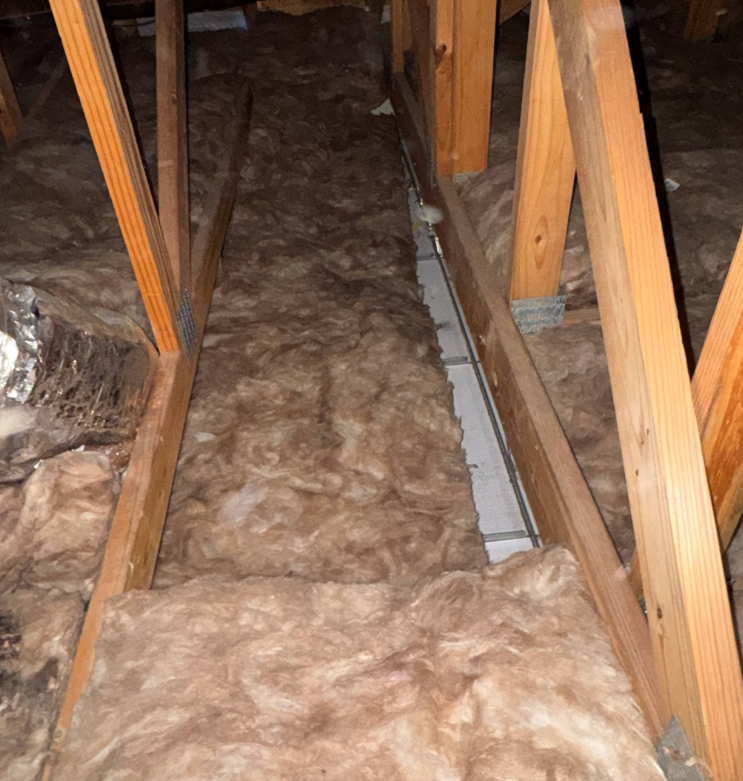
A quick, economical way to insulate between open joists or rafters in an accessible attic.
Open Walls
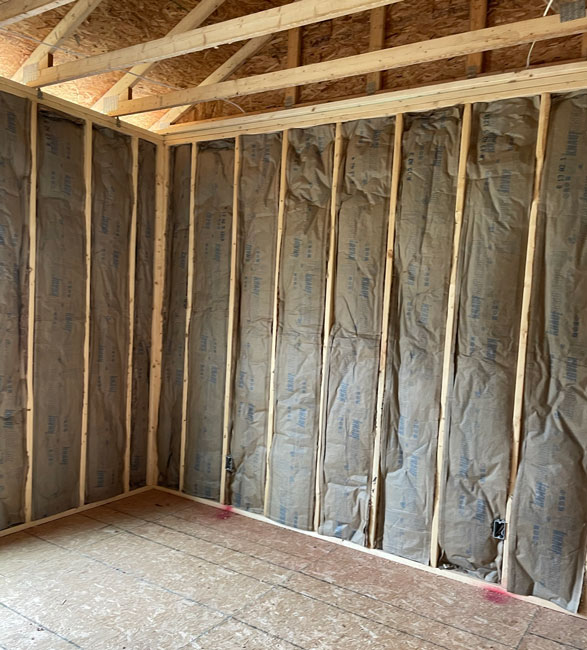
New construction, additions and renovations where the studs are exposed before drywall goes up.
Basement Ceilings and Floors
Between floor joists in a dry, accessible basement ceiling or over an unheated space.
Strengths and Limits of Batt Insulation
Batts are a good product when they are used where they fit. This is a fair look at both sides.
Strengths
Limits
Strengths
Cost-effective and widely used
Limits
Does not air-seal on its own
Strengths
Fast to install in open framing
Limits
Gaps and compression reduce performance
Strengths
Fiberglass or mineral wool to match the space
Limits
Not recommended in damp or vented crawl spaces
Strengths
Good for new construction and renovations
Limits
Cannot be installed in closed walls without opening them
Benefits of Batt Insulation
Here is why batts remain a good choice in the right place.
- Cost-effective. Batts are one of the more economical ways to add insulation value.
- Reliable and proven. Batts have been used for decades.
- Fast to install in accessible framing.
- Lower energy bills. Insulation can lower heating and cooling costs by up to 15%.
- More comfortable rooms and a quieter home.
How We Install Batt Insulation
Here is what to expect when Reed’s installs batt insulation.
Inspection
We check the framing, measure the space and look for moisture and air leaks.
Prep
We seal the leaks that should be fixed before insulation goes in and protect the work area.
Install
We cut batts to fit snugly between studs, joists or rafters without gaps or compression.
Inspect
We check the finished work, clean up and walk through it with you.
Fiberglass or Mineral Wool: Choosing for Your Lexington Project
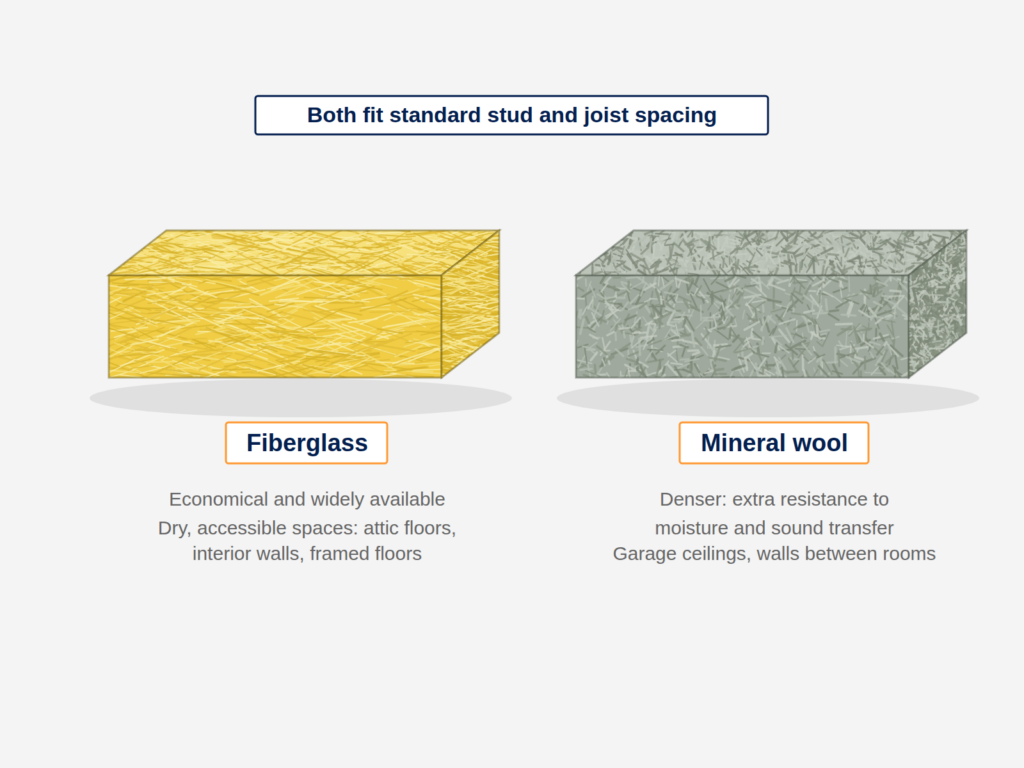
Fiberglass and mineral wool batts both fit standard stud and joist spacing, and both deliver roughly R-3.0 to 4.3 per inch depending on the product and thickness. The real differences are in how they behave.
Fiberglass is the most common choice. It is economical and widely available, and it works well in dry, accessible spaces such as attic floors, interior walls and framed floors. Mineral wool is denser, and it is a good fit where you want extra resistance to moisture and sound transfer, such as basement walls above grade, garage ceilings and walls between living spaces.
We will tell you which one makes sense for your project. If your main goal is saving energy in a space with a lot of air leaks, we may suggest spray foam instead, and for finished walls we recommend blown-in insulation.
Why Installation Quality Matters With Batts
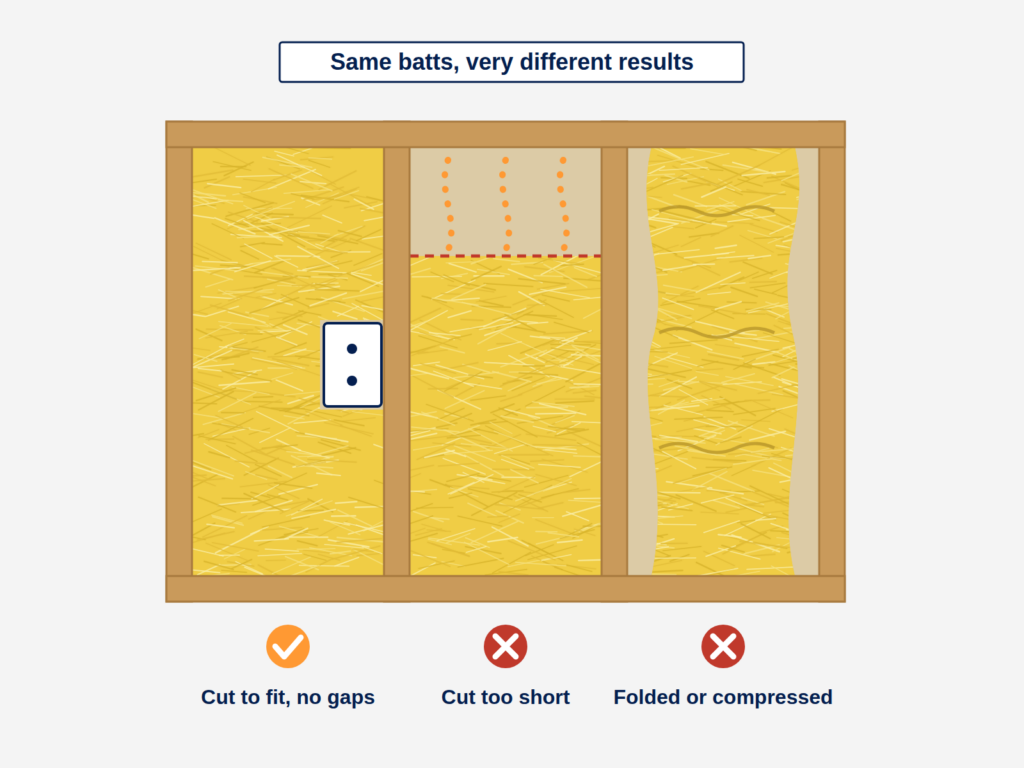
Batt insulation only performs as well as it is installed. A batt that is compressed, folded, or cut too small leaves gaps, and those gaps let air move around the insulation and cut down its effectiveness. That is why the same batts can perform very differently from one house to the next.
Our crews cut batts to fit snugly between studs, joists or rafters, work around wiring, pipes and electrical boxes without crushing the material, and make sure there are no gaps at the edges. Before installing, we look for air leaks and seal the ones that should be fixed first, because air movement around batts can undo the insulation value.
That attention is part of why we start every job with an inspection, and it is why we will tell you plainly when batts are not the right tool.
Batt Insulation for New Construction, Additions and Renovations
If you are building a new home, adding a room or gutting a space down to the studs, batts are one of the most cost-effective options. The framing is open, installers can reach every cavity and the work moves quickly. We can coordinate with your schedule so insulation goes in after framing and mechanical rough-ins and before the drywall goes up.
In a renovation, we will look at whether batts or another type is the better fit for each space. Exterior walls, ceilings and floors can all call for different materials, and we can handle more than one type on the same job.
For a whole-home project, our insulation team in Lexington can bring spray foam, blown-in and batt together under one estimate, and our new construction insulation page explains how we work with builders.
When We Recommend Something Other Than Batts
Batts are not the right answer everywhere, and we would rather tell you than sell you the wrong thing. In a vented Lexington crawl space, humid air passes through the vents, batts absorb moisture and sag, and wet insulation holds moisture against the framing. We recommend spray foam on the crawl space walls with a sealed vapor barrier on the ground.
In finished walls, batts cannot be installed without opening the wall. Dense-pack blown-in insulation fills the cavity through small access holes instead. And in attics with air leaks or vaulted ceilings, spray foam can be the better fit.
Proven by Results, Recognized for Excellence
Get a Free Batt Insulation Estimate in Lexington
Our crews inspect your home, explain which insulation fits each space and give you an upfront price.
Batt Insulation FAQs for Lexington Homeowners
How much does batt insulation cost in Lexington?
Cost depends on the type of batt, the area and the prep work needed. We give you an exact price after a free inspection.
What is the difference between fiberglass and mineral wool batts?
Both fit standard framing at roughly R-3.0 to 4.3 per inch. Mineral wool is denser and is a good fit where you want added resistance to moisture and sound.
Are batts a good choice for a crawl space?
Not in most Lexington crawl spaces. Vented crawl spaces are humid, and batts can absorb moisture and sag. We recommend spray foam on the walls with a sealed vapor barrier instead.
Can batts be installed in finished walls?
No. Batts need open framing. For finished walls, we recommend dense-pack blown-in insulation through small access holes.
Will batt insulation lower my energy bills?
It can. Insulation can lower heating and cooling costs by up to 15%.
Do you offer financing?
Yes. We offer flexible financing options. Ask about them during your free estimate, or see our financing page.
Can batt insulation be added over existing insulation?
In many attics, yes, if the existing insulation is dry and in good shape. We inspect the attic and tell you what we recommend.
How do I know if my batt insulation needs to be replaced?
Common signs include batts that are wet, stained, moldy, compressed, chewed by rodents or sagging out of the framing. We will check the condition during your inspection.
Do you remove old insulation?
Yes. If existing insulation is wet, moldy or contaminated, we remove it before installing new material.
Is fiberglass batt insulation safe?
Fiberglass batts are installed by trained crews who wear protective gear. We explain the process and the work area before we begin.
Areas We Serve
Reed’s Home Solutions installs batt insulation in Lexington and throughout Central Kentucky.