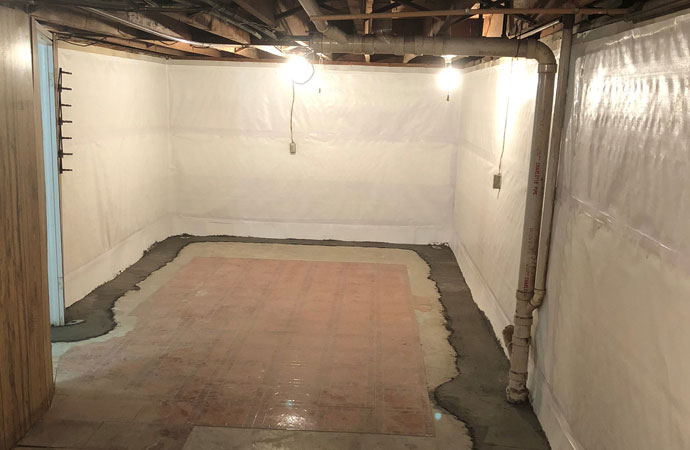
Interior Basement Waterproofing
Interior Drainage for Wet Basements
When water finds its way into your basement through foundation walls and floor joints, it creates serious problems that go far beyond a damp space. Reed’s Home Solutions specializes in interior basement waterproofing — drainage systems that capture and redirect water before it can cause flooding, structural damage, or unhealthy living conditions, installed entirely from the inside.
Interior waterproofing is often the right call when there’s no room to excavate outside, when landscaping or a driveway sits close to the foundation, or when you need a faster, less disruptive fix than a full exterior dig.

What's Included in Interior Waterproofing
A complete interior system, not a single product — each piece works with the others.
- Complete basement drainage system design — engineered around how water is actually entering your specific basement.
- Sump pump integration and optimization — the drain tile channels water to the pit, and the pump moves it out.
- Free inspections and cost estimates tailored to your specific basement, not a generic package price.
- Perimeter drain tile systems with advanced filtration, installed along the interior edge of the basement floor.
- Wall-floor joint sealing and water capture, addressing one of the most common entry points for basement leaks.
- Professional maintenance and system monitoring to keep the whole system working the way it was designed to.
Signs Your Basement Needs Interior Waterproofing
Interior waterproofing addresses water that’s already made it to the inside surface of your foundation — here’s what that typically looks like.
- Water seeping along the wall-floor joint after rain, one of the most common interior entry points.
- Efflorescence — the white, chalky mineral deposits left behind as water wicks through concrete or block.
- Water appearing after heavy rain but not from any single, identifiable crack.
- Damp or discolored walls that stay wet or stained even when there's no standing water on the floor.
- A musty smell that persists even after cleaning, often a sign of ongoing moisture inside the wall assembly.
- A sump pump that runs constantly, a sign your basement is already managing more groundwater than expected.
How an Interior Drain Tile System Works
Interior waterproofing isn’t a single product — it’s a complete drainage path from your foundation wall to the outside of your home.
Capturing the Water
- A channel is cut along the interior perimeter of the basement floor, next to the foundation wall
- Perforated drain tile is installed in that channel, angled to move water by gravity
- A layer of washed gravel surrounds the pipe, allowing water to flow in while keeping sediment out
- The wall-floor joint is sealed above the drain tile, directing seepage down into the system instead of across the floor
Moving the Water Out
- The drain tile slopes toward a sump pit installed at the low point of the system
- A sump pump removes water from the pit and discharges it away from the foundation
- The floor is patched and finished over the completed drain tile run
- The system requires no ongoing excavation or yard disruption once installed
Interior vs. Exterior Waterproofing — Which Do You Need?
Choose Interior When
- There’s limited access outside — a driveway, patio, or mature landscaping sits close to the foundation.
- You need a faster, less disruptive installation than full exterior excavation allows.
- Water is seeping through the wall-floor joint or wicking through the wall itself, rather than pooling outside.
Choose Exterior When
- You want to stop water before it reaches the wall at all, not just manage it once it’s inside.
- The foundation is showing membrane failure or exterior drainage problems that interior work won’t reach.
- Full excavation is practical for your yard and budget.
Not sure which applies? See Exterior Waterproofing, or let us tell you during your free inspection — most homes only need one, not both.
Proven by Results, Recognized for Excellence
Water Seeping Through Your Basement Walls?
Free, no-obligation waterproofing inspections across Kentucky, Tennessee, Virginia & West Virginia — plus flexible financing to help make the fix more manageable.
Interior Waterproofing FAQs
Is interior waterproofing as effective as exterior waterproofing?
For managing water that’s already reaching the wall, yes — a properly installed interior drain tile and sump system handles it reliably. The difference is what it doesn’t do: it manages water rather than stopping it before it reaches the wall. For most basements dealing with wall-floor joint leaks or seepage, interior waterproofing is the more practical, less disruptive answer.
How long does interior waterproofing installation take?
Because it’s installed entirely from inside without exterior excavation, interior systems are typically faster to install than exterior waterproofing. Exact timing depends on the length of drain tile needed and your basement’s layout, which we’ll walk through during your free inspection.
Will interior waterproofing damage my basement floor?
Installing perimeter drain tile does require cutting a channel along the interior edge of the floor, but it’s a narrow, targeted cut — not a full floor removal — and it’s finished as part of the installation.
Do I still need a sump pump with interior waterproofing?
In almost every case, yes. The drain tile system is designed to channel water to a sump pit, where a pump removes it from the home — the drainage and the pump work together as one system, not as separate fixes.
What is efflorescence, and does it mean I need waterproofing?
Efflorescence is the white, chalky mineral residue left behind when water moves through concrete or block and evaporates at the surface. It’s a reliable sign that moisture is passing through your foundation wall, even if you haven’t seen standing water — worth having inspected before it becomes a bigger problem.
Can interior waterproofing be installed year-round?
Yes. Because the work happens entirely inside the basement rather than in the yard, interior waterproofing isn’t affected by frozen ground or wet weather the way exterior excavation can be, which makes scheduling more flexible.
Does interior waterproofing come with a warranty?
Yes — our interior drain tile and sump pump installations are backed by a warranty on workmanship, and we offer ongoing maintenance to keep the system performing the way it was designed to for years after installation.
Areas We Serve
Out interior basement waterproofing contractors operate throughout Kentucky, Tennessee, Virginia, West Virginia, and surrounding areas. See below for additional communities we serve for basement waterproofing.