
Crawl Space Insulation
Crawl Space Insulation Contractor
A cold, damp crawl space doesn’t just make your floors uncomfortable — it drives up energy bills, invites mold and wood rot, and can undermine your home’s structural framing over time. Spray foam is the material Reed’s Home Solutions uses for crawl space insulation; unlike the fiberglass batts often stapled between floor joists in older homes, spray foam applied directly to the crawl space walls creates a sealed, conditioned space that keeps moisture, pests, and outside temperatures where they belong: outside.
Why We Recommend Wall Insulation Over Floor Joist Batts in a Crawl Space
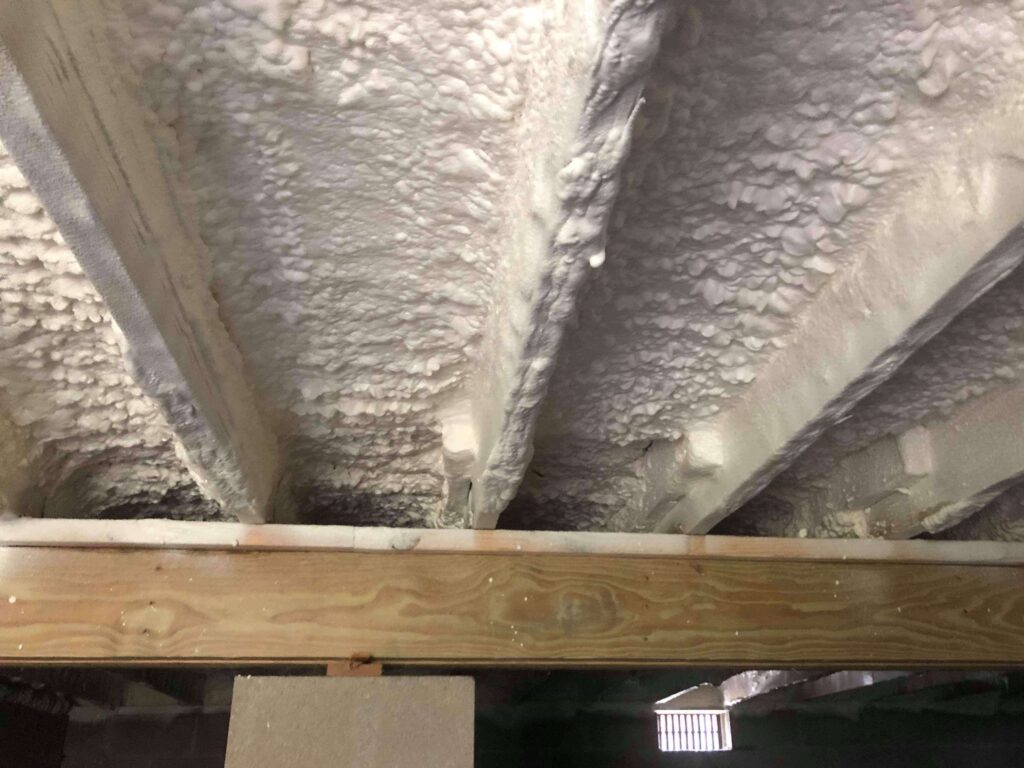
Older homes are often insulated with fiberglass batts between the floor joists above a vented crawl space. That approach fights a losing battle against humidity, since vented crawl spaces pull in moist outside air that soaks into fiberglass, sags it out of place, and feeds mold growth. We do install spray foam directly on the floor joists in some crawl spaces, but our standard recommendation is spray foam applied to the crawl space walls, combined with a sealed vapor barrier on the ground — this turns the crawl space itself into part of your home’s conditioned envelope, which is the modern approach to crawl space insulation.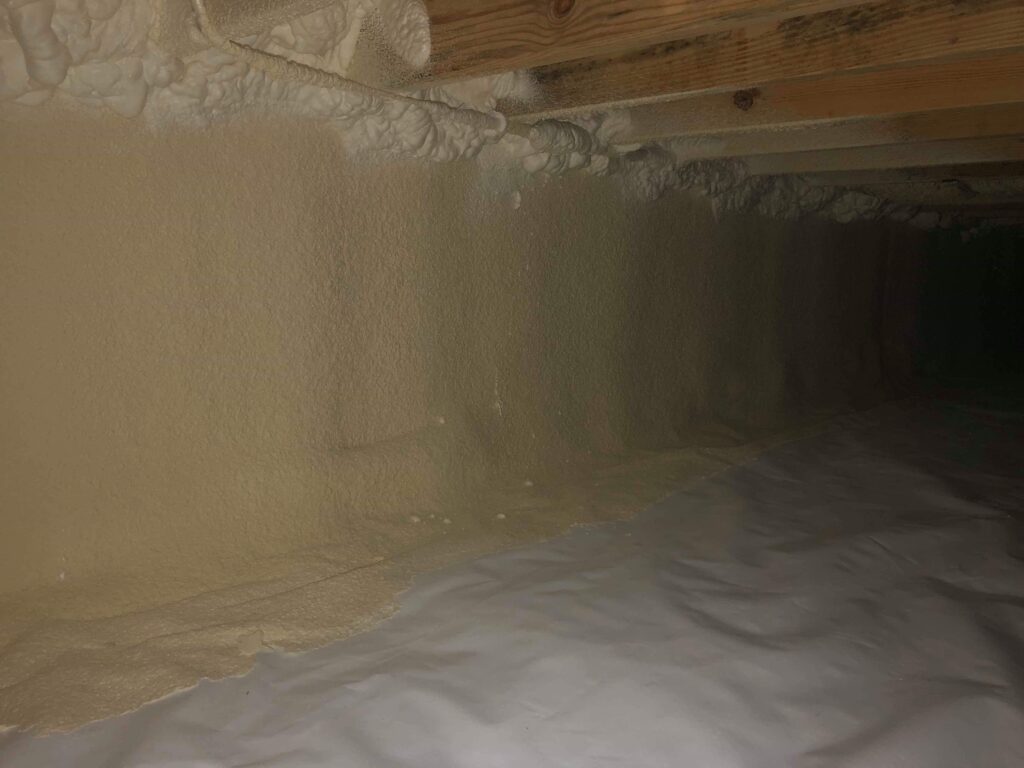
Ready to Get Started?
Crawl Space Insulation — Is That All You Need?
Insulating crawl space walls without addressing standing water, high humidity, or an open vapor barrier only slows the underlying problem down. That’s why we evaluate insulation alongside full crawl space encapsulation and repair — vapor barrier installation, dehumidification, drainage, and structural repair where needed — so your new insulation isn’t fighting a moisture problem it can’t win. Many homeowners need both; some only need one. Our free inspection will tell you honestly which applies to your crawl space.
Benefits of Crawl Space Insulation
- Warmer floors in the rooms directly above the crawl space.
- Lower humidity and reduced risk of mold, wood rot, and musty odors reaching your living space.
- Meaningful reduction in heating and cooling costs, since crawl spaces are a major source of conditioned-air loss.
- Protection for ductwork, plumbing, and framing that runs through the crawl space.
Frequently Asked Questions
How much does crawl space insulation cost?
Cost depends on your crawl space’s square footage and condition, and whether it’s being insulated as a standalone project or alongside crawl space encapsulation. We’ll provide an exact, itemized quote after a free inspection.
Why does Reed's use spray foam instead of blown-in or batt insulation for crawl spaces?
Crawl spaces deal with more moisture and airflow issues than any other part of the home, and spray foam’s air-sealing properties hold up better in that environment than blown-in or batt insulation, which can sag, settle, or hold moisture over time. It’s the only insulation type we recommend for this application.
Do I need crawl space encapsulation along with insulation?
Not always, but the two work well together. If your crawl space has a dirt floor, high humidity, or standing water, encapsulation addresses the moisture source while insulation handles the temperature side — we’ll tell you honestly which one (or both) your home needs.
How do I know if my crawl space needs insulation?
Cold floors above the crawl space, higher-than-expected energy bills, musty odors, and visible gaps around pipes or framing are all signs. A free inspection will confirm exactly what’s going on underneath your home.
Do you offer financing for crawl space insulation?
Yes. We offer flexible financing options to help make crawl space insulation and encapsulation more affordable. Ask about financing during your free estimate.
Areas We Serve
Reed’s Home Solutions installs crawl space insulation and encapsulation for homeowners throughout Kentucky, Tennessee, Virginia, and West Virginia