Welcome to Reed’s Home Solutions

RESIDENTIAL SERVICES

Crawl Space Repair Services in Kentucky, Tennessee, Virginia & West Virginia

Up to 50% of the air in your living space can originate from your crawl space — which means the musty smell, mold spores, or excess humidity down there don’t stay down there. Reed’s Home Solutions fixes crawl space moisture problems throughout Kentucky, Tennessee, Virginia, and West Virginia with encapsulation, vapor barriers, waterproofing, insulation, dehumidification, proper access, and correct ventilation — matched to what’s actually happening under your home, not a one-size package.

A damp crawl space rarely stays isolated. If moisture is building up down there, it’s worth checking whether your foundation is settling or your basement is taking on water too — that’s why our crawl space repair, basement waterproofing, and foundation repair teams work from the same inspection, not three separate visits.

Crawl Space Encapsulation Service

Crawl Space Repair Solutions

Crawl space problems usually stack — moisture, poor airflow, and gaps in the vapor barrier all feed each other. We diagnose which ones apply to your home during your free inspection.

Encapsulation

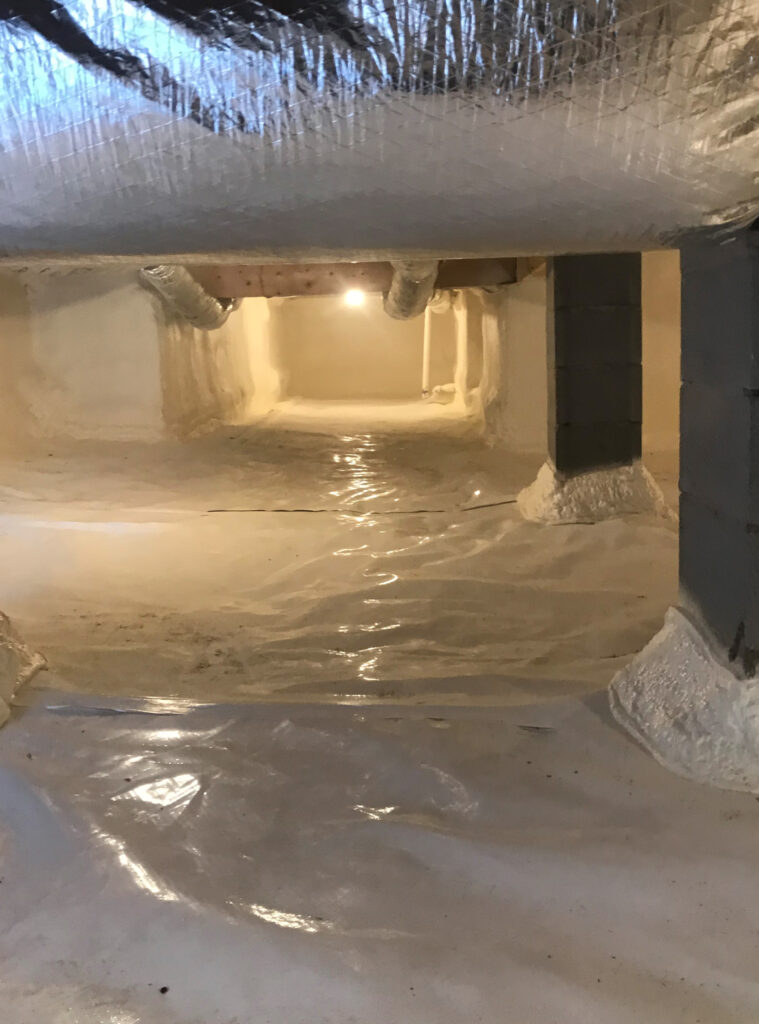
A complete sealed system — vapor barrier, air sealing, insulation, and drainage working together to turn your crawl space into a controlled, healthy part of your home’s foundation, not just a dirt-floor gap.

Vapor Barrier

A heavy-duty ground cover that blocks moisture from rising out of bare earth — the single biggest source of crawl space humidity, and the foundation every other fix depends on.

Waterproofing

Drainage, liners, and sump pumps for crawl spaces that take on standing water — with dehumidification sized in from the start to keep humidity under control afterward.

Insulation

Rigid foam board or spray foam on crawl space walls, paired with a vapor barrier, to cut energy bills and keep floors from feeling cold in winter.

What Causes Mold in a Crawl Space — And Why It Matters

Mold in a crawl space doesn’t stay in the crawl space. Here’s what typically causes it, and what it can mean for the rest of your home.

Common Causes

  • Ground moisture — often the biggest contributor, especially in crawl spaces with bare earth floors and no vapor barrier.
  • Poor drainage directing surface water toward the foundation instead of away from it.
  • Plumbing leaks running through the crawl space that go unnoticed for months.
  • High humidity exceeding 60% relative humidity, well above what building materials can tolerate long-term.
  • Inadequate ventilation that traps condensation instead of letting it escape.
  • Foundation cracks and gaps that let outside moisture and pests in.

Why It Matters for the Whole House

  • Up to 50% of a home’s indoor air can originate from the crawl space, carrying mold spores and musty odors up into living areas.
  • Mold exposure is linked to allergic reactions, respiratory issues, and eye, skin, or throat irritation.
  • Left untreated, mold and moisture damage floor joists, insulation, and other structural framing.
  • A musty smell upstairs is often the first sign of a crawl space problem, not a basement or HVAC issue.

Vents and Access, Done Right

Two smaller fixes that matter more than homeowners expect — both handled to code as part of any crawl space visit.

Ventilation & Vents

  • Repair, replacement, and strategic placement of vent covers so airflow actually reaches every part of the crawl space, not just the vents nearest the access door
  • Sized to the code-standard 1:150 ventilation ratio — 1 sq ft of vent area per 150 sq ft of crawl space floor
  • Helps maintain humidity below 50% and can address up to 15 gallons per day of moisture intrusion in a vented crawl space
  • If a vented crawl space keeps struggling with humidity, we’ll walk you through full encapsulation as the sealed alternative

Access Doors

  • Code-compliant replacement built to 2015 IRC requirements, with a minimum 18″ × 24″ opening
  • Insulated, weatherproofed doors that cut heating and cooling costs by 15-20% compared to an old, uninsulated door
  • Keeps water and pests out while keeping the crawl space easy to inspect and maintain
  • Often the fix that quietly undermines an otherwise well-sealed crawl space when it’s overlooked

Why Homeowners Choose Reed's Home Solutions

One Team for the Whole Foundation

A damp crawl space and a wet basement are often the same underlying moisture problem. If we find water intrusion or foundation movement while inspecting your crawl space, we’ll flag it; our team also handles basement waterproofing and foundation repair under one roof.

Proven by Results, Recognized for Excellence

Musty Smell, Standing Water, or Cold Floors?

Free, no-obligation crawl space inspections across Kentucky, Tennessee, Virginia & West Virginia — plus flexible financing to help make the fix more manageable.

Crawl Space Repair FAQs

A vapor barrier alone blocks ground moisture and is the right call for a crawl space that’s otherwise in decent shape. Full encapsulation adds air sealing, insulation, and often dehumidification on top of the barrier — the more complete fix for a crawl space with ongoing humidity, mold, or comfort problems. We’ll recommend the right scope during your free inspection.

Ground moisture rising through a bare earth floor is usually the biggest contributor, along with poor drainage, plumbing leaks, high humidity above 60%, inadequate ventilation, and foundation cracks that let outside moisture in. Because up to half of a home’s indoor air can originate from the crawl space, that mold doesn’t stay contained down there.

Often, yes. A vapor barrier blocks moisture rising from the ground, but it doesn’t control humidity already in the air from ventilation, plumbing, or seasonal conditions. Encapsulated crawl spaces in particular usually need a dehumidifier, since sealing the space also seals in whatever humidity is already there.

It depends on your climate and how the crawl space is currently performing. Traditional vents work by encouraging airflow, but in humid climates they can pull in more moisture than they remove. Encapsulation with mechanical dehumidification is often the better long-term fix in our region’s humid summers — we’ll assess your specific crawl space rather than defaulting to one approach.

Yes. An uninsulated, unsealed crawl space is a major source of heat loss in the rooms directly above it. Insulation combined with a sealed vapor barrier and proper air sealing typically makes the floors above noticeably warmer and reduces heating costs.

Yes. Crawl space work is rarely a planned expense, so we offer flexible financing options to help spread the cost over time. Ask about financing during your free estimate.

If your current access point isn’t sealed, insulated, or large enough to meet code (building code calls for a minimum 18″ x 24″ opening), it’s likely letting in the same moisture and pests your encapsulation or vapor barrier is designed to keep out. We can assess and replace it as part of a broader crawl space project or on its own.

Crawl Space Repair Across Kentucky, Tennessee, Virginia & West Virginia

Humid summers and clay-heavy soil push moisture into crawl spaces the same way across this whole region — our crews handle crawl space repair in every market we serve, not just our four main offices.

Kentucky: Beyond Lexington, we repair foundations in Georgetown, Nicholasville, Richmond, Versailles, Winchester, Danville, Frankfort, Paris, Somerset, Wilmore, Lawrenceburg, and Ashland.

Tennessee: Beyond Knoxville and Johnson City, we serve Bristol, Farragut, Maryville, Oak Ridge, Sevierville, Clinton, Greeneville, Jefferson City, Jonesborough, Kingsport, Morristown, Louisville, and Tusculum.

West Virginia: Beyond Charleston and Huntington, we reach Beckley, Cross Lanes, Morgantown, Parkersburg, Princeton, and Teays Valley.

Virginia: Beyond Roanoke, our Blue Ridge crews cover Blacksburg, Salem, Christiansburg, Bedford, Vinton, Daleville, Hollins, Cave Spring, Rocky Mount, Radford, Martinsville, Bluefield, Marion, Wytheville, Galax, Abingdon, Bristol, Big Stone Gap, Bland, and Merrimac.

Scroll to Top