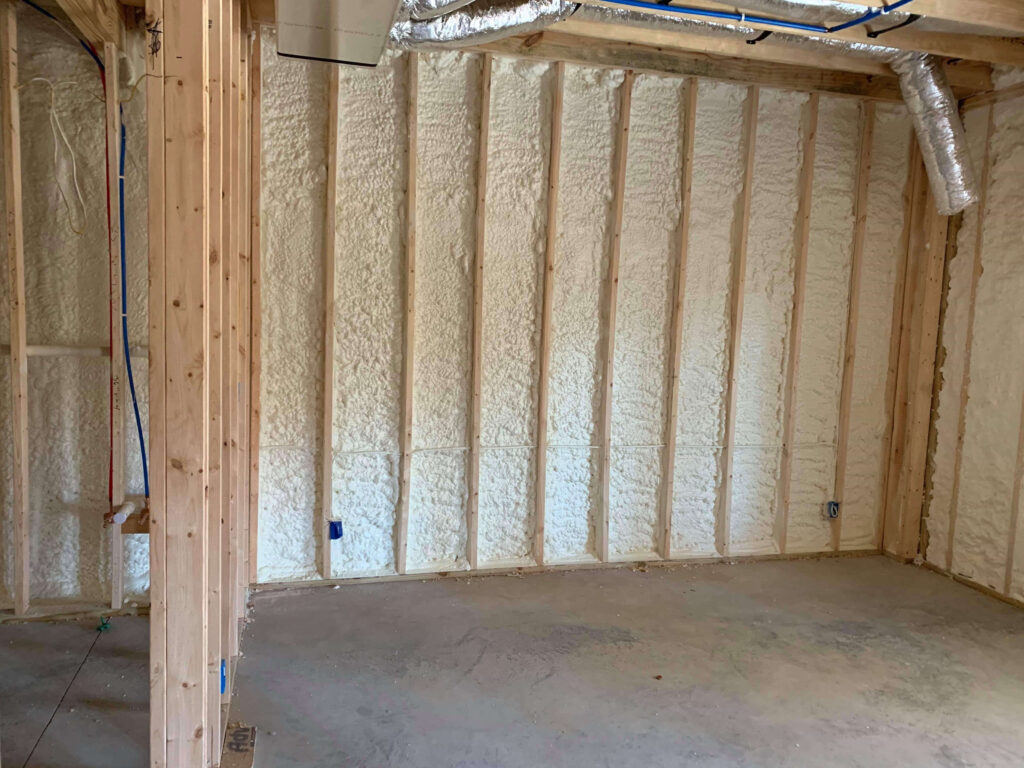
Basement Insulation in Lexington, KY
Basement Insulation Contractors in Lexington
A basement is part of your home’s envelope, whether it is finished or not. Uninsulated concrete or block walls let cold in during winter and let humid air settle in during summer, and the rim joist at the top of the wall leaks air all year. The effect shows up upstairs as cold floors, drafts at the baseboards and heating and cooling bills that run higher than they should.
Reed’s Home Solutions insulates basements throughout Lexington, KY and the surrounding Central Kentucky communities. We inspect the space first, check for moisture and the condition of the walls, and then recommend the insulation that fits, with an upfront price before any work begins.
In Lexington, a basement that is going to be insulated has to be dry first. That is why insulation and waterproofing so often go together, and why our team handles both.
Basement Wall and Rim Joist Insulation
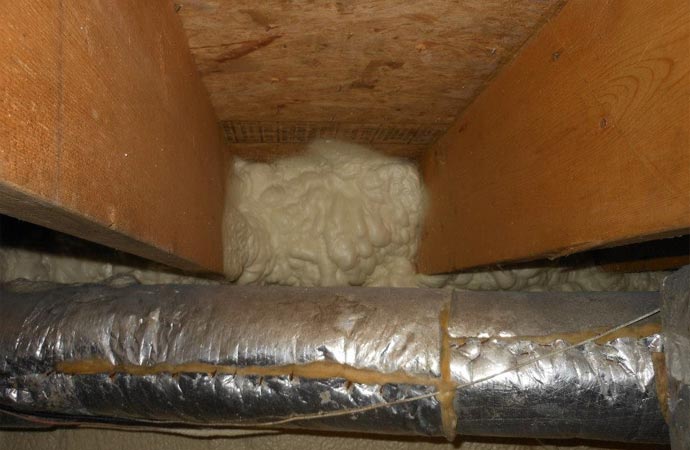
The rim joist, the band of framing that sits on top of your foundation wall, is one of the largest sources of air leakage in the entire house. It is full of small gaps where wood meets concrete and where wires, pipes and ducts pass through. Insulating and air-sealing it is one of the most effective things you can do in a basement.
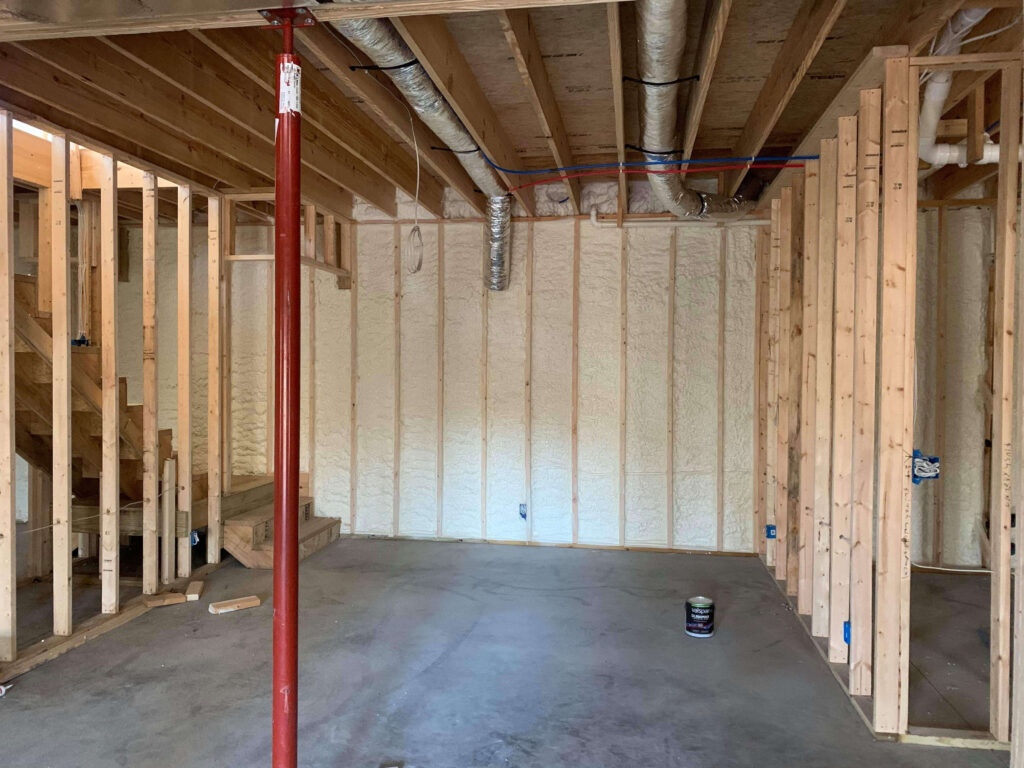
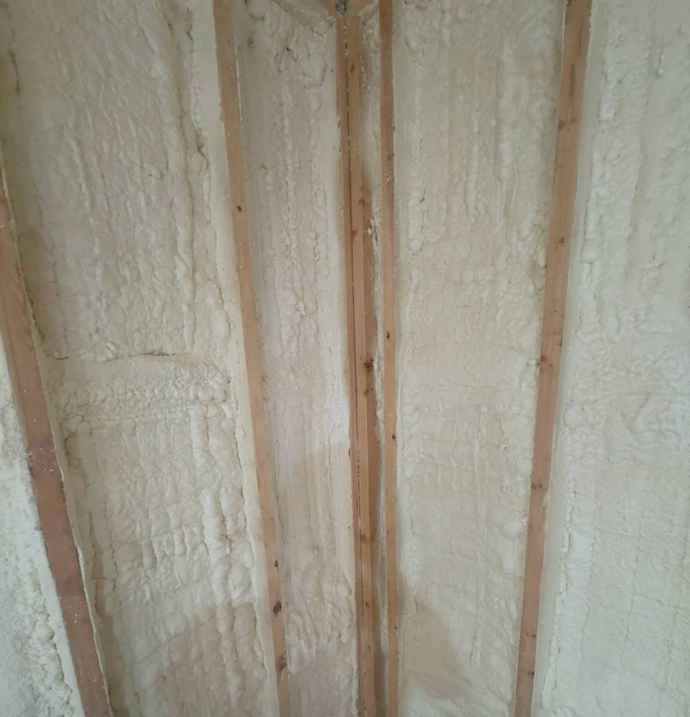
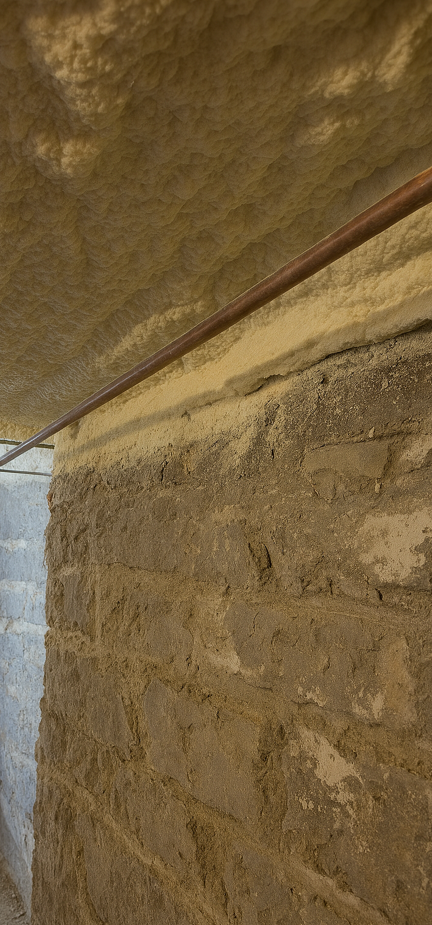
We use closed-cell spray foam on basement walls and rim joists. It expands to fill gaps and cracks, adds roughly R-6 to 7 per inch, does not absorb water and acts as a vapor barrier, all of which matter in a space that sits against the ground. Open-cell foam, at about R-3.5 to 3.6 per inch, can be a fit in some interior applications, and we will tell you which suits your space.
For finished basements, we can also add insulation to stud walls that already exist. Where cavities are closed, dense-packed blown-in insulation can fill them without tearing out the drywall.

Basement Insulation Options
Most basements are best served by spray foam, but there are good uses for every material depending on how your basement is built.
Spray Foam
Our recommendation for basement walls and rim joists. It air-seals and insulates in one pass, and closed-cell foam resists water and acts as a vapor barrier.
Blown-In
A good fit for closed, finished stud walls and ceiling cavities, where dense-packed insulation can fill the space without removing drywall.
Batt
A cost-effective choice for open framing in a basement ceiling or a new stud wall, as long as the space is dry.
Insulation and Waterproofing Work Best Together
Insulation put on a wet wall cannot do its job. If your basement has a history of leaks, seepage, efflorescence or musty odors, we recommend addressing the water first. Our team installs basement waterproofing in Lexington, and we can take care of the insulation in the same project.
Closed-cell spray foam helps in a damp basement because it does not absorb water, but it is not a substitute for waterproofing. Fix the source of the moisture, then insulate. That order gives you a basement that is both dry and comfortable.
If you see cracks in the foundation walls or notice sticking doors and uneven floors, we can also look at the structure. Reed’s handles foundation repair in Lexington in the same visit.
Basement Ceiling and Floor Insulation
If your basement is unfinished and you want to keep it that way, insulating the ceiling, which is the floor of the room above, can be a practical alternative to insulating the walls. Spray foam or blown-in insulation between the joists keeps the first floor warmer and reduces the cold coming up from below.
The same applies to a floor that sits over an unheated garage or a cold room. Insulation here keeps heat in the living space and helps cold floors feel more comfortable.
We will look at how your basement is used and recommend the approach that makes sense, whether that is the walls, the ceiling or both.
Signs Your Lexington Basement Needs Insulation
These are the most common signs we see in Lexington basements.
- Cold floors on the main level above the basement.
- Drafts near the rim joist and baseboards.
- High energy bills compared with similar homes.
- Musty odors or damp air in the basement.
- Condensation on pipes, walls or windows.
- Bare concrete or block walls, or old insulation that is stained or falling down.
How We Insulate Your Basement
Here is what to expect when Reed’s insulates your basement.
Inspection
We check the walls, rim joist and ceiling, look for moisture and structural issues and measure what is already there.
Prep
We clear the work area, protect the space and make any fixes that need to happen before insulation goes in.
Insulate and seal
We apply spray foam to the walls and rim joist, or install blown-in or batt insulation where that is the better fit.
Final walkthrough
We check the finished work, clean up and explain what we installed.
Benefits of Basement Insulation
An insulated basement improves the whole house.
- Warmer floors and fewer drafts on the main level.
- Lower energy bills. Insulation can lower heating and cooling costs by up to 15%.
- Less moisture and condensation in the basement.
- A more usable space you can finish, store things in or live in.
Why Lexington Basements Are Cold and Damp
A basement sits in the ground, and the ground stays cool. Concrete and block walls conduct that cold into the space, and Central Kentucky’s humid summers add moisture that condenses on cool surfaces. That is why an uninsulated basement can feel cold and clammy at the same time.
The cold does not stay in the basement. It travels up through the first floor, which is why floors above an uninsulated basement so often feel cold underfoot. Insulating the walls and the rim joist breaks that path and gives your heating and cooling system an easier job.
If you plan to finish your basement, insulating it first gives you a space that is comfortable to live in and that you will not have to open up again later.
Proven by Results, Recognized for Excellence
Get a Free Basement Insulation Estimate in Lexington
Our crews inspect your basement, explain what they find and give you an upfront price. If we find moisture or foundation concerns, we will tell you and show you how we can help.
Basement Insulation FAQs for Lexington Homeowners
What is the best insulation for a basement?
Closed-cell spray foam is our recommendation for basement walls and rim joists. It does not absorb water, acts as a vapor barrier and seals gaps and cracks in one step.
Do I need to waterproof my basement before insulating?
If your basement leaks or has persistent moisture, yes. Insulation works best on a dry surface, so we recommend fixing the source of the water first. Our team handles both.
Should I insulate the basement walls or the ceiling?
It depends on how you use the space. If you plan to finish or live in the basement, insulate the walls. If it is unfinished and you want to keep the first floor warmer, insulating the ceiling can be a practical choice. We will recommend one during your inspection.
Can you insulate a finished basement?
Often yes. Dense-packed blown-in insulation can fill closed cavities through small access holes without removing the drywall, and we will tell you whether that fits your walls.
Will basement insulation lower my energy bills?
It can. Sealing and insulating the rim joist and walls reduces the cold air entering your home, and insulation can lower heating and cooling costs by up to 15%.
How long does basement insulation take?
It depends on the size of the basement and the prep needed. We give you a timeline with your estimate.
Do you offer financing?
Yes. We offer flexible financing options. Ask about them during your free estimate, or see our financing page.
Should I insulate before finishing my basement?
Yes. Insulating before you frame and drywall gives you a more comfortable finished space and avoids opening walls later.
Does basement insulation help with condensation?
It can. Insulating cold concrete and block walls reduces the cool surfaces where humid air condenses. If your basement leaks, we recommend fixing that first.
Areas We Serve
Reed’s Home Solutions insulates basements in Lexington and throughout Central Kentucky.