Basement & Foundation Crack Repair in Lexington, KY
Basement Crack Repair for Lexington Homes
A crack in a basement wall or floor is one of the most common reasons Lexington homeowners call us, and it is also one of the most misunderstood. Some cracks only let water seep through after a hard rain. Others are the visible sign that a wall is being pushed, pulled or settled out of position. Basement and foundation crack repair starts with telling those two apart, because the fix for one is the wrong fix for the other.
Reed’s Home Solutions repairs leaking and structural cracks in basements across Lexington, KY and Central Kentucky. Our crews work out of our Versailles office, and every job begins with a free, no-obligation inspection. We look at the crack, the wall around it and the way water is reaching it, then tell you plainly what is going on and what we recommend.
If your crack is part of a bigger wet basement problem, we handle that too. Our basement waterproofing in Lexington covers drainage, sump pumps and dehumidifiers, so you do not need a separate contractor for each piece.

Two Kinds of Foundation Crack Repair
Leaking cracks and structural cracks call for different materials and different methods. We diagnose first, then repair the one you actually have.
Leaking Crack Repair
We inject polyurethane foam into the crack from the inside. It expands to fill the gap and cures into a flexible waterproof seal that moves with the wall instead of cracking again. When the crack also needs strength, we use epoxy resin injection to bond the concrete back together. The work is done from inside the basement with no excavation, and it is typically finished in a few hours, not days.
Structural Crack Repair
Structural cracks start with a foundation assessment and crack analysis. We bond the crack with epoxy injection, add carbon fiber reinforcement to stabilize walls under stress, and inject grout to fill voids behind the wall. When settlement is driving the cracking, underpinning or stabilization addresses the cause. Larger problems may call for full foundation repair.
Why Basement and Foundation Walls Crack in Lexington, KY
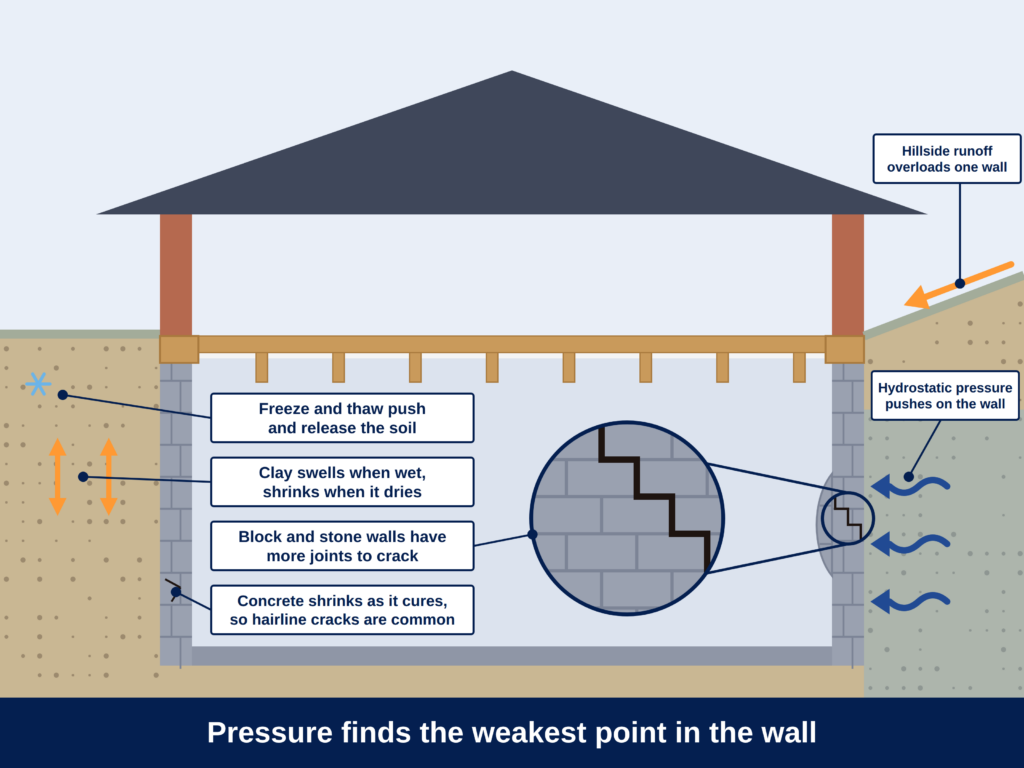
Concrete cracks. Even a perfectly poured wall shrinks as it cures, and a hairline crack is common in homes of any age. What matters is what happens next. In Central Kentucky, the ground around a foundation goes through a lot. Spring storms soak the soil, summer humidity keeps it damp, and winter freezes push and release it again and again. Lexington sits on limestone bedrock, and heavy clay sits on top of it. Clay swells when it is wet and shrinks when it dries, which puts uneven pressure on basement walls.
That pressure is called hydrostatic pressure when it comes from water, and it is the reason many cracks leak. Water that cannot drain away builds up against the wall and finds the weakest point. Older Fayette County neighborhoods add another factor. Many homes here were built with block or stone foundations, which have more joints and more places to crack than a poured wall.
Hillside lots add one more risk. Water running downhill toward a house can overload the soil on one side, so a single wall may crack or bow while the others stay sound.
Signs You Need Basement Leak and Crack Repair
Call for an inspection if you notice any of these. You do not have to wait for a puddle.
- Seepage after rain. Even a thin line of moisture along a crack means water is getting through, and the opening usually gets bigger over time.
- A wall bowing inward near a crack. This points to pressure from outside and needs a structural look, not just a seal.
- A musty smell or mold near the crack. Moisture is reaching the surface even when you cannot see water.
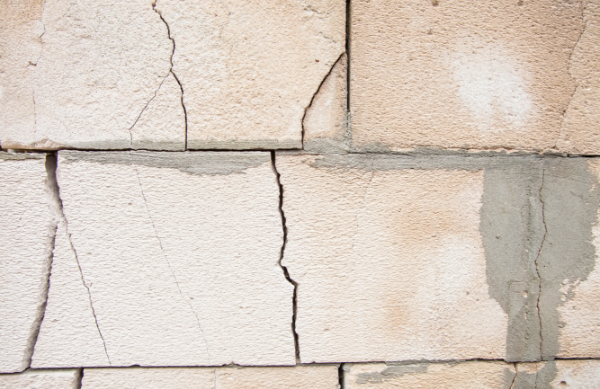
- Stair-step cracks in block or brick. Cracking that follows the mortar joints in a stepped pattern is a common sign of settlement.
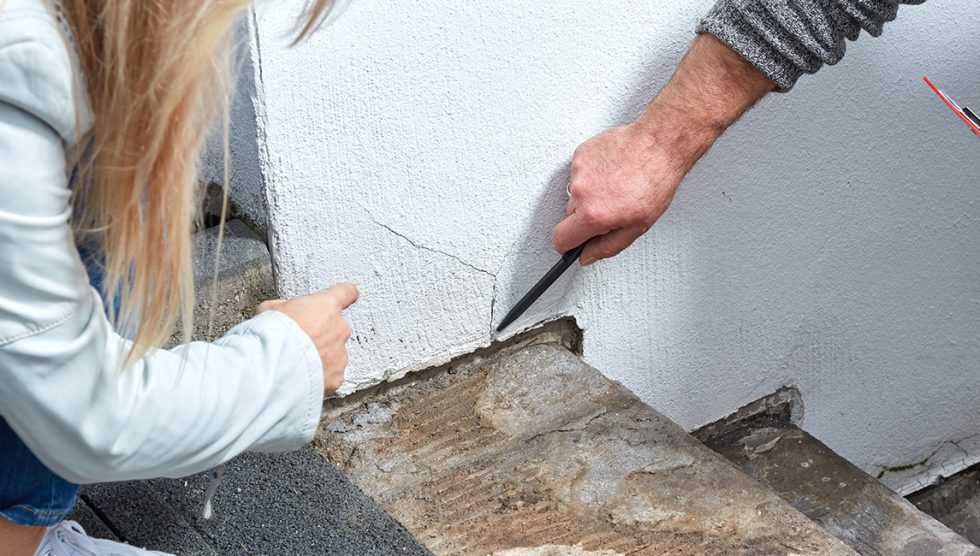
- A crack that keeps widening. A crack you can mark with a pencil and watch grow is not a cosmetic issue.
- A patched crack that reopened. Surface patching and hardware-store sealants rarely hold, because they do not fill the full depth of the crack.
Not sure what you are looking at? Photos help, but an in-person inspection is free, so there is no cost to have us look.
Leaking Crack or Structural Crack? How to Tell the Difference
This is a rough guide for homeowners. We confirm the diagnosis in person before recommending any repair.
Leaking crack
Structural crack
Typical pattern
Leaking crack
Hairline or vertical crack, often in a poured wall or floor
Structural crack
Stair-step, horizontal or diagonal crack that grows wider over time
Wall condition
Leaking crack
Wall is straight and in place
Structural crack
Wall may bow, lean or shift
Main concern
Leaking crack
Water and moisture getting in
Structural crack
Strength and movement of the foundation
Usual repair
Leaking crack
Polyurethane or epoxy injection
Structural crack
Epoxy injection, carbon fiber reinforcement, stabilization
Where it is done
Leaking crack
From inside the basement
Structural crack
Usually from inside, with excavation only if the cause requires it
What Happens During Your Crack Repair
Here is how a crack repair visit goes, from first look to finished wall.
Inspection and diagnosis
We trace the crack along its full length, check the wall for movement, look at the floor joint and the drainage outside, and decide whether it is a leak, a structural problem or both. You get a straight answer and an estimate at no charge, and the schedule is set out in the estimate.
Injection and reinforcement
Ports are set along the crack and polyurethane or epoxy is injected under pressure, working from the inside out so the material fills the crack through the full thickness of the wall. Structural cracks also receive carbon fiber straps that hold the wall in place. Most of this work happens from inside, without digging up your yard.
Cleanup and follow-up
Ports are removed, the surface is finished and the area is cleaned up. We explain what to watch for over the next few rainstorms and who to call if anything changes.
Why Crack Injection Instead of Excavation?
Digging out a foundation wall to patch a crack from the outside is slow, expensive and hard on a yard. In Lexington, you may be digging through clay and rock, and you may be working around driveways, porches, utility lines and landscaping. For most cracks, injection reaches the same goal from the inside. The material fills the crack through the full wall thickness, so it seals where the water actually enters.
That is why injection is usually quicker and less disruptive: no trench, no heavy equipment in the yard and no landscaping to rebuild. The repair is typically finished in a few hours, not days.
Excavation still has a place. If the real problem is a failed exterior membrane or a broken footing drain, repairing the outside may be the better answer, and we will say so. Our exterior waterproofing page explains when that makes sense.
What Crack Repair Pairs With
Sealing a crack stops water at one spot but does not lower the groundwater pressing on the rest of the wall. That is why we often pair crack repair with drainage.
A French drain or interior drain tile system relieves the pressure that opened the crack to begin with. A sump pump carries collected water away from the house. If settlement or bowing is behind the cracking, foundation repair deals with the structure itself.
Once the basement is dry, you can finish or insulate it with confidence. Our basement insulation in Lexington is best installed after leaks and cracks are repaired, so the insulation stays dry and does its job.
How Much Does Foundation Crack Repair Cost in Lexington?
There is no single price for crack repair, because no two cracks are alike. The factors that move the price are the length and number of cracks, whether the crack is leaking or structural, which material is needed, how easy the crack is to reach and whether the wall needs reinforcement. A short leaking crack in an open wall is a very different job from a long structural crack behind a finished basement.
Cause matters too. If water pressure or settlement created the crack, the estimate will also reflect any drainage or stabilization we recommend, so you see the full picture up front.
The way to get a real number is a free inspection. We look at the crack in person and give you a written estimate, and flexible financing is available if you would like to spread the cost out.
Cracks, Seepage or Damp Walls in Your Lexington Basement?
Request a free, no-obligation inspection and estimate. We will find out whether your crack is a leak, a structural issue or both, and explain the repair before you decide anything.
Proven by Results, Recognized for Excellence
Basement Crack Repair FAQs for Lexington Homeowners
Should I use polyurethane or epoxy to repair a basement crack?
It depends on what the crack needs. Polyurethane foam expands and cures flexible, which makes it the right choice for stopping water in a crack that may still move a little. Epoxy cures rigid and bonds the concrete back together, so it suits cracks where strength matters. We choose after we inspect.
Do you have to dig up my yard to fix a crack?
Usually not. Most leaking and structural cracks are repaired by injection from inside the basement. Excavation is only recommended when the cause is outside, such as a failed membrane or drain, and we will show you why.
How do I know if my crack is structural?
Warning signs include stair-step cracks in block, a wall that bows or leans, a crack that keeps getting wider. A thin vertical crack in a straight wall is often just a leak, and a free inspection will settle it.
Will the crack come back after repair?
A properly injected crack is sealed through the full thickness of the wall, so it holds up far better than a surface patch. If the wall keeps moving because of water pressure or settlement, a new crack can form elsewhere, which is why we address the cause as well as the crack.
Is it safe to leave a small crack alone?
Some hairline cracks never leak and can be watched. But cracks do not heal on their own, and a small one that seeps after rain tends to widen. Mark the ends with a dated pencil line and call us if it grows or leaks.
Does crack repair come with a warranty?
Our workmanship is warrantied. We explain the coverage that applies to your repair in your estimate, so you know what is included before you sign anything.
How much does basement crack repair cost in Lexington?
The price depends on how many cracks you have, whether they leak or are structural, the method needed and how accessible the wall is. We do not guess over the phone. A free inspection gets you a written estimate, and we can talk through financing if you want it.
Can crack repair fix a wall that is already bowing?
Injection alone will not straighten a bowed wall. Bowing is a structural condition, and we look at carbon fiber reinforcement or wall stabilization, sometimes combined with drainage to relieve the pressure. We will tell you honestly if a wall needs more than a crack repair.
Will crack repair get rid of the musty smell in my basement?
It removes one source of moisture, and the smell often improves. If the odor persists, there may be other moisture or mold involved, so we may suggest a whole-home dehumidifier or a look from our mold remediation team.
Areas We Serve
Reed’s Home Solutions repairs basement and foundation cracks in Lexington and throughout Central Kentucky.