Crawl Space Waterproofing in Lexington, KY
Crawl Space Waterproofing Contractors in Lexington, KY
Crawl space waterproofing in Lexington, KY is for the crawl space with an active water problem: standing water after a storm, soil that never dries, or water seeping through a block wall. A vapor barrier alone cannot handle that. Liquid water needs a way out, and the moisture left in the air needs to be dried.
Reed’s Home Solutions designs a complete system for each wet crawl space: drainage that moves water to a sump, a heavy polyethylene liner and a crawl space dehumidifier. If your basement has the same trouble, the same crew can look at basement waterproofing in Lexington during one visit.
Every project starts with a free, no-obligation inspection and a written estimate.

Why Lexington Crawl Spaces Take On Water
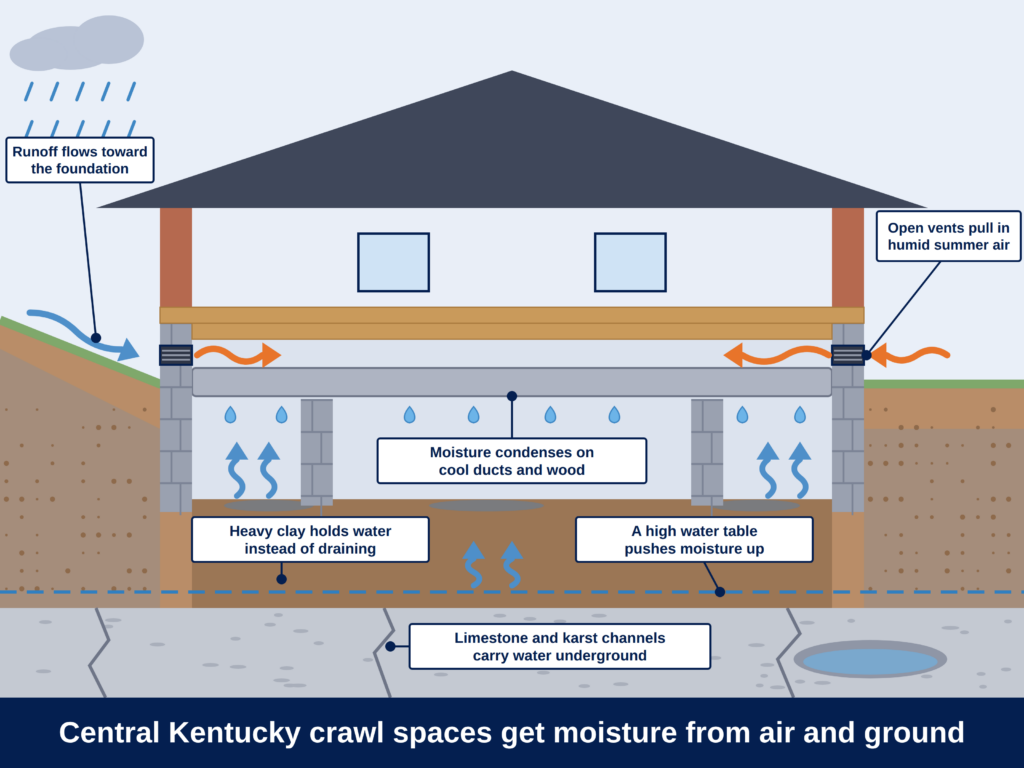
Central Kentucky sits on limestone bedrock with clay soil on top. Clay holds water instead of draining it, and limestone can carry groundwater through cracks, so the ground around a house can stay saturated for days after a heavy spring rain. Many Lexington homes also have block or stone foundations and piers, which pass moisture easily.
On hillside lots and in older neighborhoods, water runs toward the low side of the house, and a crawl space there becomes the collection point. Humid summers keep it damp well into fall.
Gutters that dump at the foundation and grading that slopes toward the house make it worse, so we check the yard and downspouts during your inspection too.
What's Included in Crawl Space Waterproofing in Lexington
Each system moves water out, then keeps the space dry.
Managing the Water
Crawl space drainage collects water along the footing or walls and sends it to a crawl space sump pump, which pushes it away from the house. In the wettest spots we use a 30-mil barrier for extra toughness.
The Liner System
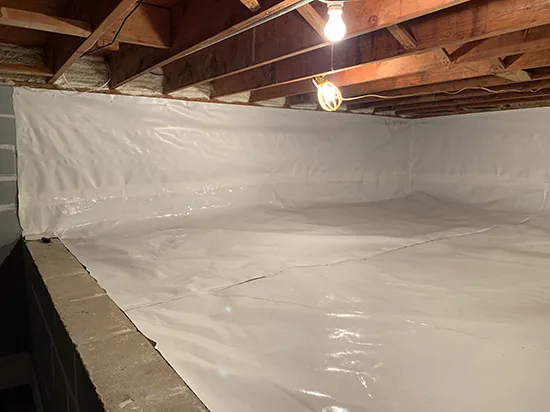
The liner is 12-mil, 3-ply polyethylene with an antimicrobial finish. It covers the floor and runs up the walls and piers, with seams and penetrations sealed. The finish helps keep crawl space mold off the surface.
How We Waterproof a Wet Crawl Space in Lexington, KY
Your estimate sets out the schedule. The work follows this order.
Inspect and trace the water
We check where water enters, the vents, the access door, the rim joist and any plumbing leaks.
Clear and prepare the space
Debris, torn plastic and wet or failed material come out.
Install the drainage
Drainage goes in where water collects and slopes toward the sump.
Set the sump pump
A pump goes in at the low point, with a discharge line away from your foundation.
Lay and seal the liner
The liner covers the floor and walls, and seams are sealed.
Add the dehumidifier and test
We mount the unit, connect its drain and show you how it works.
Signs You Need Crawl Space Waterproofing in Lexington, KY
Warning signs show up under the house and inside it.
What You Might Notice
Standing water in crawl space after rain, muddy soil, water stains on walls, a musty smell, cold floors, sagging floors, wood rot, visible mold, pests, or a sump pump that never stops.
Why It's Different From a Vapor Barrier
A vapor barrier slows moisture rising from soil as vapor. It is not built for liquid water. If water pools around piers, plastic on the dirt traps it. Waterproofing adds drainage and a pump so water has somewhere to go.
Crawl Space Waterproofing vs. Vapor Barrier vs. Encapsulation
Here is how the three differ. Your inspection shows which one fits.
Vapor barrier
Waterproofing
Encapsulation
Main job
Vapor barrier
Blocks moisture vapor from the soil
Waterproofing
Removes and manages liquid water
Encapsulation
Seals the space from ground and outside air
Material
Vapor barrier
10-20 mil reinforced polyethylene
Waterproofing
12-mil, 3-ply liner, 30-mil in high-moisture spots
Encapsulation
30-mil polyethylene on floor and walls
Drainage and sump
Vapor barrier
Not included
Waterproofing
Built in
Encapsulation
Added where needed
Dehumidifier
Vapor barrier
Not included
Waterproofing
Built in
Encapsulation
Included
Best when
Vapor barrier
Soil is damp but no water collects
Waterproofing
Water stands, seeps or flows
Encapsulation
You want a sealed, conditioned space
Why Crawl Space Waterproofing Matters for Your Lexington Home
- It protects the structure. Constant moisture feeds wood rot and sagging floors.
- It stops mold at the source. Mold needs moisture.
- It cleans up your air. Air from below drifts upstairs with its musty smell.
- It discourages pests. Insects and rodents like damp spaces.
- It helps comfort. Many homeowners see warmer floors and lower energy use, depending on the home.
- It protects ductwork and stored items. They last longer out of the wet.
Fix the Water First
Other upgrades only last if the water is controlled, so drainage and the sump come first. After that, consider full crawl space encapsulation or crawl space insulation.
What Affects the Cost of Crawl Space Waterproofing in Lexington?
Crawl space waterproofing cost comes down to a few factors.
- Size of the crawl space. More area means more liner and a larger dehumidifier.
- How much water you have. A damp corner needs less than a flooded floor.
- Drainage length and layout. More footing to cover means more drainage.
- Sump pump needs. One pit or several, and how far the discharge runs.
- Access and site conditions. Tight entries and low clearance take more labor.
- Existing damage. Rotted framing or mold may need foundation repair or mold remediation alongside the waterproofing.
The free inspection ends with a written price. Monthly payment options are on our financing page.
Standing Water in Your Crawl Space? What to Do Right Now
Start with safety. If water reaches wiring, a furnace or a water heater, stay out and call an electrician first.
Clear gutters and point downspouts away from the foundation. Photograph the water and where it enters. Do not lay plastic over standing water, because it hides the problem and holds the moisture in.
Then call our Central Kentucky office in Versailles at (877) 353-8081 or request an inspection online.
Crawl Space Dehumidifier, Built Into the System
Drainage removes visible water. The dehumidifier handles moisture in the air.
How It's Sized
We size the unit at about 10 pints of moisture removal per 500 sq ft. It mounts at least 6 in. above the ground, within about 9.2 ft of a grounded outlet, and drains to a condensate line or the sump.
What It Delivers
Once drainage is working, the dehumidifier holds the crawl space at 30-50% relative humidity, dry enough to discourage mold and rot through humid Kentucky summers.
Pairing Waterproofing With Other Lexington Crawl Space Repair
Waterproofing is often step one of a larger crawl space repair.
Full Encapsulation
For a sealed space with closed vents, waterproofing comes first.
Structural Repair
Water can undermine piers and joists. We check for damage.
Insulation
A dry space can be insulated to warm cold floors.
One Team for Water, Above and Below in Lexington
A wet basement wall and a wet crawl space often share one cause, and fixing only one can send water to the other. So we inspect both in one visit.
Reed’s handles crawl space repair, basement waterproofing and foundation repair with one team, so you get one plan.
Our crews work from Versailles and serve Lexington, Fayette County and nearby towns. Every estimate is free.
Proven by Results, Recognized for Excellence
Standing Water in Your Crawl Space?
Tell us what you are seeing and we will inspect it for free, explain your options in plain language and put the price in writing. Ask about financing when we visit.
Crawl Space Waterproofing FAQs for Lexington Homeowners
What is the difference between crawl space waterproofing and a vapor barrier?
A vapor barrier stops moisture vapor rising from the soil. Waterproofing handles liquid water with drainage, a sump pump, a liner and a dehumidifier. If water stands or seeps in, you need waterproofing. If the soil is only damp, a vapor barrier may be enough.
Do I need a sump pump in my crawl space?
If water collects or the water table rises after storms, a crawl space sump pump is usually part of the fix. It gives drainage somewhere to send the water. After inspecting, we tell you whether your space needs one.
What is the 12-mil liner?
It is a 12-mil, 3-ply polyethylene liner with an antimicrobial finish. It covers the floor, runs up walls and piers, and has sealed seams. In high-moisture areas we step up to a 30-mil barrier.
How much does crawl space waterproofing cost in Lexington?
It depends on the size of the space, how much water you have, how much drainage and how many pumps it needs, and how easy the crawl space is to reach. We give you a written price after the free inspection.
Will waterproofing my crawl space lower my energy bills?
Many homeowners see lower energy use after fixing a wet crawl space, but it depends on the home. A dry crawl space also tends to mean warmer floors and less strain on your HVAC system.
Should my crawl space and basement be waterproofed together?
If you have both and both are wet, yes. They often share a water source, so inspecting them together prevents one fix from pushing water toward the other. Learn more about basement waterproofing.
Is the dehumidifier included, or is it a separate purchase?
It is built into the system. We size it for your crawl space, mount it above the ground and connect it to a drain, so it works as part of the whole design.
Can you remove crawl space mold during waterproofing?
Waterproofing removes the moisture that mold needs, but existing growth is a separate job. If we find active mold during the inspection, we will discuss mold remediation as part of your plan.
What if I want a sealed crawl space instead?
Waterproofing and sealing work together. After the water is under control, we can add full encapsulation with closed vents and a 30-mil barrier. Our inspector explains encapsulation vs vapor barrier and waterproofing so you pick the right scope.
Areas We Serve
Reed’s Home Solutions installs crawl space waterproofing in Lexington and throughout Central Kentucky.