
Lexington, KY homeowners deal with one of the most demanding climates for home insulation in the region. A trusted Lexington insulation company understands how superheated summers and freezing winters put your home’s thermal envelope under constant pressure — and HVAC systems already account for roughly 50% of your home’s total energy use. When insulation starts failing, your heating and cooling system works harder, monthly bills climb, and temperature swings between rooms become impossible to ignore.
Lexington’s humid subtropical climate is especially tough on attic insulation. Moisture, heat, and cold each take their toll on insulation materials throughout the year, reducing performance when you need it most. The result is higher energy costs and a home that never quite feels comfortable, no matter how often you adjust the thermostat.
Improving insulation can cut your heating and cooling costs by up to 20%. Reed’s Home Solutions helps Central Kentucky homeowners identify where insulation is failing and find the right solutions to fix it. Knowing how our local climate affects insulation performance is the first step toward lower energy bills and a more comfortable home year-round.
How Lexington’s Climate Challenges Your Home’s Thermal Envelope
Understanding Humid Subtropical Climate Effects
Lexington’s humid subtropical climate creates a double burden for attic insulation. Hot, humid summers combine with wet, cold winters to challenge your home’s ability to maintain comfortable temperatures throughout the year. Your insulation faces moisture from both outdoor humidity and indoor condensation — and that moisture does real damage.
Humidity directly reduces insulation performance by changing how heat moves through building materials. Research shows that thermal conductivity of insulation materials increases significantly as moisture content rises. Fiberglass and mineral wool insulation, both common in Central Kentucky homes, experience noticeable increases in heat transfer at higher humidity levels. When moisture replaces the air trapped inside insulation, heat moves more easily through the material instead of being slowed down.
The problem gets worse during certain times of year. March and April bring extended wet weather, when indoor relative humidity can exceed 85% or even reach 90%. During winter’s coldest stretch — mid-January through mid-February — indoor humidity in poorly insulated homes averages 86.1% while temperatures drop to around 9.3°C. At those levels, insulation that looked fine during installation is no longer doing its job.
The Stack Effect in Kentucky Homes
Your home breathes — and not always in the way you want it to. Warm air rises and escapes through attic openings while cold air enters at the foundation level, creating pressure differentials that pull conditioned air out of your living space. This is called the stack effect, and it works against your heating and cooling system all year.
Winter conditions generate the strongest stack effect pressure — approximately 4 pascals per story of height, compared to only 1.5 pascals per story in summer. As heated air exits through attic leaks, negative pressure pulls outside air in through rim joists, sill plates, and foundation gaps. Your furnace heats that incoming cold air, it rises, and the cycle starts over.
The impact on energy use adds up fast:
- Leaky buildings lose tremendous amounts of conditioned air through continuous air exchange
- Cold air entering at lower levels makes downstairs rooms uncomfortable, prompting thermostat adjustments
- During summer, hot outdoor air pushes cooler conditioned air downward and out through basement cracks
Temperature Differentials Between Seasons
Lexington’s seasonal swings create some of the most demanding conditions insulation has to handle. Summer cooling loads increase 40-60% with inadequate attic barriers, and winter heating demands follow a similar pattern. Dark roof surfaces can reach 150°F during summer, pushing mean temperatures inside roof assemblies to around 110°F.
Air sealing and insulation professionals in Central Kentucky must account for these wide temperature extremes. Without addressing both ends of the seasonal range, indoor comfort suffers no matter how efficient your HVAC system is.
Summer Heat and Humidity Impact on Attic Insulation
Superheated Attic Temperatures in July and August
Lexington attics turn into radiant ovens during July and August. A properly ventilated attic should run only 10-20 degrees warmer than outdoor air. On a 95°F afternoon, that puts a healthy attic somewhere between 115°F and 135°F. Homes with blocked vents or poor airflow push that number to 150°F or 160°F — and dark asphalt shingles hold heat all day long, keeping temperatures elevated well into the evening. That kind of heat radiates downward, making second floors 10-15 degrees warmer than the rest of your home.
Moisture Threat to Fiberglass Insulation
Humidity is one of the biggest threats to fiberglass insulation performance. Water fills the tiny air pockets that give insulation its thermal resistance, turning the material into a conductor rather than a barrier. A 1.5% increase in moisture content alone can reduce R-value by up to 50%. Fiberglass performs poorly once wall cavity humidity climbs above 30%. When heat and moisture work their way through your roof and insulation fails to stop them, they seep directly into your living spaces. Damp insulation also creates ideal conditions for mold and mildew growth, bringing musty odors and respiratory irritation along with it.
How Poor Insulation Drives Up Summer Energy Bills
Neglected Lexington attic insulation costs money every single month. Here is what the numbers look like:
- Heating and cooling savings — Adding insulation and sealing air leaks reduces heating and cooling costs by an average of 15%.
- Cooling cost reduction — Proper attic insulation can bring cooling costs down by up to 20%.
- Annual savings — Upgrading attic insulation can shave 10 to 20 percent off heating and cooling costs, saving $200 to $400 each year.
Homes with substandard insulation simply require more energy to hold indoor temperatures steady. That expense adds up fast during a Central Kentucky summer.
Air Conditioning Strain and System Overwork
Poor insulation keeps air conditioning systems running nonstop. When heat radiates into living spaces from above, your cooling system runs longer and uses more electricity just to keep up. That constant strain makes breakdowns and surprise repair bills far more likely. Overworked systems may need full replacement years earlier than expected — and a full HVAC replacement runs between $5,000 and $12,000. Protecting your attic insulation is one of the most straightforward ways to protect your cooling system and avoid that expense.
Winter Freeze and Ice Dam Formation
Thermal Bridging Through Unsealed Attic Floors
Winter has a way of exposing exactly where your insulation falls short. Heat escapes from living spaces through unsealed penetrations in your attic floor — light fixtures, plumbing vents, and electrical outlets are common culprits. That warm air flows up into the attic and warms the roof deck from below.
The result shows up right on your roof. Snow melts in uneven stripes across roof surfaces while other areas stay snow-covered. Those patterns are not random. They signal that your attic insulation is not properly connected, leaving gaps where air moves freely around insulation barriers. If you see this happening on your roof during winter, it is a clear sign that heat is escaping where it should not be.
The Ice Dam Cycle and Roof Damage Risk
Ice dams are one of the most damaging — and preventable — winter problems for Lexington homeowners.
Here is how the cycle works: heat loss from your living space warms the upper sections of your roof above 32°F while the eaves stay below freezing. Snow melts on the warmer upper roof and flows downward until it hits those cold eaves, where it refreezes. After several rounds of melting and refreezing, ice builds into a dam that blocks proper drainage off the roof.
Water then pools behind that ice barrier and works its way under shingles. Eventually, it enters your attic and damages ceilings, walls, and the insulation itself. Proper attic insulation in Lexington should maintain a minimum of R-30, though R-38 is preferable for preventing ice dams during Central Kentucky’s coldest stretches. Air sealing needs to be part of that solution as well — addressing both conduction and convection heat loss is what stops the cycle from repeating.
Drafts and Cold Spots During Central Kentucky Freezes
Cold spots and drafts during winter are not just uncomfortable. They are a direct sign that your insulation is not doing its job.
Cold air infiltrates through inadequately insulated areas, and your heating system works harder to compensate. Heat rises and escapes through improperly insulated ceilings, leaving lower floors noticeably colder than the rest of the house. Upstairs rooms may feel stuffy from trapped heat while downstairs stays cold — a clear sign that your thermal barrier has been compromised.
These temperature swings push your HVAC system to run longer and consume more energy during the months when your bills are already highest. Addressing insulation gaps before winter’s coldest stretches is the most effective way to keep your home comfortable and your energy costs under control.
Signs Your Insulation Is Failing and How to Fix It
Knowing when insulation is failing makes all the difference. These are the warning signs Central Kentucky homeowners should watch for — and what to do about them.
High Utility Bills During Peak Summer and Winter Months
Compare your energy bills to the same months from previous years. A 15-20% increase without rate hikes or significant usage changes points to inadequate insulation. When insulation fails, your HVAC system runs almost continuously because heated or cooled air escapes as fast as it’s generated. Heating and cooling already account for nearly half of your home’s total energy use — when insulation degrades, that number climbs fast during peak months.
Uneven Temperatures Between Upper and Lower Levels
Two-story homes with insulation problems commonly see temperature differences of 8 to 10 degrees between floors. Upper levels trap warm air during summer while lower areas stay cooler. If one bedroom feels stuffy while another stays comfortable, your thermal barrier has gaps. This usually comes down to uneven coverage or settled insulation that has lost material thickness over time.
Musty Attic Odors or Visible Moisture Damage
A musty smell coming from your attic is a serious warning sign. It typically points to moisture problems and potential mold growth. When warm, moist air meets cold surfaces in a poorly insulated attic, condensation forms. Wet insulation feels heavy, looks matted or compressed, and loses its ability to resist heat transfer. Water is the enemy of insulation performance — and damp insulation becomes a breeding ground for mold that can spread through your ventilation system.
Why R-Value Matters in Central Kentucky
Not all insulation is equal, and R-value is the number that tells you how well it actually works. The Department of Energy recommends R-38 to R-60 for attics, depending on climate zone. Higher R-values deliver better temperature control and lower energy bills year-round. For Lexington’s climate specifically, proper R-value selection has to account for both extreme summer heat and hard winter freezes. Most floors in this region need R-25 to R-30.
Air Sealing Before Insulation Upgrades
Air sealing should always come before adding new insulation. Hidden leaks around plumbing vents, electrical wires, attic hatches, and recessed lights allow conditioned air to escape regardless of how much insulation sits above them. ENERGY STAR data shows homeowners save an average of 15% on heating and cooling costs when they combine air sealing with attic insulation upgrades. Air leakage directly undermines insulation performance, which is why our team addresses sealing first.
Spray Foam vs. Fiberglass: Which Is Right for Your Home?
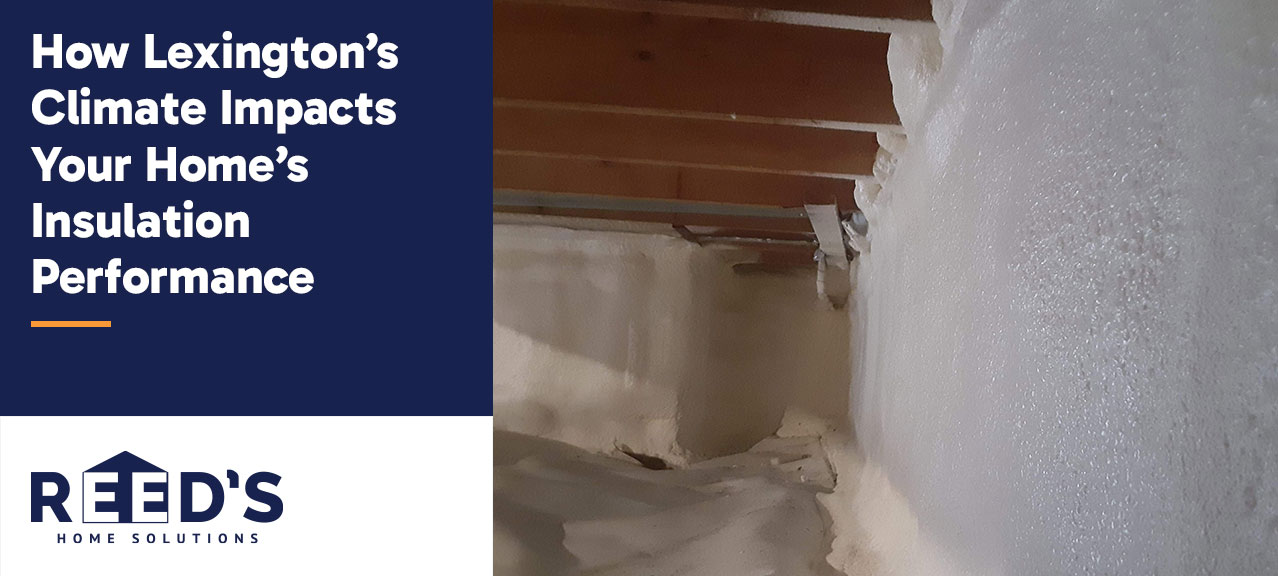
- Spray Foam Insulation: Delivers R-6.5 to R-7 per inch, and closed-cell spray foam creates an airtight seal that stops drafts at the source. Higher upfront cost, but it reduces heating and cooling bills long-term.
- Fiberglass Insulation: Costs USD 0.30 to USD 1.50 per square foot and provides R-2.2 to R-3.2 per inch. A budget-friendly option, but it does not prevent air leakage on its own.
At Reed’s Home Solutions, we evaluate your home’s construction, existing insulation levels, energy usage, and budget to recommend the best solution. Whether you choose Lexington spray foam insulation for maximum performance or Lexington fiberglass batt insulation for cost effective thermal protection, upgrading your insulation can improve comfort, reduce HVAC strain and lower monthly utility bills.
Contact Reed’s Home Solutions for a Free Insulation Estimate
Lexington’s climate doesn’t give your home’s insulation a break. Humid summers, freezing winters, and moisture year-round all chip away at your thermal envelope — and the longer failing insulation goes unaddressed, the more it costs you in energy bills, comfort, and potential damage.
There is simply no reason to keep paying for a home that won’t stay comfortable. Properly air-sealed insulation with the right R-value for Central Kentucky conditions makes a real difference, season after season.
Reed’s Home Solutions is here to help. We inspect your home, identify where insulation is failing, and recommend the right solutions for your specific situation — whether that’s spray foam, fiberglass, air sealing, or a combination of all three. Contact us today for a free estimate and take the first step toward lower energy bills and a more comfortable home.