Welcome to Reed’s Home Solutions

RESIDENTIAL SERVICES · CHARLESTON, WV

Attic Insulation in Charleston, WV

Attic Insulation Charleston WV Homeowners Trust Reed's For

No part of a house loses or gains heat the way the attic does. In winter, warm air drifts upward and slips out through a thin or leaky attic floor. In summer, the Kanawha Valley sun heats the roof and the attic turns into an oven, pushing that heat down into the rooms below. Quality attic insulation, paired with good air sealing, lets the house hold steady at your thermostat setting, so the furnace and air conditioner are no longer fighting the weather.

Reed’s Home Solutions, Charleston’s trusted foundation repair and insulation company since 1989, installs attic insulation across the Charleston area and the surrounding Kanawha Valley. Before we recommend anything, we climb up and look: how much insulation is there, where air is getting through, and whether moisture, mold or pests are part of the picture. Then we suggest spray foam, blown-in or batt insulation, explain the reasoning in plain language, and quote you a price before a single bag or drum is opened.

For a quick benchmark, ENERGY STAR sets the climate zone 4 goal, which includes Charleston, at R-60 when an attic has no insulation and R-49 when 3 to 4 inches are already in place. If your attic comes up short against those figures, adding more is among the most worthwhile upgrades available to you.

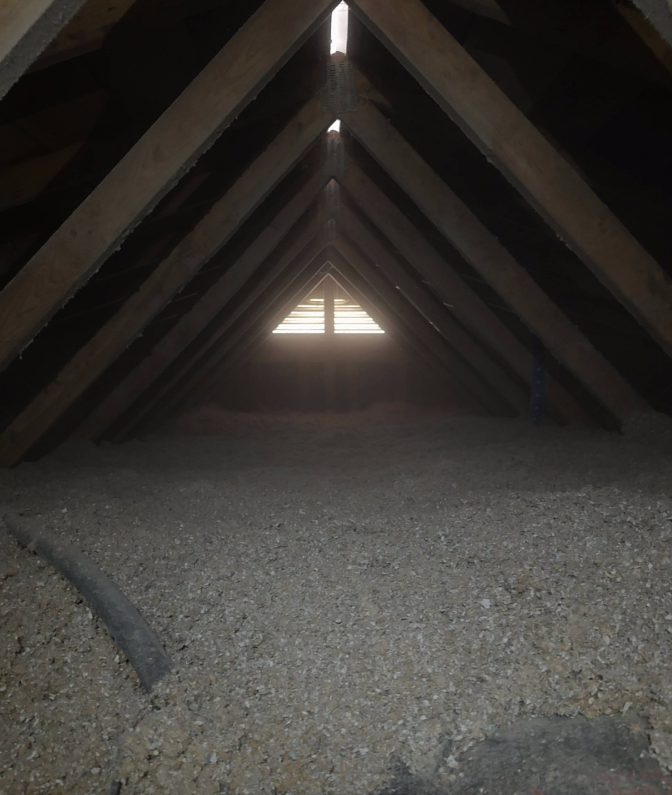
Attic space with triangular roof framing and blown-in insulation covering the floor, illuminated by light coming through a vent at the far end.

Warning Signs Your Charleston Attic Is Underperforming

You do not have to crawl around up there to spot trouble. These are the clues we hear about most from homeowners in the area.

If you recognize more than one of these, a free attic inspection will show what is happening above your ceiling.

Spray Foam, Blown-In and Batt: Attic Insulation Options

All three materials work in an attic when they are matched to the framing and the goal. Here is where each one fits in a Charleston house.

Spray Foam Attic Insulation

Spray foam expands on contact and fills cracks, gaps and awkward corners, so it insulates and air-seals together. It can go on the underside of the roof deck to bring the attic inside the home’s conditioned envelope, or onto the attic floor. Closed-cell foam comes in around R-6 to R-7 per inch, while open-cell lands near R-3.5 to R-3.6.

Blown-In Attic Insulation

Cellulose or fiberglass loose-fill is blown across the attic floor with a hose and a machine, flowing around joists, cables and ductwork. It is the standard way to build depth in a thin attic, and if the existing layer is dry and sound, the new material can usually go right over it. Figure on R-3.2 to R-3.8 per inch.

Batt Attic Insulation

Batts of fiberglass or mineral wool get trimmed to size and fitted between joists or rafters. They make economical sense on open attic floors, knee walls in finished attics and other spots where the crew has direct access, and they run from R-3.0 to R-4.3 per inch.

Our Attic Insulation Installation Process

No two attics are alike, so we start with an assessment rather than a script. We measure the insulation already up there, hunt for air leaks at chimney chases, plumbing vents, can lights and the attic hatch, and check for moisture, mold, pests and ventilation problems that should be handled before new material goes down.

Preparation. We protect your floors and furnishings, set up safe access, and seal the larger openings that let heated and cooled air slip into the attic. Insulation that is soaked, moldy or contaminated is removed first.

Installation. The crew then installs what you chose: spray foam on the roof deck or the attic floor, blown-in across the floor, or batts trimmed to fit between joists. With spray foam, we make sure the surfaces and conditions are within the range the product needs so it bonds and cures correctly.

Final check and cleanup. We confirm coverage and depth, compare the finished work with your estimate, and leave the area clean. A blown-in attic is commonly a three-to-six-hour job, and nearly all attics wrap up in one day.

Insulating Roof Decks, Vaulted Ceilings and Bonus Rooms

Plenty of attics are not a simple open floor. Hillside and river-valley homes often have finished attic rooms, vaulted or cathedral ceilings, dormers and rooms above garages, with little or no space to blow insulation across a flat surface. In those cases the answer is to insulate the roof deck or the framing of the ceiling itself.

Foam sprayed onto the bottom face of the roof deck seals the whole roofline and keeps the attic much closer to the temperature of the living space. Rooms under the roof stay more comfortable, and any ductwork or equipment in the attic is shielded from the worst heat and cold. For closed ceiling cavities, dense-packed blown-in insulation can be installed through small openings without removing the drywall.

If you cannot tell whether the roof deck or the attic floor is the better place to insulate, we will study how the attic is framed and what you need from it, then lay out the tradeoffs so the decision is yours.

What a Well-Insulated Attic Does for Your Home

Done properly, attic insulation shows up in your comfort and on your monthly statements.

Choosing Attic Insulation for Your Home

Think of this as a starting point. We make the final call after we see your attic during the free inspection.

Your attic

Best fit

Why

Your attic

Leaky attic with overheated rooms below

Best fit

Spray foam

Why

Closes gaps and insulates at once

Your attic

Open attic floor that is thin on insulation

Best fit

Blown-in

Why

Builds depth fast and flows around framing

Your attic

Exposed joists, new build or full gut remodel

Best fit

Batt

Why

Economical when you can reach the framing

Your attic

Finished attic, vaulted ceiling or room over the garage

Best fit

Spray foam on the roof deck, or dense-packed blown-in

Why

Reaches closed cavities and sloped ceilings

Your attic

Existing insulation that is wet, moldy or contaminated

Best fit

Remove, then replace

Why

New insulation belongs in a clean, dry attic

Air sealing for attic insulation

Air Sealing Your Charleston Attic Before You Insulate

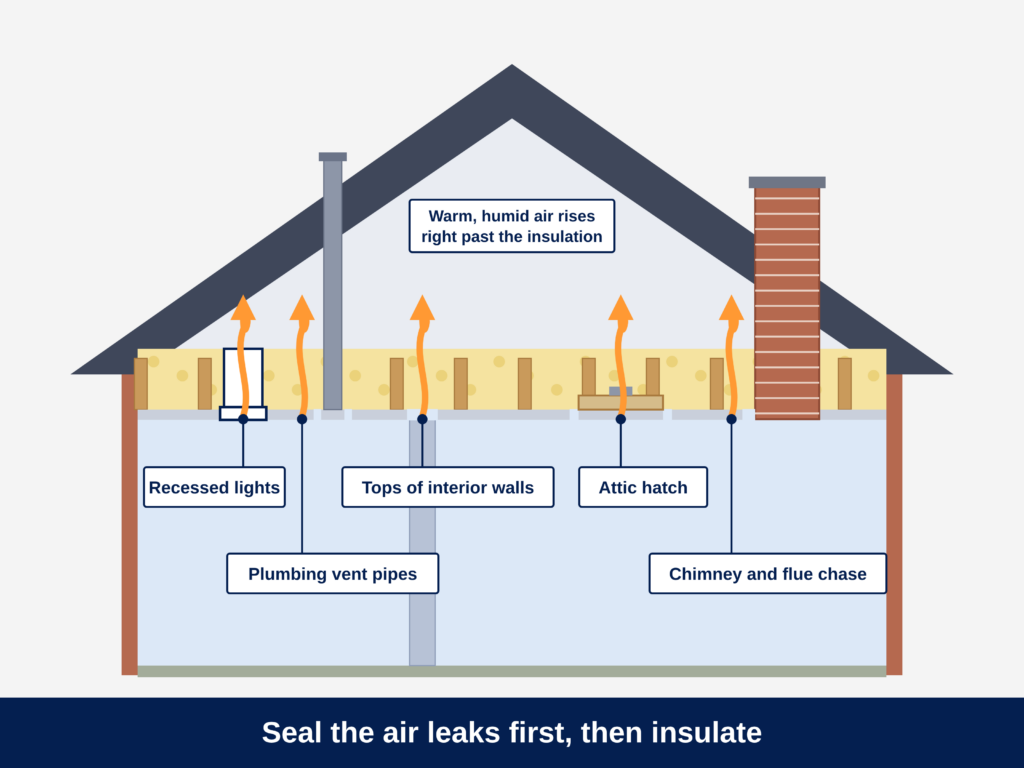
Piling insulation on top of a leaky attic is like pulling on a coat and leaving the zipper open. Gaps around chimneys, plumbing vents, recessed lights, the attic hatch and the tops of interior walls let conditioned air rise into the attic, and insulation by itself does not stop that movement.

That is why the inspection includes a search for those leaks, and why we seal the important ones before insulating. Spray foam seals while it insulates, while blown-in and batt go in after the larger gaps are closed. The payoff is an attic that matches the rest of the house instead of fighting it, which matters during muggy Kanawha Valley summers and cold snaps alike.

Proven by Results, Recognized for Excellence

Request a Free Attic Insulation Estimate in Charleston

Our crew inspects your attic, explains what they find and gives you an upfront price. Should we come across moisture or structural problems, we will say so and explain how our crawl space repair and foundation repair teams can address them.

Charleston Attic Insulation Frequently Asked Questions

Price varies with the insulation type, the size of the attic, how much is already there and whether old material has to be removed. Once the free inspection is complete, you receive an itemized written price, and nothing starts until you have seen it.

It depends on how the attic is built. Spray foam is the pick for drafty attics, finished rooms and sloped roof decks. For building up depth on an open attic floor, blown-in is the common route, and batt suits exposed framing. You can compare them on our spray foam, blown-in and batt insulation pages. We confirm the choice once we see your attic.

In climate zone 4, ENERGY STAR calls for R-60 where an attic has no insulation and R-49 where there are already 3 to 4 inches. The West Virginia energy code also lists R-49 for attics and ceilings in climate zone 4; the state code summary has the details. We measure your current depth and show you how much is missing, and the ENERGY STAR insulation guide explains the numbers.

Often, yes. Loose-fill can usually be blown over older fiberglass or cellulose provided it is dry and still in decent condition. Material that is soaked, moldy or contaminated must be taken out first, and the inspection will tell us which situation you have.

It frequently helps with both. Ice dams form when heat escaping through the attic melts snow on the roof, and an overheated upstairs usually means heat is moving through the roof or the ceiling below. More insulation and tighter air sealing reduce both problems, and we point out any ventilation issues we spot.

Blown-in attics usually take between three and six hours, so a single day covers most of them. Spray foam projects and larger homes may need longer, and the timeline is listed on your estimate.

Someone should be home at the start so the crew can get inside and reach the attic. After that, you do not need to hover near the work area, and we review the plan with you first.

Yes. Flexible payment options are available for insulation work, so ask about them when we price your job, or browse our financing page.

We do. Our crews serve South Charleston, St. Albans, Dunbar, Nitro, Cross Lanes, Teays Valley and Hurricane, as well as Huntington and Beckley. See our insulation services overview or service areas to confirm yours.

Areas We Serve

Across Charleston and the Kanawha Valley, our crews insulate attics of every shape and size.

Scroll to Top