Welcome to Reed’s Home Solutions

RESIDENTIAL SERVICES · CHARLESTON, WV

Basement Insulation in Charleston, WV

Basement Insulation Company Serving Charleston and the Kanawha Valley

Finished or not, your basement belongs to the home’s envelope. Bare concrete or block walls pull winter cold inside and let humid air linger through summer, and the rim joist along the top of the wall leaks all year long. You notice it upstairs: chilly floors, drafts along the baseboards and utility bills higher than they ought to be. Basement insulation is one of the most direct ways to fix all of that.

Reed’s Home Solutions has been Charleston’s trusted foundation repair and insulation company since 1989. We insulate basements across Charleston, WV and the Kanawha Valley, from hillside houses with a walk-out lower level to older homes tucked along the river. Our crew looks over the space first, checks the walls and any moisture, and suggests the insulation that suits your basement. The inspection and estimate are free, and your price is quoted before work begins.

Around Charleston, a basement slated for insulation needs to be dry first. Heavy rain, humid river air and the slopes many homes are built on all send water toward lower levels. For that reason the two jobs are usually paired, and our team does both.

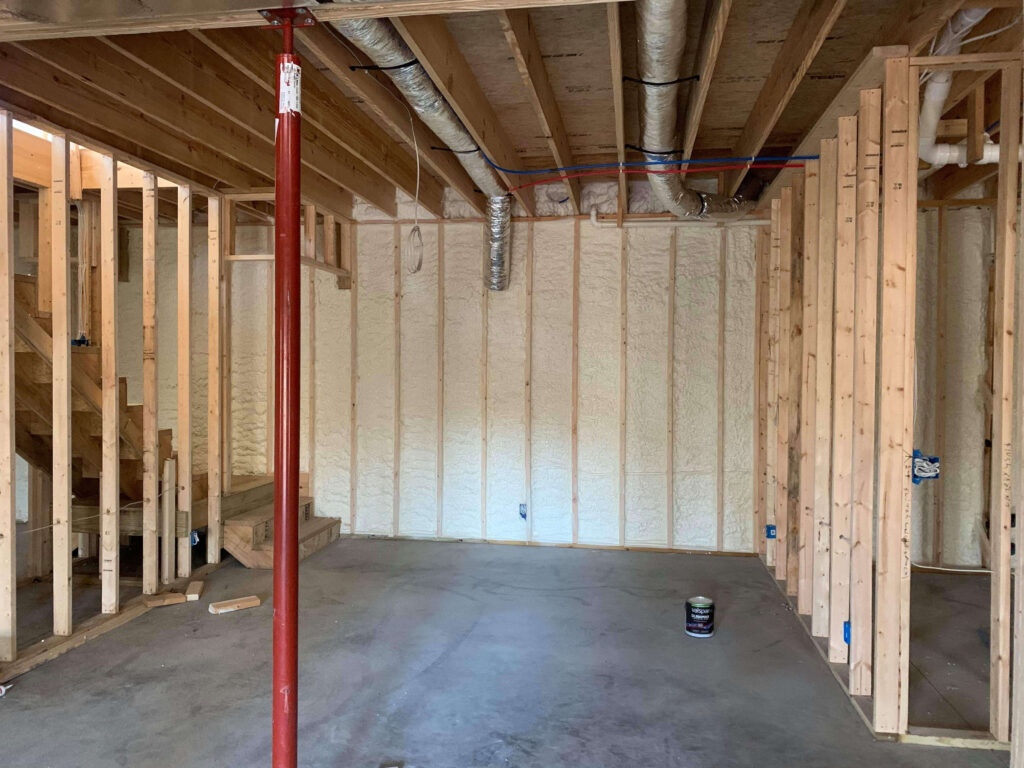
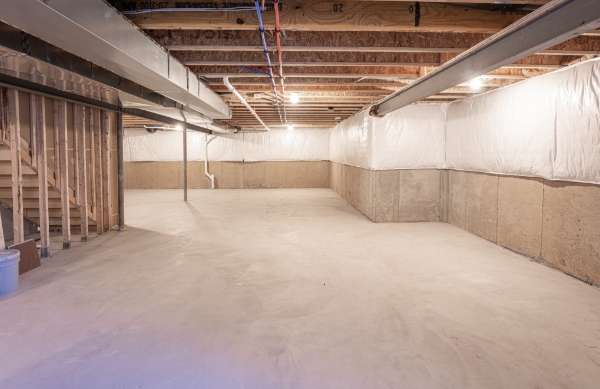
Basement wall spray foam insulation

Why Kanawha Valley Basements Run Cold and Damp

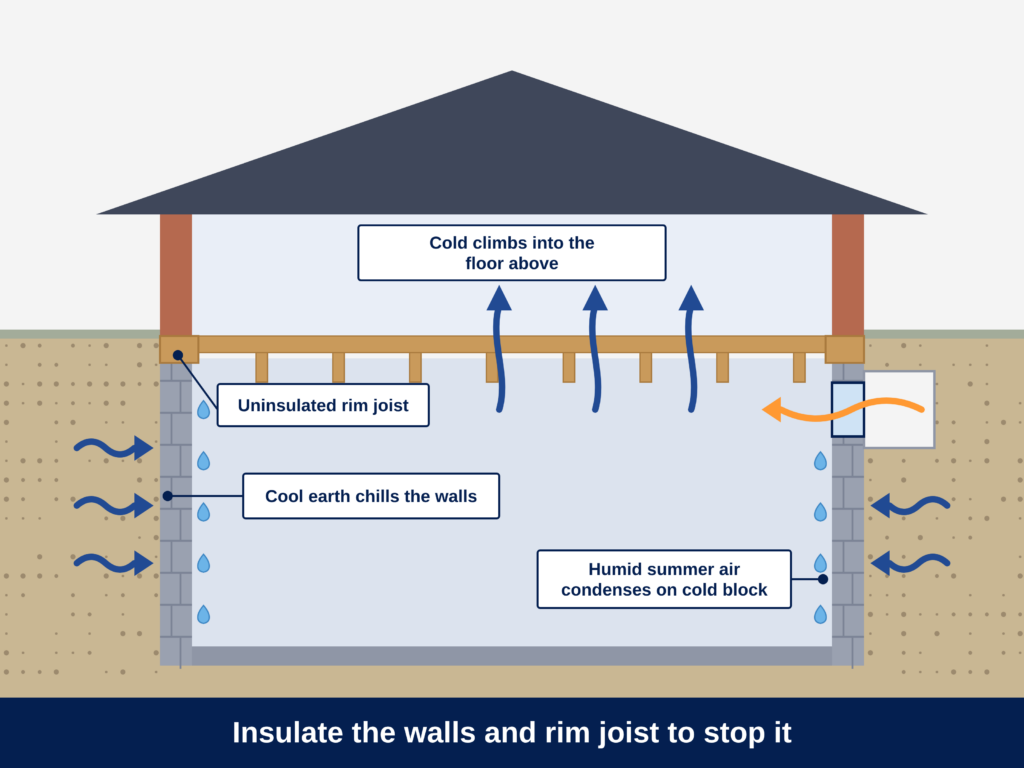
Below grade, the earth keeps things cool all year. Concrete and block walls hand that coolness to the room, while valley summers bring humid air that condenses the moment it touches a cold surface. The result is a lower level that manages to feel chilly and clammy together.

That cold does not stay put. It climbs into the first floor, so rooms over an uninsulated basement often feel cold under your feet. Treating the walls and the rim joist cuts that route off and lightens the load on your furnace and air conditioner.

Planning to finish the space someday? Insulating beforehand means you build a comfortable room once, rather than opening the walls up again later.

Basement Wall and Rim Joist Insulation

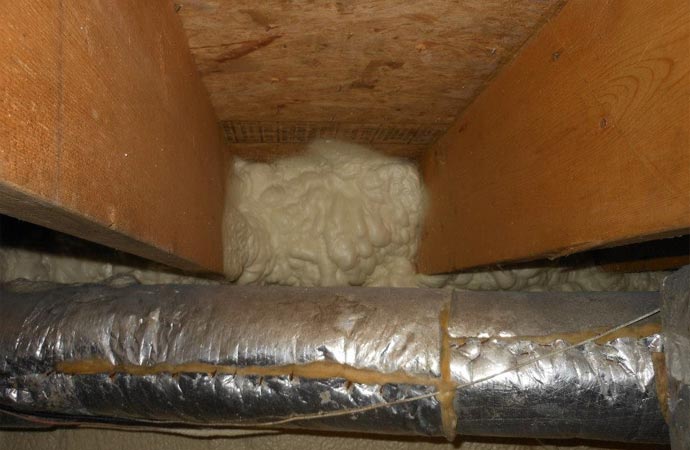
Sitting on top of the foundation wall, the rim joist is among the leakiest spots in the entire house. Tiny gaps appear wherever wood meets concrete and wherever wires, pipes and ducts pass through. Air-sealing and insulating that band does more for comfort than almost any other job down there.

On basement walls and rim joists we spray closed-cell foam. It swells into cracks and gaps, delivers roughly R-6 to 7 per inch, repels water and serves as a vapor barrier, which counts for a lot when a wall is pressed against wet soil. Open-cell foam, at about R-3.5 to 3.6 per inch, is sometimes right for interior spots, and we will say which one fits yours. Our spray foam insulation in Charleston page has the details.

Finished basements with stud walls can be insulated too. If the cavities are closed up, dense-packed blown-in material can fill them with the drywall left in place. West Virginia’s energy code for climate zone 4 lists R-13 (or R-10 continuous) for basement walls, and the state energy code summary has the full list.

Basement Insulation Options by Material

Spray foam is the right answer for most basements, yet every material has a place depending on how yours was built.

Spray Foam

Our top choice for foundation walls and rim joists. One application seals air leaks and adds R-value, and the closed-cell type shrugs off water while serving as a vapor barrier.

Blown-In

Well suited to finished stud walls and ceiling cavities that are already closed in. Dense-packing reaches the cavity without demolition.

Batt

A budget-friendly pick for exposed framing, such as a basement ceiling or a brand-new stud wall, provided humidity is under control.

Waterproofing and Insulation Belong Together

Wet walls defeat insulation. When a basement has a record of leaks, seepage, white mineral deposits, standing water or musty odors, we deal with the water before anything else. Our crews install basement waterproofing in Charleston, including drainage and sump systems, and the insulation can be part of the same project.

Closed-cell foam tolerates dampness better than other materials, since water does not soak into it, but it is no replacement for waterproofing. Stop the source of the moisture, then insulate. In that order you end up with a basement that is dry and comfortable at once.

Cracks in the walls, doors that stick or floors that have gone out of level deserve a look at the structure too. Hillside lots and shifting soils can stress a foundation, and Reed’s handles foundation repair in Charleston during the same visit.

Insulating a Basement Ceiling or the Floor Above

Maybe the basement is unfinished and will stay that way. In that case, insulating the ceiling, which doubles as the floor of the rooms above, can make more sense than doing the walls. Foam or blown-in material packed between the joists warms the main level and stops cold from rising through it.

The same thinking applies to a floor over an unheated garage or a cantilevered room, which is common on hillside and river-valley houses. Insulation there holds heat in the living space and takes the chill off the floor. Our wall and garage insulation in Charleston page covers the garage side of the story.

We consider how you use the lower level and propose what fits: walls, ceiling, or a combination of the two.

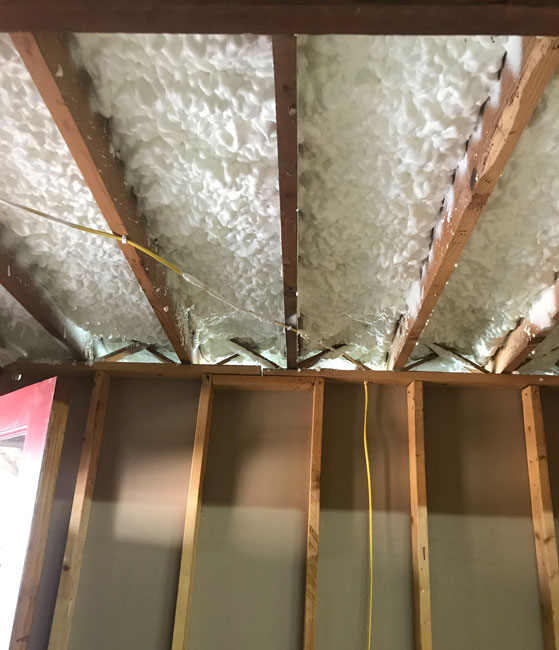
Basement ceiling insulation

Signs Your Charleston Basement Needs Insulation

These clues come up again and again in basements around the Kanawha Valley.

Our Basement Insulation Installation Process

A Reed’s basement job follows these four stages.

1

Inspection

A technician examines the walls, rim joist and ceiling, hunts for moisture or structural trouble and records what insulation, if any, is already up.

2

Prep

Work areas are cleared and covered, and any repair that must come before insulation is taken care of.

3

Insulate and seal

Spray foam goes onto the walls and rim joist, or we install blown-in or batt material where one of those suits the space better.

4

Final walkthrough

Once the work is finished and cleaned up, we take you through what went in and where.

Benefits of Insulating Your Basement

An insulated lower level pays off throughout the house.

Proven by Results, Recognized for Excellence

Request a Free Basement Insulation Estimate in Charleston

A Reed’s technician walks your basement, points out what needs attention and quotes a clear price before leaving. Moisture or foundation trouble gets flagged right away, along with a plan to fix it. Financing is available.

Basement Insulation Questions From Charleston Homeowners

For foundation walls and rim joists we recommend closed-cell spray foam. Water does not soak into it, it works as a vapor barrier, and it fills cracks and gaps as it goes on.

When it leaks or stays damp, you do. Dry surfaces give insulation its best chance, so the water problem comes first. Reed’s crews handle waterproofing as well as insulation.

Your plans for the space decide it. A basement you intend to finish or live in calls for wall insulation, while one that stays raw may be better served by a ceiling treatment that warms the main level. We make the call during the inspection.

Frequently. Small access holes let us dense-pack blown-in material into closed cavities while the drywall stays up, and we say honestly whether your walls are a candidate.

Likely, yes. Closing off the rim joist and walls keeps cold air from sneaking in, and ENERGY STAR puts potential heating and cooling savings from added insulation at up to 15%.

Cold concrete and block walls collect condensation when humid air meets them, and rain can add water from outside. We check for both during the inspection and tell you whether you need insulation, waterproofing or the two together.

Basement size and the amount of prep drive the schedule. A timeline comes with your written estimate.

Several things move the price: how large the basement is, what the walls are made of and which materials suit them. After a free inspection you get an itemized quote with real figures.

We do. Flexible payment options exist, and you can ask about them at your free estimate or read the details at our financing page.

Areas We Serve

Basement insulation from Reed’s is available to homeowners in Charleston and across the Kanawha Valley.

Scroll to Top