Welcome to Reed’s Home Solutions

RESIDENTIAL SERVICES · CHARLESTON, WV

Fiberglass Batt Insulation in Charleston, WV

Batt Insulation Contractors Serving Charleston, WV

Most people picture batts when they think of insulation: the pink or yellow rolls and pre-cut panels, made of fiberglass or mineral wool, that slide in between studs, joists and rafters. They have been going into houses for generations. In the right location, with careful installation, they remain a dependable and budget-friendly choice. Anyone shopping for fiberglass batt insulation in Charleston WV should start by learning where batts shine and where they struggle.

Reed’s Home Solutions has been Charleston’s trusted foundation repair and insulation company since 1989. We put in batts for homeowners throughout the Kanawha Valley and across West Virginia. The first step is a visit to look things over and say honestly whether batts suit each part of your house. You get a price before anything starts, and the inspection and estimate cost you nothing.

Where batts excel is exposed framing: a new build, a remodel stripped to the studs, an addition or an attic floor you can reach. Enclosed walls, damp crawl spaces and cluttered cavities are another story. Different products win there, and we will point that out when it comes up.

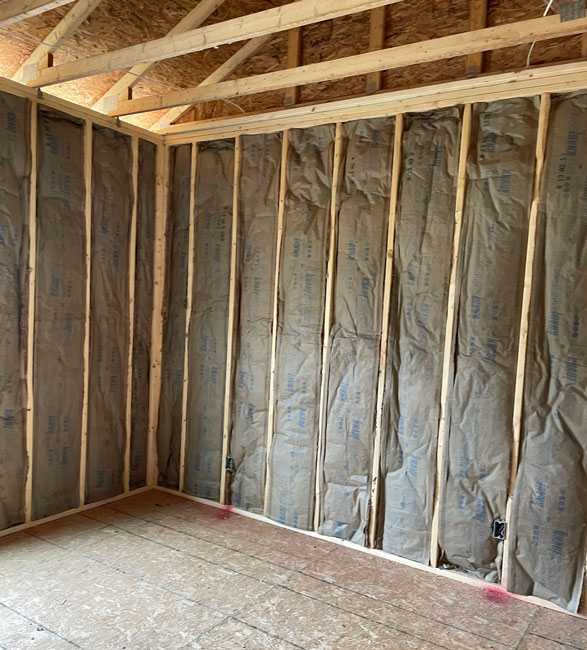
Batt Insulation installed in a new construction project.

Fiberglass and Mineral Wool: Two Kinds of Batts

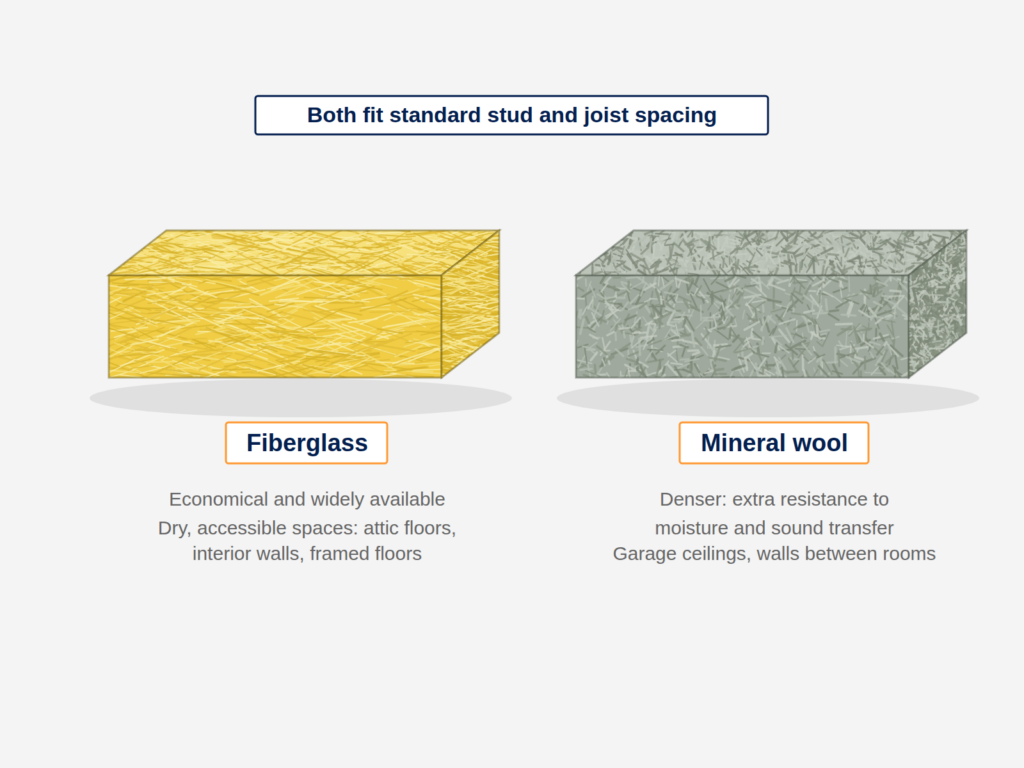
Both kinds arrive in standard widths made to match the usual framing spacing.

Fiberglass Batts

Spun glass fibers formed into blankets. This is the batt most people know, and it is an affordable option for walls, floors and attics. Figure R-3.0 to 4.3 for every inch of thickness.

Mineral Wool Batts

Heavier and denser than fiberglass, mineral wool is chosen when moisture tolerance and sound control rank high. Its range is the same, R-3.0 to 4.3 per inch.

Where Batts Make Sense in Charleston Homes

Around a typical Charleston house, these three spots are where a batt is usually the smart call.

Attic Floors and Rafters

A speedy, low-cost way to fill the bays between exposed joists or rafters when you can walk or crawl through the attic.

Open Walls

Bare studs in a new build, an addition or a remodel, before anyone hangs the drywall.

Basement Ceilings and Floors

Tucked into the joist bays of a dry basement ceiling, or under a floor that sits over a cold garage or open porch.

Batt Insulation Pros and Cons Before You Buy

A batt does a fine job in its element. Here is the balanced picture, good and bad.

Strengths

Limits

Strengths

Easy on the budget and familiar to every installer

Limits

Leaves air leaks wide open

Strengths

Goes up fast between exposed studs and joists

Limits

Any squeezed or missing piece lowers the result

Strengths

Choice of fiberglass or mineral wool for the room

Limits

A poor fit for damp, vented crawl spaces

Strengths

Right at home in new builds and gut remodels

Limits

Walls must be opened before batts can go in

Benefits of Fiberglass Batt Insulation

These are the reasons batts keep earning a spot in the right places.

Our Batt Insulation Installation Process

From the first visit to the final check, here is how a Reed’s job goes.

1

Survey

A technician looks over the framing, takes measurements and watches for dampness and drafts.

2

Prepare

Your belongings get covered, and any leak that deserves attention first is sealed.

3

Fit

Each batt is trimmed to sit snug between studs, joists or rafters, with no voids and no squashed edges.

4

Review

We examine the finished work, tidy the area and go over it together with you.

Picking Fiberglass or Mineral Wool for Your Charleston Project

Either type slides into standard stud and joist spacing, and either lands around R-3.0 to 4.3 for each inch, depending on product and thickness. Where they diverge is in everyday behavior once they are in the wall.

Fiberglass is the default pick. It costs less, shows up everywhere and is happy in dry, easy-to-reach places: attic floors, interior partitions and framed floors. Mineral wool is heavier. That helps where you want a stronger buffer against dampness and noise, for example on basement walls above grade, a garage ceiling or a wall dividing two living spaces.

We steer you to whichever suits your job. Should your biggest worry be energy loss through a leaky space, spray foam may be our recommendation, and a finished wall calls for blown-in insulation instead.

Why Careful Installation Decides How Batts Perform

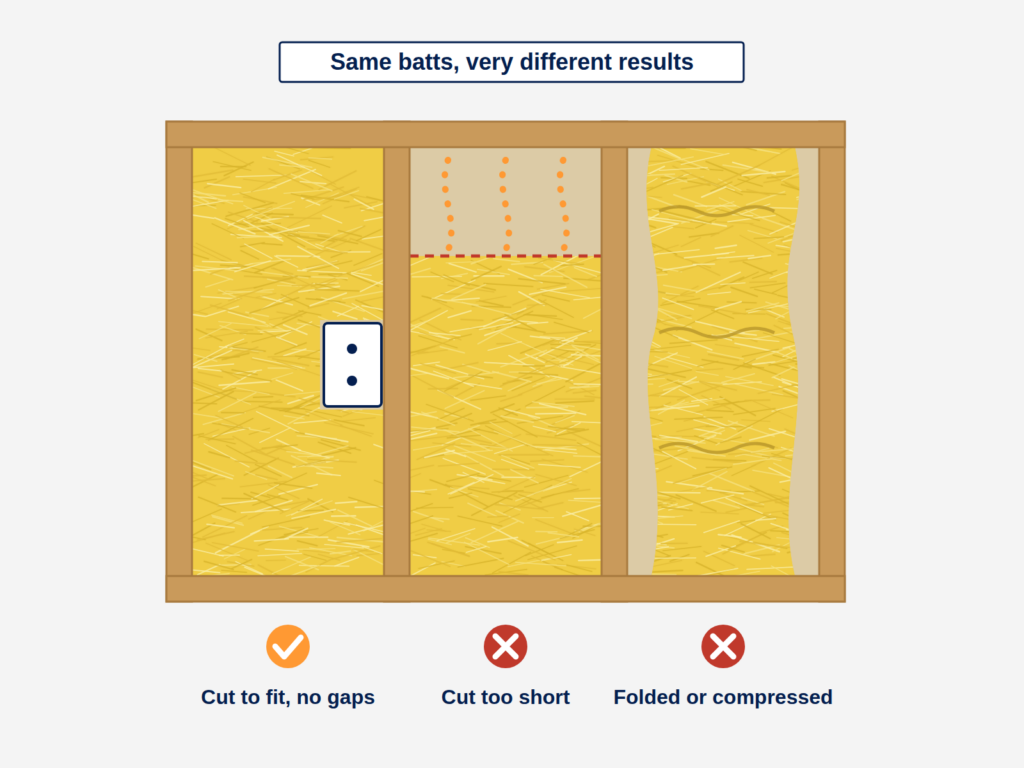
Think of a batt as a blanket: tuck it badly and the cold gets in. One that has been mashed, bent double or trimmed undersized leaves open pockets, and moving air slips around the material and wipes out much of its benefit. That is how two identical products can give very different results in two different houses.

Our installers size each piece to fit tightly between framing members. They split batts around cables, pipes and outlet boxes instead of crushing them, and they check every edge for openings. Before any material goes up, we seal leaks that deserve fixing first, since drafts can erase the R-value you are paying for.

This is one reason every project opens with an inspection. It is also the reason we speak up if another product would do better.

Three wall cavities comparing a batt cut to fit, a batt cut too short and a batt folded or compressed

Batt Insulation for New Builds, Additions and Remodels

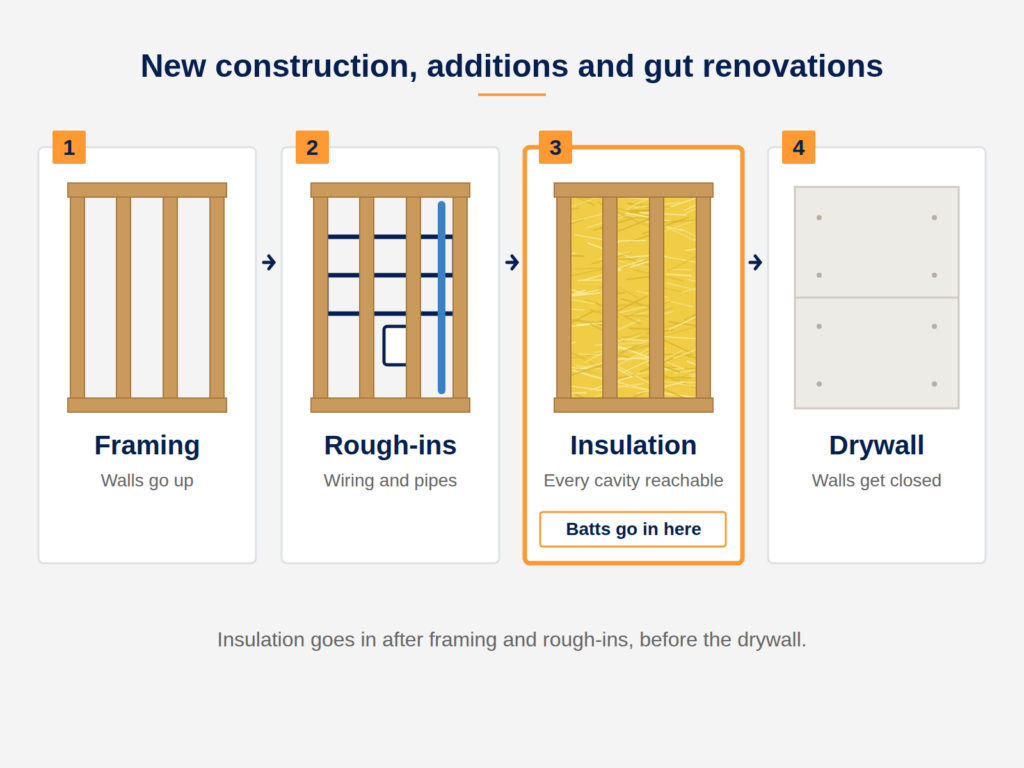
Building a house, adding on or stripping a room to the framing? Batts are among the thriftiest options available. Every cavity is within reach, so crews move quickly. We plan around your builder or contractor so that insulation arrives once framing and rough-in work are finished and before the drywall crew shows up.

For climate zone 4, the West Virginia energy code lists R-20 (or R-13+5) for wood-frame walls, R-49 for attics and ceilings, and R-13 (or R-10 continuous) on basement and crawl space walls. The West Virginia energy code summary has the details, and we build each plan around the numbers that apply to your project.

Remodels are rarely one-size-fits-all. Exterior walls, ceilings and floors may each want a different material, and one crew can install more than one kind. For a whole-house plan, our Charleston insulation team can combine spray foam, blown-in and batts in one estimate.

Times We Suggest Something Other Than Batts

No product is perfect for every corner of a house, and we would rather be straight with you. Take a vented crawl space in the valley: damp summer air drifts through the vents, the fiberglass drinks it in and slumps, and the soggy material presses moisture against the wood above. For those spaces we favor spray foam on the crawl space walls plus a sealed vapor barrier across the ground. When pooled water or wet walls are the underlying problem, start with our basement waterproofing and crawl space repair work.

Finished walls pose a different challenge, because a batt cannot be slid in unless the wall is opened. Dense-pack blown-in insulation reaches the cavity through small drilled holes instead. Attics that leak air, and rooms under vaulted ceilings, often do better with spray foam too.

Build sequence showing insulation installed after framing and rough-ins and before drywall

Proven by Results, Recognized for Excellence

Request a Free Batt Insulation Estimate in Charleston

A Reed’s technician walks through your home, says which material belongs in each space and quotes a price before leaving.

Charleston Batt Insulation: Your Questions Answered

Insulation cost swings with the batt type, the size of the job and any prep needed. A free inspection gets you a firm price.

Both fit standard framing and run from R-3.0 to 4.3 an inch. Mineral wool is the heavier of the two and is chosen where moisture and noise resistance count.

Seldom in this area. Vented crawl spaces hold humid air, and batts absorb it and droop. We prefer spray foam on the walls with a sealed vapor barrier below.

No, they need open framing. Behind finished walls we propose dense-pack blown-in insulation, installed through small drilled holes.

Often. Added insulation can cut heating and cooling bills by as much as 15%.

It is. Raise it during your free estimate, or read our financing page for the flexible options.

Many times, yes, so long as the older material is dry and sound. The inspection tells us what is practical in your attic.

Look for soaked, stained or moldy pieces, flattened batts, rodent damage or sections that have slipped down out of the framing. We assess all of this during the visit.

We will. Whenever what is up there is wet, moldy or contaminated, it comes out before new material goes in.

Trained installers handle them in protective gear. Before we begin, we explain the steps and the working area.

Areas We Serve

Batt insulation from Reed’s Home Solutions is available in Charleston and all across the Kanawha Valley.

Scroll to Top