Welcome to Reed’s Home Solutions

RESIDENTIAL SERVICES · CHARLESTON, WV

Crawl Space Insulation in Charleston, WV

Crawl Space Insulation Company Serving Charleston and the Kanawha Valley

Plenty of homes around Charleston sit on a crawl space, whether it is a block-walled space under a hillside house or a low area held up on piers. What happens down there decides a lot about how the rest of the house feels. When crawl space insulation is missing, or has soaked up moisture and dropped away from the floor, cold air, damp air and musty odors travel straight up into your living area. You notice it as cold floors in winter, energy bills that keep climbing and a smell that never quite clears.

Reed’s Home Solutions has been Charleston’s trusted foundation repair and insulation company since 1989, and crawl space insulation is a regular part of that work. We start by looking at the space itself: the moisture, the vents, the floor framing, the ground and whatever insulation is already hanging there. Then we explain what we recommend and why, and you get a clear price before anything begins. The inspection and estimate are free, with no obligation.

The Kanawha Valley is humid. River air, heavy rain and long, sticky summers all push moisture toward the lowest part of your house. When warm, wet air drifts into a vented crawl space and meets cool surfaces, you get condensation, soft wood and mold. So we never treat insulation as a stand-alone job here. We look at moisture and insulation together, because one without the other will not last.

Crawl Space Spray Foam Insulation

Why We Insulate Crawl Space Walls Instead of Floor Joists

The old habit was to wedge fiberglass batts between the floor joists and walk away. In a vented crawl space in West Virginia, that habit runs into trouble fast. Humid air moves through the foundation vents, the batts take on water, and wet insulation slumps, stops working and pins moisture against the wood above it. The floor system ends up damper than it was before anyone insulated.

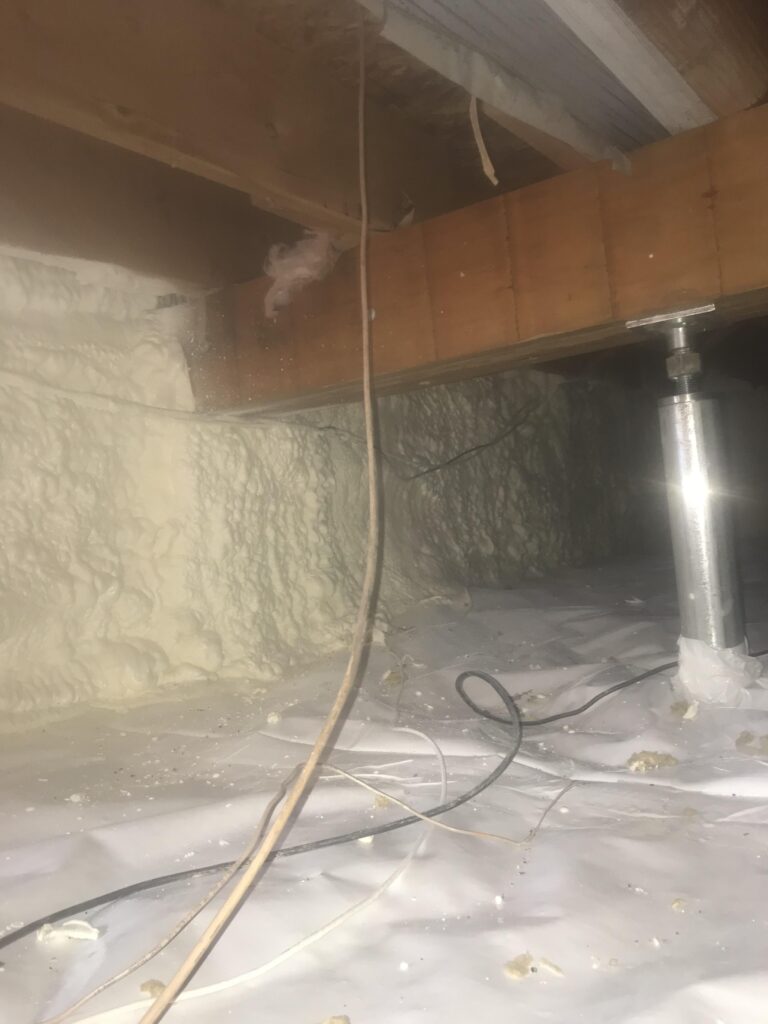
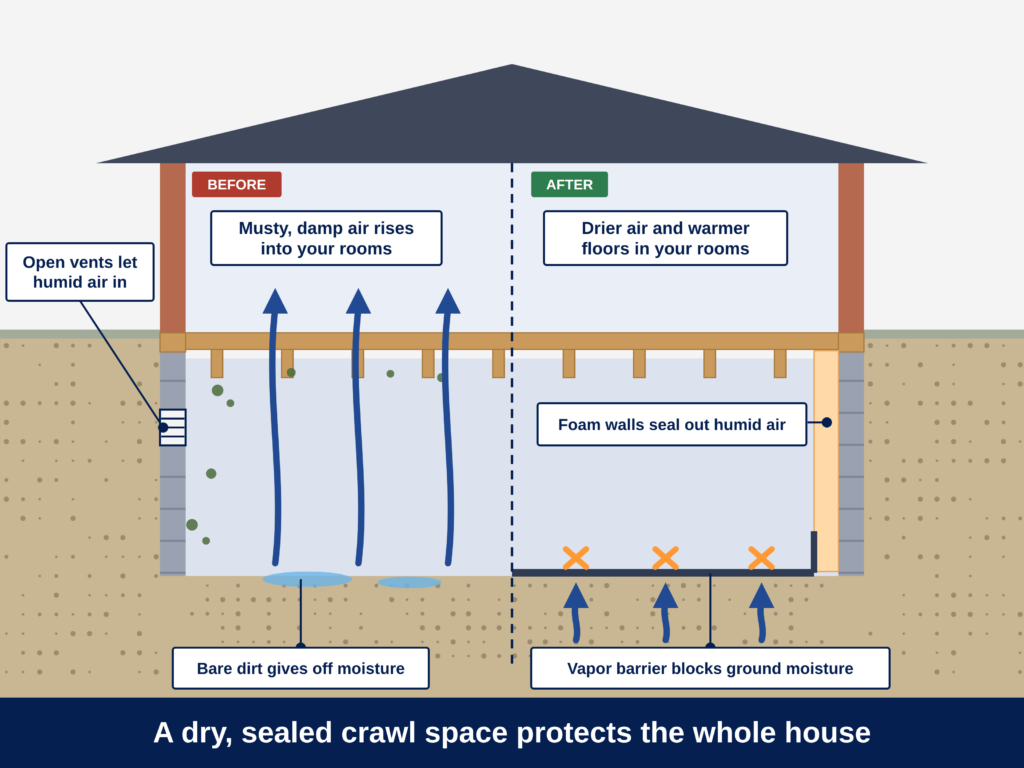
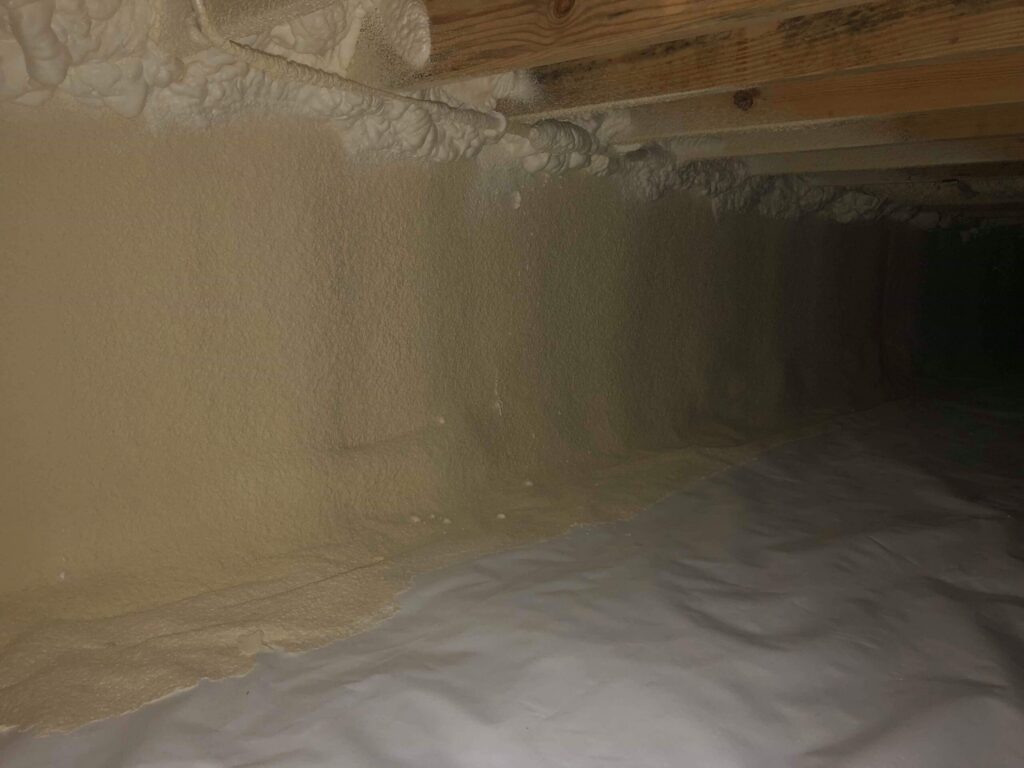
Our preferred fix is closed-cell spray foam on the crawl space walls, paired with a sealed vapor barrier across the ground. Closed-cell foam does not soak up water, works as a vapor barrier itself and seals the cracks and gaps along the foundation. It pulls the crawl space inside your home’s thermal envelope, so the floor overhead stays warmer and the air below stays drier. At roughly R-6 to 7 per inch, it also packs a lot of insulating value into a thin layer. You can read more on our spray foam insulation in Charleston page.

For a space that tends to run damp, we point homeowners to spray foam over any material that can hold water. Anything that behaves like a sponge when the humidity spikes is a poor match for a Kanawha Valley crawl space.

Floor Insulation Over a Crawl Space

Some houses are better served by insulating the floor itself. When the floor sits directly above an unconditioned crawl space, it is the lone barrier between your living area and the cold, damp air below. Chilly floors, drafts along the baseboards and a furnace that runs and runs without ever warming the first floor all point to a leak in that barrier. Homes with a garage or living space built over a cantilever have a similar problem, because cold air can reach the floor from underneath on more than one side.

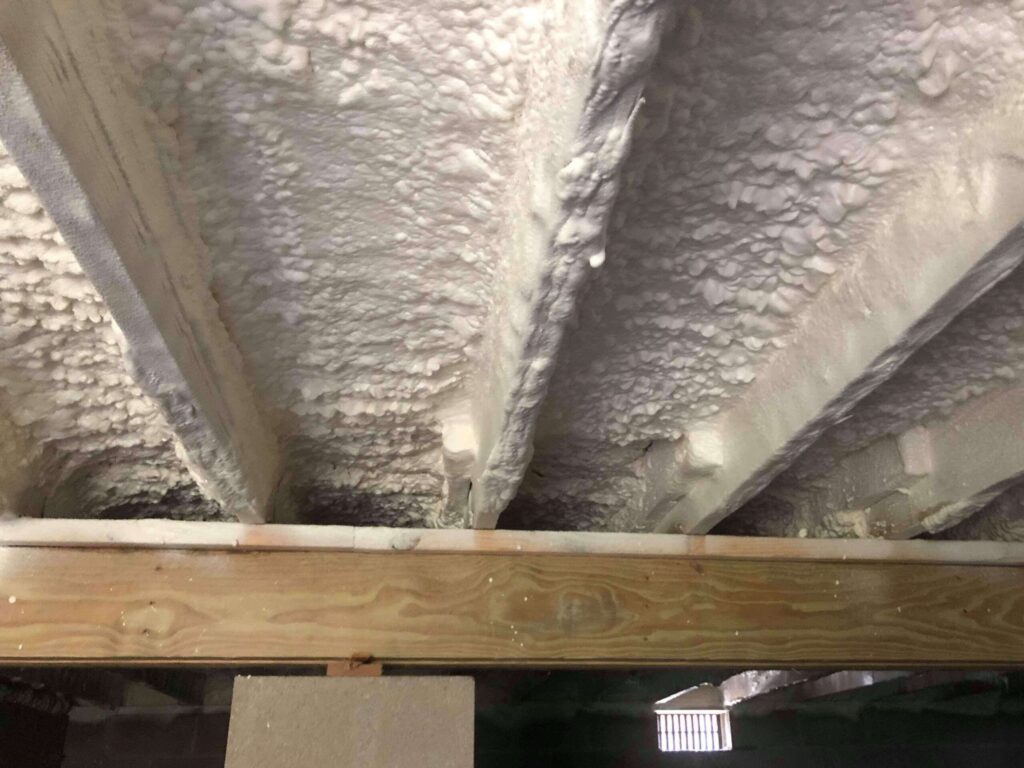
Closed-cell spray foam sprayed onto the underside of the floor closes gaps at the rim joist and subfloor and around pipes and wires, and it builds up R-value in the same pass. Once we have seen your crawl space, we can say whether the foundation walls or the floor system is the smarter place to insulate, and when moisture control has to come first. You will find more in our overview of insulation contractors in Charleston.

Standing water, active moisture or damaged framing get dealt with before any foam goes on. Foam performs best on a dry, solid structure, and our crews also handle crawl space repair in Charleston.

Signs Your Charleston Crawl Space Needs Insulation

The clues usually turn up in the rooms overhead rather than under the house. Here is what to look and smell for.

Does Your Crawl Space Need More Than Insulation?

Insulation is only one piece of a healthy crawl space. Depending on what the inspection turns up, your home could need some of these services too.

Crawl Space Repair

Floors that bounce or droop, joists that are cracked or rotted and piers that have shifted all need to be corrected first. One company can handle both the structural fixes and the insulation.

Crawl Space Encapsulation

A sealed liner over the ground and up the walls blocks ground moisture from entering the space. Paired with spray foam, it keeps humidity down through the long wet season.

Foundation Repair

Shifting soils and heavy rain can stress a foundation. If we spot cracked walls, settling or sticking doors, we can look at the structure as well.

Comparing Crawl Space Insulation Options

Here is how the choices we talk through with Charleston homeowners stack up.

Approach

Handling moisture

Where it fits

Approach

Closed-cell foam on the foundation walls plus a ground vapor barrier

Handling moisture

Repels water and doubles as a vapor barrier

Where it fits

Our first choice for most vented crawl spaces in the Kanawha Valley

Approach

Closed-cell foam on the floor’s underside

Handling moisture

Repels water

Where it fits

Houses where treating the floor system beats treating the walls

Approach

Fiberglass batts between floor joists

Handling moisture

Soaks up moisture and droops

Where it fits

A poor match for damp or vented spaces; see our batt insulation page for dry spots where batts do work

Our Crawl Space Insulation Installation Process

From first visit to final check, this is how a Reed’s crawl space job unfolds.

1

Inspection

A technician crawls the space looking for standing water, damp spots, mold, pests and open vents, and notes the state of the piers or block walls, the framing and any old insulation.

2

Clean-out and repairs

Soaked, damaged or contaminated material comes out, debris is hauled away and any structural fixes are finished so the foam has a sound surface.

3

Seal and insulate

A vapor barrier goes down over the soil, and spray foam is applied to the walls, or to the underside of the floor if that suits the house better.

4

Final check

We go over the finished work to make sure nothing was missed, then walk you through exactly what was put in.

Benefits of Insulating Your Crawl Space

Once the space under your home is dry and insulated, the living areas above feel different.

How a Dry Crawl Space Helps the Rest of Your House

Warm air rises, and it pulls whatever is beneath the house along with it. Air from the crawl space slips through floor gaps, around plumbing and past the rim joist into the rooms where you eat and sleep. If that air carries dampness or a musty odor, your living space ends up sharing it. In a river-valley town where summer humidity is a fact of life, that is worth taking seriously.

Closing off the crawl space and foaming its walls shuts that path at the source. Framing stays clear of humid air, your heating and cooling equipment holds its temperature more easily, and pests find less to like. West Virginia’s energy code for climate zone 4 lists R-13 for basement and crawl space walls (or R-10 continuous), and you can see the full requirements in the state energy code summary.

Our approach comes down to three moves: control the moisture, seal the space, then insulate it. Done in that order, the work lasts and you feel it in your floors. If your home also has a damp lower level, our basement insulation in Charleston page explains how we handle that side of the house.

Proven by Results, Recognized for Excellence

Request a Free Crawl Space Insulation Estimate in Charleston

A Reed’s technician goes under your house, shows you what is there and quotes a clear price before leaving. Moisture or structural trouble gets flagged right away, along with a plan to fix it. Financing is available.

Crawl Space Insulation Questions From Charleston Homeowners

For a typical vented crawl space around Charleston, we lean toward spray foam on the walls with a sealed liner over the ground. A few houses do better with foam under the floor instead. The inspection settles it, and we explain our reasoning either way.

Closed-cell spray foam, and it is the only type we put in crawl spaces. It repels water and works as its own vapor barrier, which is exactly what a damp, humid space calls for.

Nothing stops you, but we advise against it in a vented space. Humid air flows in through the vents, the batts drink it up, and the soggy material droops and presses moisture into the framing.

Yes. Foam bonds and performs best on dry, sound surfaces. If we see pooled water, rot or constant dampness, we recommend solving that first, and our crews can handle repair and encapsulation too.

In most houses it does. Less cold air and fewer drafts rise through the floor once the space is sealed and insulated, and that rising air is the main reason floors feel icy in January.

It can. A sealed vapor barrier and closed-cell foam on the walls keep humid outside air and ground moisture from settling in under your house, so the space stays drier and the air moving upward is less damp.

That depends on how big the space is and how much clean-out, repair or moisture work comes first. Your written estimate includes a timeline specific to your house.

There is no one number, since price follows the size of the space, its condition and any prep work. After a free inspection you receive an itemized quote with the real figures.

We do. Flexible payment options are available, and you can bring them up at your free estimate or read the details at our financing page.

Areas We Serve

Crawl space insulation from Reed’s is available to homeowners in Charleston and across the Kanawha Valley.

Scroll to Top