Welcome to Reed’s Home Solutions

RESIDENTIAL SERVICES · CHARLESTON, WV

Blown-In Insulation in Charleston, WV

Blown-In Insulation Contractors Serving Charleston, WV

If your house in the Kanawha Valley is drafty in January and stuffy in July, blown-in insulation is often the least disruptive fix. A hose and blower push loose-fill material into attic floors, closed wall cavities and cramped corners, and the fluffy material wraps around joists, wires and pipes rather than stopping short of them. Plaster, drywall and siding usually stay right where they are.

Reed’s Home Solutions has been Charleston’s trusted foundation repair and insulation company since 1989, so people who want blown-in insulation Charleston WV wide tend to find us. A visit starts with a look at what is already in your house. Then we tell you what we would do and what it costs, and only then does any work get scheduled. Both the inspection and the estimate are free and carry no obligation.

Loose-fill is a strong match for attics that have thinned out and for older walls that never got a proper fill. Crews typically wrap up an attic, a set of walls or a garage in one day.

Blown-In Insulation

Cellulose and Fiberglass: Two Kinds of Loose-Fill Insulation

Two materials do the job well. We pick between them based on the house in front of us.

Cellulose

Ground-up recycled paper with a borate treatment. It is heavy for loose-fill, so it packs into irregular gaps well and sees plenty of use in both attics and walls. Expect R-3.2 to 3.8 for each inch of depth.

Fiberglass Loose-Fill

Spun glass fibers, light and fluffy. It shrugs off water better than paper does, which makes it a natural for open attic floors. The rating also falls between R-3.2 and 3.8 per inch.

Where Loose-Fill Insulation Goes in a Charleston House

Anywhere there is a reachable cavity or a flat open floor, blown-in can go to work.

Attics

Laid across the attic floor to lift a thin layer toward today’s targets. If what is up there now is dry and sound, we can usually add to it instead of pulling it out.

Existing Walls

Packed tight through holes roughly one to two inches wide, drilled from the inside or the outside and filled in afterward. Nobody has to tear into your drywall.

Floors and Ceilings

Fills sealed joist bays and ceiling cavities, like the floor of a room over a garage, a cantilevered bump-out or a ceiling below a section of attic nobody can squeeze into.

Why Kanawha Valley Homeowners Pick Blown-In Insulation

People around Charleston and the river towns keep telling us the same handful of things.

Blown-In vs. Spray Foam vs. Batt: Which Insulation Fits

A side-by-side look at the three most common choices for a Charleston project.

Blown-in

Spray foam

Batt

Rating per inch

Blown-in

R-3.2 to 3.8

Spray foam

R-3.5 to 3.6 open-cell, R-6 to 7 closed-cell

Batt

R-3.0 to 4.3

Stops air leaks

Blown-in

Only a little

Spray foam

Very well

Batt

Only a little

Closed, finished walls

Blown-in

Yes, by dense-packing

Spray foam

No, framing must be open

Batt

No, framing must be open

Strongest use

Blown-in

Attic floors and walls already built

Spray foam

Leaky or damp-prone areas

Batt

Exposed framing in new work

What to Expect From Our Blown-In Insulation Installation

The process is the same from the first phone call to the final walk-through.

1

Inspect

A technician checks the attic or wall cavities, notes how much insulation is up there now and hunts for moisture and drafts.

2

Prepare

Floors and furniture get covered, the machine is set up and any leak worth fixing first gets sealed.

3

Blow

Material goes in to the depth and density on your estimate, or is packed into wall cavities through small drilled holes.

4

Wrap up

Holes get patched, debris gets hauled off and we review the result with you before we leave.

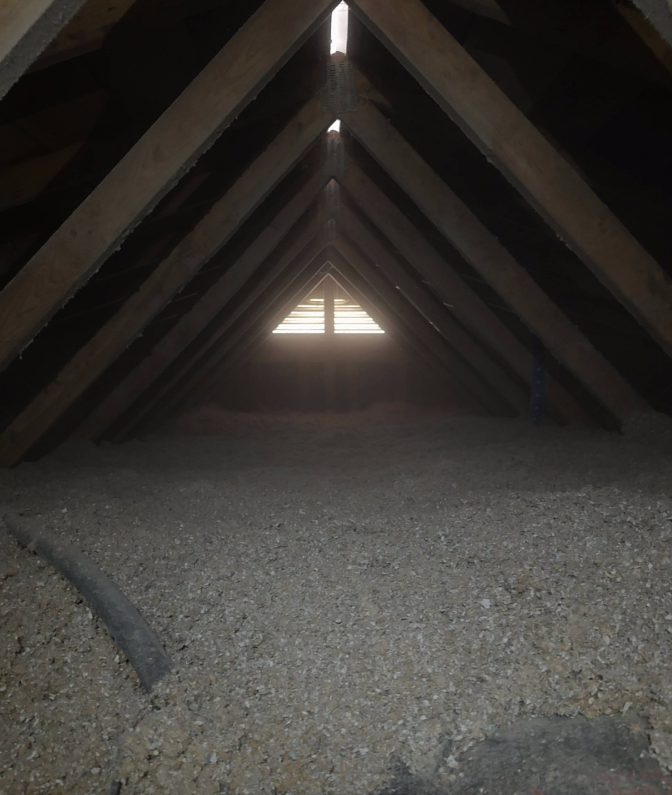
Attic space with triangular roof framing and blown-in insulation covering the floor, illuminated by light coming through a vent at the far end.

Blown-In Insulation for Charleston Attics

For most homes, the attic is where loose-fill pays off first. We blow it over the attic floor to a planned depth, and since it flows like a blanket of snow, it lands around joists, ducts, wiring and the corners where a batt would never quite fit. You end up with one unbroken layer instead of a patchwork of seams. For the whole picture on that space, read our attic insulation page.

In climate zone 4, which includes Charleston, ENERGY STAR calls for R-60 over an uninsulated attic and R-49 when 3 to 4 inches are already in place. The West Virginia energy code points to R-49 for attics and ceilings in the same zone. During the inspection we measure your current depth and show you how it compares. Plenty of hillside and river-valley homes sit well short, and loose-fill closes that distance faster than anything else.

Ahead of installation we check for drafts, dampness and ventilation trouble, and we keep the new layer from smothering the attic’s airflow. Anything wet, moldy or contaminated is removed first. Dry insulation in decent condition can stay, with the fresh layer on top. For the numbers behind all this, see the ENERGY STAR insulation guide.

Dense-Pack Wall Insulation Without Opening Up Your Walls

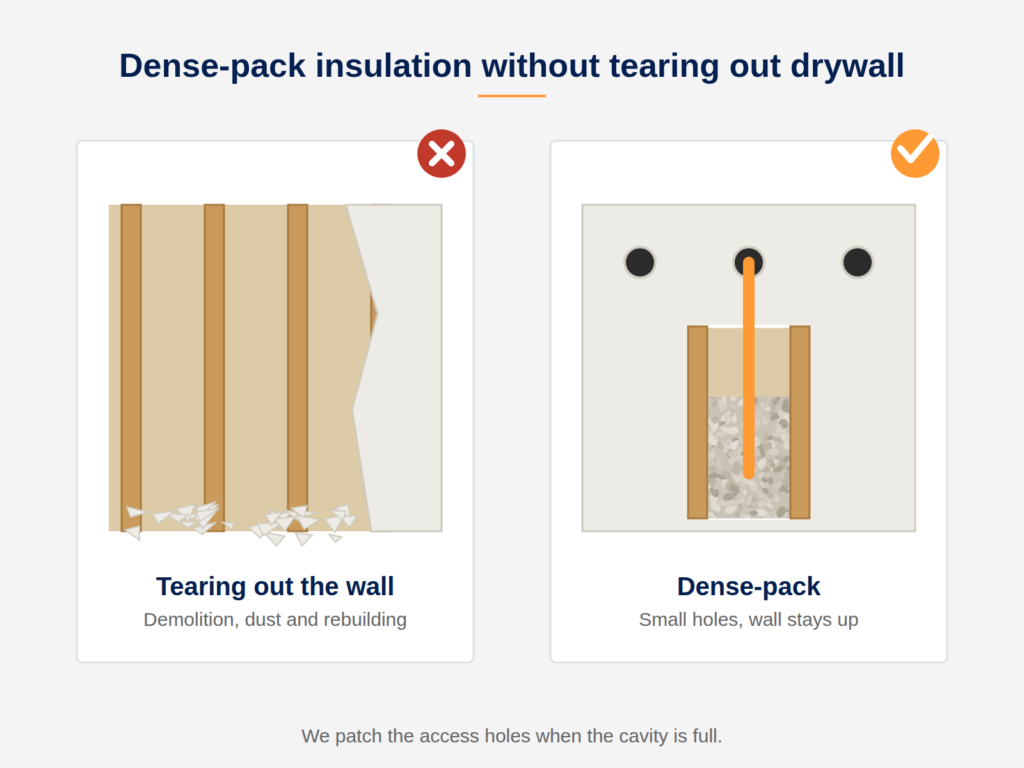
A lot of older homes around Charleston have thin or empty wall cavities. Demolishing plaster or drywall just to fix that would cost more than it is worth, so we do the work from the outside in a different way: dense-packing.

A crew member drills a hole about one to two inches wide into each cavity, working from inside the room or from the siding side, whichever causes less fuss at your address. Insulation is then blown in under pressure until the space is tightly and evenly filled. It wraps around wires, water lines and fire blocking, which are the exact spots where batts leave voids. The holes are patched afterward.

Walls and garages usually take a single day. A finished garage, or a bedroom perched above one, gets the same treatment. Our wall and garage insulation page has more on that.

Mounds of cellulose and fiberglass loose-fill insulation side by side

Choosing Between Cellulose and Fiberglass Loose-Fill

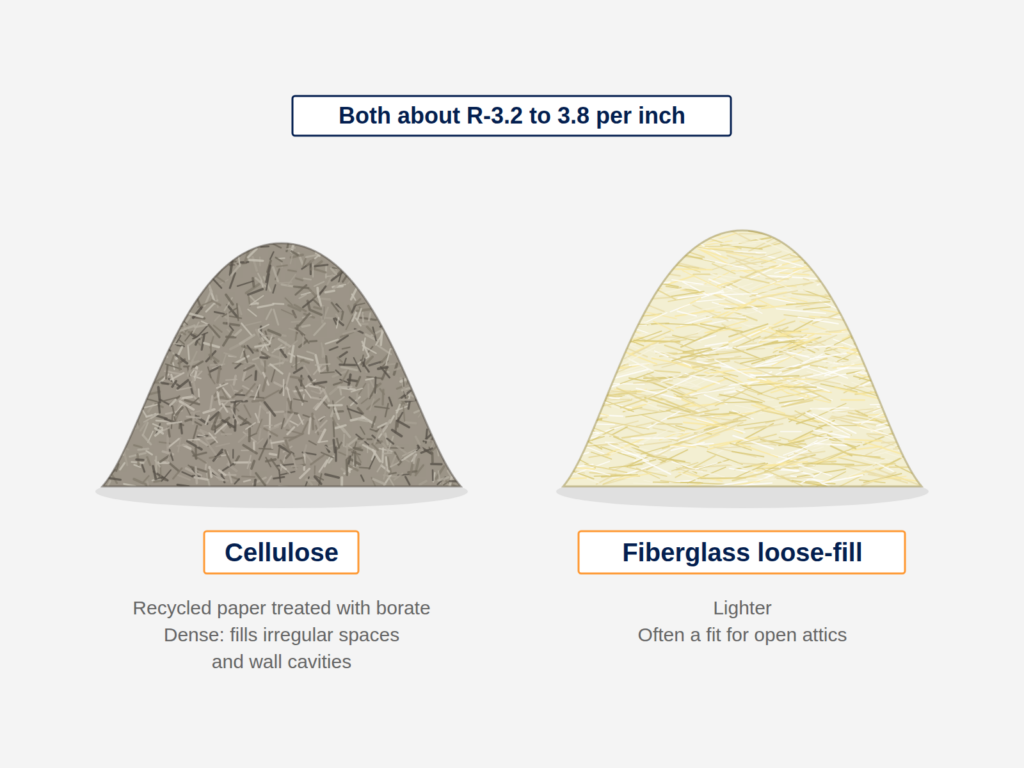
Because both materials fall near R-3.2 to 3.8 per inch, the rating seldom decides things. Density does. Cellulose, which is recycled paper with borate added, is heavier and tends to fill odd corners and wall cavities snugly. Fiberglass loose-fill is lighter and a common pick for wide-open attic floors.

We weigh the space, what is in it today and your priorities, then name a favorite. Whichever we choose appears on your estimate, and if you want the reasoning, just ask.

Should stopping air leaks or controlling dampness matter more than adding thickness, spray foam insulation may suit you better. For bare framing in a new build or remodel, fiberglass batt insulation is often the thrifty route.

Clues Your Charleston Home Is Short on Insulation

Here is what usually prompts a call about insulation Charleston WV homeowners could be missing out on.

Proven by Results, Recognized for Excellence

Request a Free Blown-In Insulation Estimate in Charleston

A Reed’s technician goes through your attic and walls, walks you through the findings and quotes a price before leaving.

Charleston Blown-In Insulation: Your Questions Answered

The insulation cost varies with the material, how large the area is and how much is already installed. After a free inspection you get a firm price in writing.

Neither wins across the board. Each rates between R-3.2 and 3.8 an inch. Cellulose is borate-treated recycled paper and runs denser, while fiberglass loose-fill is lighter. We match one to your house.

Yes. A few small holes go in, the cavity is packed solid and the openings are patched when we finish.

Frequently, provided the older material is dry and still in decent shape.

A standard attic runs about three to six hours. Attics, walls and garages commonly wrap up inside a day.

Often. Added insulation can shave heating and cooling bills by as much as 15%.

It is. Ask about our flexible options during your free estimate, or look over our financing page.

Some settling is normal in an open attic. We blow to a depth that accounts for it, then measure the final thickness. Wall cavities are packed firmly, so they stay where they are put.

Usually. A deeper layer over the ceiling below slows heat drifting into those rooms. If leaks from the attic or a finished area under the roofline are driving the problem, spray foam may be our suggestion.

Only when it is soaked, moldy or contaminated. Material that is dry and sound normally stays, and the new layer rests on it.

The cellulose we install carries a borate treatment. We are glad to go into detail about the product while we are at your house for the estimate.

Areas We Serve

Blown-in insulation from Reed’s Home Solutions is available in Charleston and all across the Kanawha Valley.

Scroll to Top