
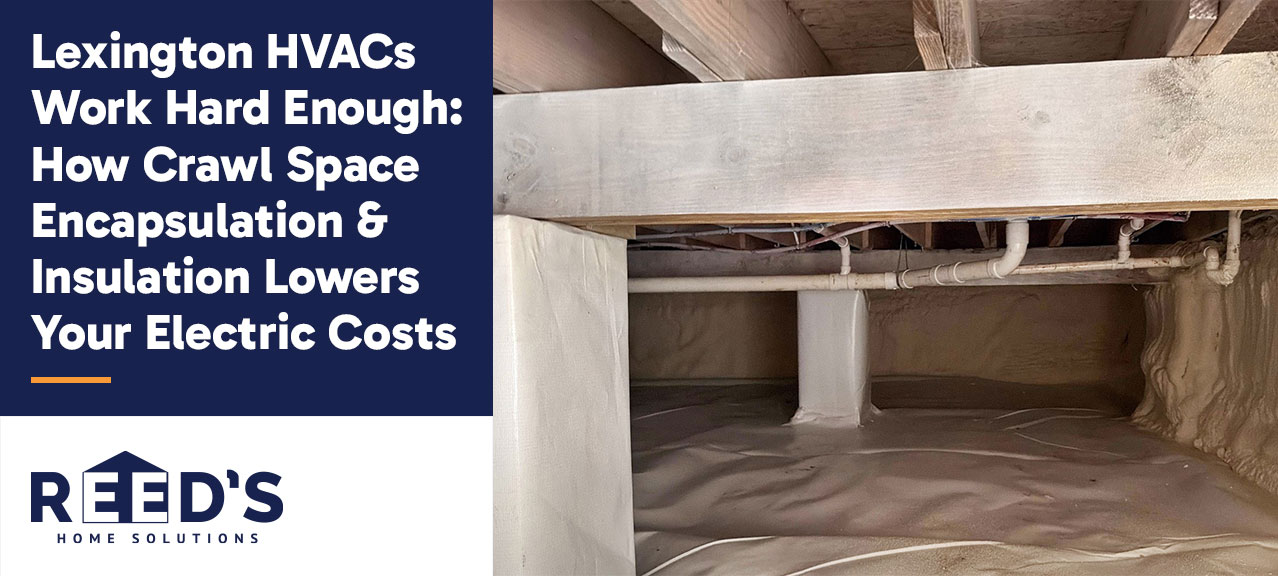
Hot Kentucky summers and freezing Bluegrass winters force your HVAC system into overtime, but the real culprit isn’t outside. Completing a crawl space encapsulation in Lexington, KY addresses the hidden energy drain beneath your floors. Humid air and thermal loss make your heating and cooling equipment work twice as hard. Unsealed crawl spaces dump moisture and extreme temperatures into your living areas, driving up costs month after month.
Homeowners typically see a 15% to 30% reduction in heating and cooling energy usage after a professional encapsulation. Reed’s Home Solutions explains how combining Lexington crawl space insulation energy savings with proper vapor barriers creates high-performance HVAC efficiency crawl space solutions. These targeted upgrades help lower electric bills in Lexington, KY while protecting your expensive equipment and improving comfort year-round.
How an Unsealed Crawl Space Taxes Your HVAC System
Vented crawl spaces in the Bluegrass region create three distinct energy drains that compound your heating and cooling costs. Each mechanism operates independently, yet they work together to force continuous HVAC operation.
The Stack Effect: How Air Movement Drives Up Energy Costs
Your home functions as a vertical air channel. Warm air rises and exits through attic penetrations and exhaust fans. This upward movement creates a negative pressure vacuum in lower levels that pulls replacement air directly from your crawl space. Up to 50% of the air you breathe on the first floor originates from beneath your floorboards.
Replacement air arrives at crawl space temperatures between 35°F and 45°F during winter, stripping heat from floor assemblies as it rises. Your thermostat detects this cold infiltration and signals your heating system to run longer cycles. Summer conditions pull hot, humid Bluegrass air upward through the exact same pathways. The U.S. Department of Energy reports that 20% to 30% of a home’s energy loss stems from uncontrolled air leakage, with much of that originating from unsealed foundations. This stack effect energy loss crawl space pattern compounds through both heating and cooling seasons each year.
Humidity and the Latent Heat Problem
Moisture infiltration creates a secondary burden on HVAC efficiency crawl space performance. Vented crawl spaces in Kentucky average 77% relative humidity, which means your air conditioner must remove that moisture before actual cooling can begin. This latent load steals capacity from temperature reduction. Your AC runs longer cycles to dehumidify the space, which can overcool rooms, trigger short-cycling, and waste energy on frequent compressor startups.
A 16-SEER cooling unit operating under an elevated latent load from Bluegrass region humidity crawl space conditions may deliver an effective performance closer to 12–13 SEER. That performance gap translates directly into higher utility bills and accelerated mechanical wear.
HVAC Ductwork Heat Transfer in Vented Crawl Spaces
Supply ducts carrying conditioned air through unsealed crawl spaces lose energy through conduction. A duct delivering 120°F air through a 40°F crawl space experiences ongoing thermal loss through duct walls. Even R-6 flex duct insulation reduces but does not eliminate this loss.
Delivered air temperatures can drop 10°F to 15°F before reaching registers over a 20 to 40-foot run. This explains why rooms farthest from your air handler feel coldest in winter and warmest in summer, forcing your system to run extended cycles to compensate.
Encapsulation vs. Insulation: The Dynamic Energy-Saving Duo
Encapsulation and insulation serve distinct functions, but they deliver maximum crawl space insulation energy savings when paired together. Encapsulation seals your crawl space with heavy-duty polyethylene vapor barriers ranging from 12 to 20 mil thickness, covering floors and walls to block ground moisture. Insulation adds thermal resistance through foam boards or spray foam applied to perimeter walls. Building professionals recommend combining both strategies to address moisture infiltration and thermal transfer simultaneously.
Vented vs. Encapsulated Crawl Space Comparison
| Feature | Standard Vented Crawl Space | Encapsulated & Insulated Crawl Space |
| Moisture Control | Open to Lexington humidity & high water tables | Sealed with 12–20 mil crawl space vapor barrier Lexington system & dehumidifier |
| HVAC Efficiency | High workload (battles extreme ambient temps) | Optimized HVAC efficiency crawl space buffer zone |
| Duct Performance | Ducts lose up to 30% thermal energy to ambient air | Ducts run in conditioned space, maintaining delivery temps |
| Utility Impact | High seasonal spikes year-round | Helps lower electric bills in Lexington, KY by 15% to 30% |
Moisture Control: Vapor Barriers and Dehumidifiers
Professional crawl space vapor barrier Lexington installations create a continuous barrier between damp soil and your living spaces. The liner covers the ground surface, extends up foundation walls, and is sealed tightly at all seams. This prevents soil moisture evaporation that drives relative humidity up to 77%. When coupled with vent sealing and rim joist air sealing, the system isolates your crawl space from outdoor conditions. Dedicated crawl space dehumidifiers then maintain optimal humidity levels (45%–55%) to control residual moisture.
HVAC Load Reduction Through Conditioned Spaces
Building Science Corporation research confirms that conditioned crawl spaces outperform vented alternatives in energy consumption, durability, and comfort across all climate zones. Sealing vents and installing heavy vapor barriers reduces indoor humidity by 30% to 50%. This converts the crawl space into a semi-conditioned buffer zone that stabilizes temperatures year-round, improving overall HVAC efficiency crawl space performance.
4 Ways Crawl Space Encapsulation Lowers Your Electric Bills
- Creates a Conditioned Buffer Zone Below Your Home: Sealing vents and installing thick vapor barriers eliminates the wild temperature swings beneath your floorboards, protecting living spaces from summer mugginess and winter drafts.
- Reduces HVAC Filter Clogs and Mechanical Wear: Blocking dust, pollen, and airborne debris from entering ductwork prevents coil corrosion and blower motor strain, reducing maintenance frequency.
- Optimizes Ductwork Performance and Air Delivery: Conditioned crawl space temperatures prevent supply lines from losing 10°F to 15°F during air distribution, allowing your system to hit setpoint temperatures with fewer cycles.
- Maintains Consistent Indoor Humidity Levels: Controlling under-floor moisture prevents excess latent loads from overwhelming your air conditioner, allowing it to cool your home faster and more efficiently.
Energy Savings: 15% to 30% Reduction in Heating and Cooling Costs
Homeowners realize significant crawl space insulation energy savings through improved thermal resistance and sealed ductwork. Research confirms up to a 20%+ decrease in overall energy consumption, directly answering how much does crawl space encapsulation save on electric bill queries for local residents seeking to lower electric bills in Lexington, KY.
Extends HVAC Equipment Lifespan and Protects Home Value
A 10% to 15% decrease in HVAC system cycles extends equipment service life, delaying costly unit replacements. Preventing moisture-related structural decay also preserves floor joists and protects home equity.
Frequently Asked Questions
How much can I save on my electric bill with crawl space encapsulation?
Homeowners in hot, humid regions report saving $50 to $150+ per month on utility costs after a crawl space encapsulation in Lexington, KY. The Environmental Protection Agency confirms average heating and cooling savings of 15% after proper sealing and insulating. Combining these upgrades generates reliable crawl space insulation energy savings that help lower electric bills in Lexington, KY.
Does crawl space insulation help in both summer and winter in Lexington, KY?
Yes. Winter cold chills uninsulated floorboards, forcing your furnace to work harder. In summer, a crawl space vapor barrier Lexington installation blocks heavy humidity infiltration, reducing cooling loads on your air conditioner year-round.
Is it better to insulate or encapsulate a crawl space?
Doing both yields the best HVAC efficiency crawl space performance. Insulation slows heat transfer, while encapsulation blocks moisture and air leakage. Installing insulation without encapsulation in a damp crawl space can trap moisture, causing mold growth and sagging fiberglass batts.
Give Your HVAC System a Break Today
Stop forcing your heating and cooling equipment to work overtime against regional humidity and thermal losses. Investing in crawl space encapsulation in Lexington, KY combined with proper insulation delivers a 15% to 30% reduction in utility costs while extending your equipment’s service life.
Ready to maximize your Lexington crawl space insulation energy savings and lower electric bills? Reed’s Home Solutions provides complete crawl space inspections and custom energy-efficiency solutions. Contact Reed’s Home Solutions today to schedule your evaluation!