
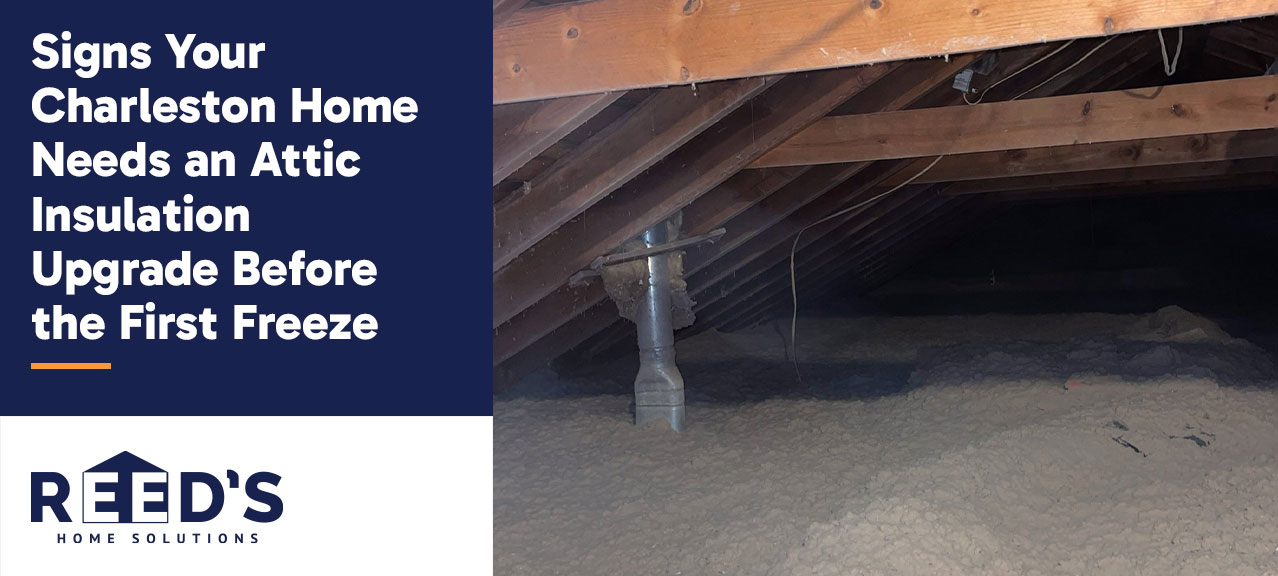
Households account for nearly 22 percent of the energy consumption in the United States each year. For Charleston, WV homeowners, attic insulation plays a critical role in controlling those costs. Old or ineffective insulation forces your HVAC system to work overtime and leads to surging energy bills and uncomfortable temperature swings. The Department of Energy states that proper insulation can reduce heating and cooling costs by up to 20%. This makes upgrading your attic insulation upgrade Charleston before the first freeze a priority. Reed’s Home Solutions Charleston specializes in identifying the warning signs your home needs better insulation. We deliver solutions that stop attic heat loss Charleston WV homes experience every winter.
5 Warning Signs Your Charleston Home Needs an Attic Insulation Upgrade
You need to spot the symptoms of failing attic insulation before winter arrives. This protects your Charleston home from unnecessary energy waste and repairs that get pricey. Reed’s Home Solutions identifies five critical warning signs every homeowner should monitor.
Cold Drafts and Chilly Ceilings in Upper Floors
Your body radiates heat to cold surfaces. Poorly insulated ceilings feel uncomfortable even when your thermostat reads a normal temperature. Drafty upper floors signal a stack effect problem where warm air escapes through attic leaks. This creates a vacuum that pulls cold exterior air through cracks near doors and floor thresholds. Rooms feel cold all the time despite your heating system running without stop. This constant air cycling is the cause.
Surging Winter Utility Bills
Homes with inadequate insulation experience energy losses up to 30%. Heat escaping through under-insulated attic space represents the biggest factor that contributes to higher bills. Up to 85% of your home’s heat escapes through the attic when insulation fails to create an effective thermal barrier. Your HVAC system compensates by working overtime and drives up natural gas consumption during Charleston’s coldest months.
Ice Dams Forming Along Roof Eaves
Ice dams develop when heat loss through your roof melts snow. Meltwater flows downward and refreezes at cold eaves. This freeze-thaw cycle allows water to work underneath shingles and eventually damages attics, ceilings and walls. Most experts agree attic insulation should maintain at least an R-30 value, with R-38 preferable in northern climates. Proper insulation prevents heat loss from your home’s interior. Adequate ventilation keeps attic air cold enough to prevent ice dam formation.
Fluctuating Room Temperatures
Temperature stratification creates uncomfortable layers where cold air settles near floors while hot air concentrates near ceilings. Air leaks coupled with the stack effect cause this phenomenon, especially noticeable between first and second floors. Some rooms feel colder than others even when your thermostat maintains a steady setting. You’re forced to adjust heating controls without achieving consistent comfort.
Old, Settled, or Pest-Damaged Insulation
Attic insulation 30 years old or more should be replaced. Loose-fill and blanket products settle and lose effectiveness over time. Rodents tear apart insulation for nesting, compress material and leave droppings that contaminate the space. Signs include scratching sounds after dark, musty odors and flattened sections in blown insulation. Rooms that suddenly feel hotter in summer or colder in winter than the rest of your house are another warning.
How Reed’s Home Solutions Upgrades Your Charleston Attic
Reed’s Home Solutions Charleston follows a systematic approach to attic insulation upgrade Charleston projects. The company addresses air leakage before adding thermal barriers. This sequenced methodology will give maximum energy savings and comfort to West Virginia homeowners.
Complete Air Sealing Before Installation
Air sealing attic Charleston WV homes represents the most important step in preparation work. Cellulose and fiberglass classifications fall under ‘air permeable’ materials that don’t stop airflow. Sealing all holes leading into living space becomes mandatory before piling insulation on top. Reed’s technicians seal top plates where walls meet attic drywall. Research indicates this delivers the greatest effect of all locations and can reduce air exchanges by up to 1.6. Recessed can lights receive airtight covers. These fixtures act like 6-inch chimneys and allow conditioned air to escape. Penetrations around pipes, wiring, electrical boxes and furnace flues get sealed with expanding foam or high-temperature caulk.
High-Performance Blown-In Insulation Application
Blown-in insulation flows around framing, wiring and plumbing obstacles that batts don’t fit around cleanly. This loose-fill material gets installed to measured depth and density. It creates continuous thermal coverage with fewer gaps. Reed’s Charleston insulation installers use depth markers to distribute the material evenly across your attic floor.
Spray Foam Insulation Options for Rooflines
Charleston homes with HVAC equipment in attics benefit from spray foam attic insulation West Virginia contractors apply to roof sheathing. This provides both insulation and air barrier in one application. Closed-cell technology performs 24 times better at blocking airflow compared to traditional materials. Its R-value doesn’t degrade over time.
Proper Attic Ventilation
Rafter vents installed between rafters maintain airflow paths from soffit intakes to ridge exhausts. Proper ventilation moves super-heated air out during summer and prevents moisture buildup year-round. Reed’s Home Solutions never covers soffit vents with insulation. The company maintains the balanced system building codes require.
Benefits of Upgrading Before the First Freeze
Timing your attic insulation upgrade Charleston project before winter weather hits delivers immediate financial returns and protection for your home’s heating system.
Lower Heating Costs Right Away
EPA estimates show homeowners can save an average of 15% on heating and cooling costs by air sealing and adding insulation in attics. Charleston households spend about 50% of total energy costs on heating and cooling. This translates to measurable monthly savings starting with your first utility bill after installation. Many Reed’s Home Solutions customers report reductions of $200 or more on energy expenses each year. The Department of Energy corroborates these figures and suggests that sealed and insulated homes achieve up to 15% savings on heating and cooling costs.
Consistent Indoor Comfort Throughout Your Home
Installed insulation delivers stable temperatures throughout your living space during the hottest and coldest times of the year. Your second-floor bedrooms maintain the same comfort level as ground-floor rooms without constant thermostat adjustments. Reed’s Home Solutions Charleston creates this consistency by preventing heat transfer between your attic and living areas. This eliminates the temperature stratification that makes upper floors uncomfortable during freezing spells.
HVAC Protection During Peak Freezing Spells
Your heating system experiences reduced strain when attic insulation Charleston WV professionals install thermal barriers before winter arrives. The combination of air sealing and insulation maximizes energy efficiency. Your furnace runs fewer cycles during Charleston’s coldest days. This decreased workload minimizes wear and tear on components and extends equipment lifespan while reducing the likelihood of mid-winter breakdowns. Homes with ductwork in attics gain additional protection. Insulated attic spaces prevent extreme temperature swings that force your HVAC to work overtime compensating for heat loss through uninsulated ducts.
Why Choose Reed’s Home Solutions in Charleston, WV
Local Expertise for Kanawha Valley Homes
Reed’s Home Solutions Charleston brings specialized understanding of West Virginia’s unique housing challenges. Charleston is the state’s largest city and capital, with much of the housing stock built before 1960. Neighborhoods like Kanawha City, Edgewood, and the West Side feature block after block of homes from the 1920s, 1930s, and 1940s. Many have brick exteriors and original wood framing. Modern air-sealing is absent. Charleston sits at the confluence of the Kanawha and Elk rivers, where the city receives about 44 inches of rain per year. Reed’s team knows the older housing stock and humidity issues specific to the Kanawha Valley.
Complete Inspections and Custom Solutions
A contractor visits your home and gets into the attic, crawl space, or walls. Reed’s technicians measure existing materials and check for moisture issues. They explain findings in plain language. You receive a written estimate before any work begins.
Professional Installation You Can Trust
Reed’s Home Solutions documents the materials and coverage on every job. The full scope goes in writing before starting. You walk through what was done upon completion and receive written documentation of the insulation type and amount installed. This protects your tax credit eligibility and provides records if you sell the home.
Book Your Estimate Today
Acting before the first freeze protects your Charleston home from unnecessary energy waste and emergency repairs that get pricey. Reed’s Home Solutions Charleston delivers upgrades that combine air sealing and high-performance insulation to get immediate results. Your heating bills drop and comfort improves throughout every room. Your HVAC system operates without excessive strain during West Virginia’s coldest months. Schedule your inspection today to experience these benefits this winter.