Foundation Settlement Repair
We Fix Sinking and Settling Foundations
A settling foundation doesn’t move all at once — it happens gradually, as the soil underneath shifts, dries out, or washes away, and the structure above follows it down unevenly. Left alone, that uneven movement gets more expensive to fix, not less. Reed’s Home Solutions diagnoses what’s moving and why during a free inspection, then stabilizes it with helical or push piers engineered to your home’s soil and load.
What Causes Foundation Settlement — And How to Spot It
Most foundation damage traces back to the soil, not the concrete. Here’s what typically causes it, and how to spot it early.
Common Causes
- Expansive clay soils that swell when saturated and shrink during dry spells, common throughout Kentucky, Tennessee, Virginia, and West Virginia — the single biggest driver of settlement in our service area.
- Poor grading or clogged gutters that let water pool against the foundation instead of draining away, softening the soil directly beneath the footing.
- Drought-to-downpour cycles that dry soil out until it pulls away from the foundation, then saturate it again — the swing itself is what causes movement.
- Plumbing leaks that saturate soil under a slab or around a footing with no visible sign above ground until settlement shows up in the structure.
- Tree roots planted too close to the foundation, drawing moisture unevenly from the soil beneath it.
Signs Your Wall Is Bowing
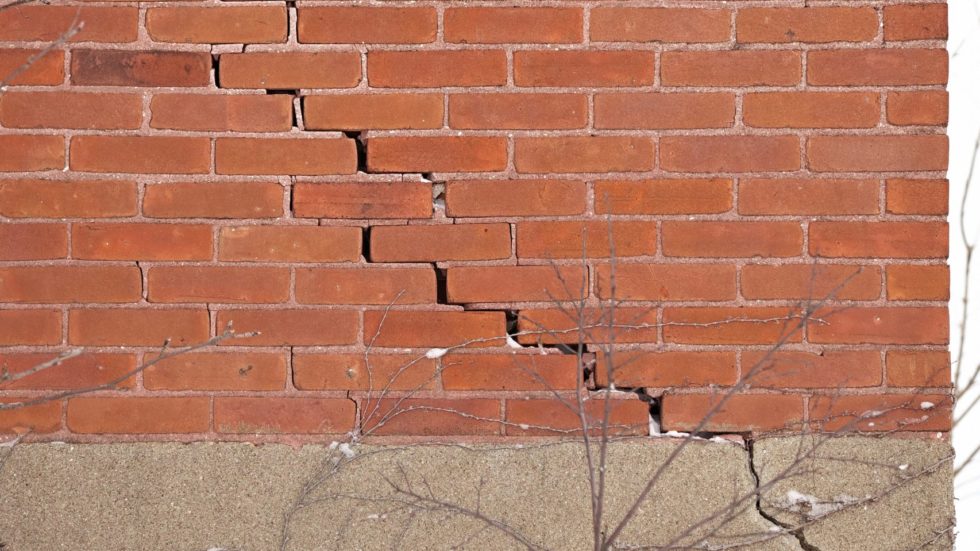
- Stair-step cracks in block or brick foundation walls.
- Doors and windows that stick, won’t latch, or develop gaps that come and go seasonally.
- Sloping or bouncy floors, especially near an exterior wall.
- Gaps where a wall meets the ceiling or floor.
- Visible separation around a chimney or where an addition meets the main structure.
How We Fix a Settling Foundation
Both methods stop settlement and support the structure above — which one fits your home depends on soil conditions and how far the movement has progressed. We determine that during your free inspection, not before.
Helical Piers
Deep steel supports that thread into load-bearing soil or bedrock. Installation isn’t weather-dependent, and it’s typically the better fit for lighter structures or additions.
Push Piers
Steel piers driven straight to bedrock or refusal, providing over 70,000 lbs of support per pier with minimal excavation.
A Moving Foundation Is Often a Wet Basement, Too
Settlement and water intrusion frequently share the same root cause — soil and drainage. If your foundation is settling, it's worth having your basement or crawl space checked in the same visit; see Basement Waterproofing and Crawl Space Repair.

Proven by Results, Recognized for Excellence
Notice Cracks, Sticking Doors, or a Sloping Floor?
Free, no-obligation foundation inspections across Kentucky, Tennessee, Virginia & West Virginia — plus flexible financing to help make a structural repair more manageable.
Areas We Serve
We provide foundation settlement repair throughout Kentucky, Tennessee, Virginia, West Virginia, and surrounding areas. See below for additional communities we serve for foundation repair.