Bowing Basement Wall Repair
Repair Bowing and Leaning Walls
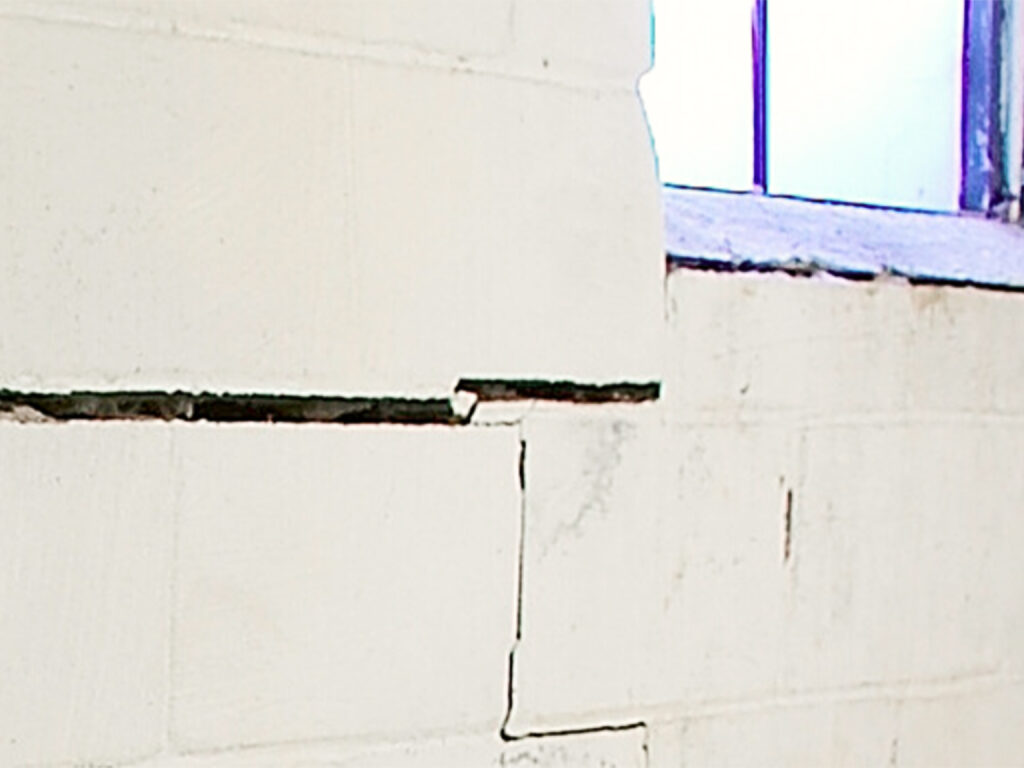
A bowing or leaning basement wall means hydrostatic pressure or soil movement is pushing harder than the wall can resist. It’s a progressive problem — a wall that’s bowing an inch today can crack or fail structurally if the pressure behind it isn’t relieved and the wall itself isn’t reinforced. Reed’s Home Solutions stabilizes bowing walls with one of three engineered systems, chosen based on how far the wall has already moved.
What Causes a Basement Wall to Bow — And How to Spot It
Most foundation damage traces back to the soil, not the concrete. Here’s what typically causes it, and how to spot it early.
Common Causes
- Hydrostatic pressure from soil that’s saturated with water, pushing continuously against the wall from the outside.
- Expansive clay soils, common throughout Kentucky, Tennessee, Virginia, and West Virginia, that swell when wet and physically push against foundation walls.
- Poor grading or downspouts draining too close to the foundation, overloading the soil right next to the wall instead of carrying water away.
- Frost heave, where freezing and thawing soil pushes against a wall repeatedly over the winter months.
Signs Your Wall Is Bowing
- A horizontal crack at or near the midpoint of the wall.
- Stair-step cracks in block or brick, often worse near corners.
- A visible inward curve or lean when you sight down the wall.
- The wall separating from the floor or ceiling.
- White, powdery mineral deposits (efflorescence) near cracks — a sign water is moving through them.
How We Stabilize a Bowing Wall
Three engineered systems, chosen by how far the wall has moved and how much room there is to work with outside.
Wall Anchors
Steel rods anchor the wall to stable soil in the yard, then tighten over time to gradually straighten it. This is the best option where there's room outside to set anchor points — it doesn't require excavating the interior, and it can reverse bowing over time rather than just holding it in place.
- Best for: walls that have moved further, with yard space available
Carbon Fiber Reinforcement
Carbon fiber reinforcement provides exceptional strength for foundation wall stabilization, with tensile strength exceeding 500,000 psi. Straps bond directly to the interior wall with epoxy, requiring zero exterior excavation, and prevent further cracking while maintaining the wall's structural integrity.
- Best for: early-stage bowing, tight lots with no exterior access
Reinforced Steel Beams
Vertical steel beams brace a severely bowed or cracked wall floor-to-ceiling — our most heavy-duty option, for walls that have already moved significantly and need more than surface reinforcement to stay put.
- Best for: walls with significant movement or visible structural failure
Which Method Is Right for Your Wall?
Mostly a function of how far the wall has already moved and whether there's room outside to install anchor points. Carbon fiber works best for early-stage bowing with no exterior excavation; wall anchors gradually straighten a wall that's moved further, using stable soil outside as the anchor point; reinforced steel beams are for walls that have moved significantly and need floor-to-ceiling bracing. We'll walk you through which applies to your wall during your free inspection.
A Bowing Wall Is Often a Drainage Problem, Too
Hydrostatic pressure is a water problem before it's a structural one. If your wall is bowing, it's worth having your grading and drainage checked in the same visit; see Basement Waterproofing for interior and exterior drainage solutions.
Proven by Results, Recognized for Excellence
Bowing Wall Repair FAQs
My basement wall is bowing — how do you decide between wall anchors, carbon fiber, and steel beams?
Mostly by how far the wall has already moved and whether there’s room outside to install anchor points. Carbon fiber works well for early-stage bowing with no exterior excavation; wall anchors gradually straighten a wall that’s moved further, using stable soil outside as the anchor point; reinforced steel beams are for walls that have moved significantly and need floor-to-ceiling bracing. We’ll walk you through which applies to your wall.
Is a bowing wall an emergency?
It’s progressive rather than instant, but it doesn’t get better on its own — the pressure causing it typically continues, and a wall that’s bowing can eventually crack through or fail structurally. The sooner it’s stabilized, the more options (like wall anchors, which can gradually reverse the bow) stay on the table.
Do you need to excavate my yard to fix a bowing wall?
Only for wall anchors, which need anchor points set in stable soil outside. Carbon fiber reinforcement and reinforced steel beams are both installed entirely from the interior, with no exterior excavation required.
Noticing a Bowing, Leaning, or Cracking Wall?
Free, no-obligation foundation inspections across Kentucky, Tennessee, Virginia & West Virginia — plus flexible financing to help make a structural repair more manageable.
Areas We Serve
We provide bowing wall stabilization throughout Kentucky, Tennessee, Virginia, West Virginia, and surrounding areas. See below for additional communities we serve for foundation repair.