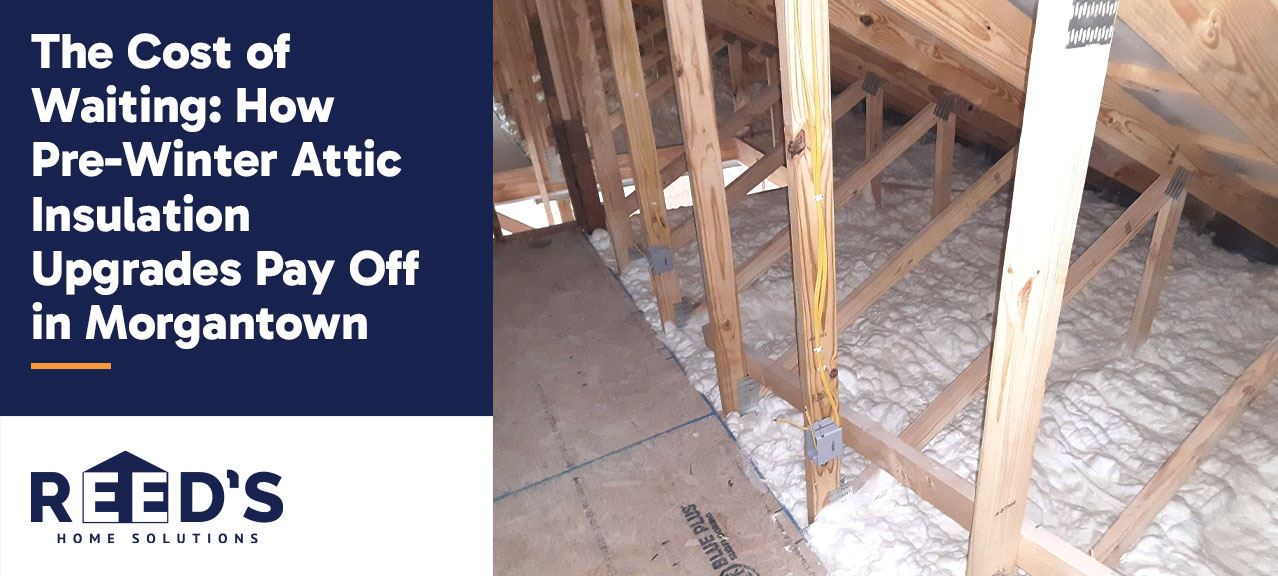
Proper attic insulation can reduce your heating and cooling costs by 15-25%, yet many Morgantown homeowners wait until winter to address this upgrade. Pre-winter attic insulation Morgantown projects completed in fall deliver immediate savings. Wait until temperatures drop and you lose hundreds of dollars to heat loss. You also face limited contractor availability and deal with more complex installation conditions. The US Environmental Protection Agency estimates that proper attic insulation can slash your energy bills by about 20%. In this piece, we’ll show you what delaying your attic insulation upgrade costs you. This includes cumulative winter heating expenses and hidden damage from ice dams that strain your HVAC system. You’ll also find out why fall is the optimal time for energy efficient attic upgrades in West Virginia. Reed’s Home Solutions will show you how to calculate your return on investment for reducing heating bills in Morgantown.
Why Timing Matters for Attic Insulation in Morgantown
Insulation installed before winter starts saving money right away
Fall delivers the best window for attic insulation upgrades in Morgantown. The weather remains cool and dry. Your attic space stays comfortable to work in. Schedule your attic insulation Morgantown WV project during early fall and your home stands fully prepared before freezing temperatures arrive. You capture heating savings right away the moment colder weather settles in.
Your upgraded insulation begins working from day one of heating season with this timing advantage. Every degree your furnace doesn’t just need to compensate for heat loss translates to lower energy bills. Wait until winter and you’re hemorrhaging heated air through your underinsulated attic while your utility costs climb.
Contractor availability tightens as temperatures drop
Insulation contractors experience predictable seasonal demand patterns that affect your project timeline. Temperatures hit extremes and comfort problems become obvious. Insulation companies see a surge in emergency calls from homeowners desperate for relief. This rush creates fuller contractor schedules and longer wait times for installation.
Cold rooms and drafty floors push insulation upgrades to the top of homeowner priority lists once winter arrives. Heating systems run constantly. Contractors who maintain flexible schedules during quieter fall months often find themselves completely booked by December. Your home just needs blown-in insulation before winter. Scheduling during fall eliminates the frustration of waiting weeks for an available installation date while your heating bills continue mounting.
Updating mid-winter is harder and can get pricey
Winter installations face practical challenges that fall upgrades avoid entirely. Snow accumulation and extreme cold conditions make access more difficult. Labor costs may increase slightly during winter months because of weather-related complications. Fall projects proceed smoothly without weather disruptions.
The attic environment itself presents obstacles during winter updates. Your installer must work in space that’s either uncomfortably cold or excessively warm from escaping heat if your heating system is compensating for poor insulation. These conditions slow installation progress and reduce working speed. Fall weather eliminates these complications and your energy efficient attic upgrade gets completed properly without weather-induced delays or the stress of emergency timing.
What Morgantown Winters Do to an Underinsulated Home
Typical winter temperatures and heating demand in North-Central West Virginia
Morgantown experiences a January daily mean temperature of 32°F. Winter lows drop below freezing often and plummet below 10°F at times. The region receives approximately 27.6 inches of snowfall annually and creates sustained heating demands throughout the cold season. These temperature patterns translate to substantial heating degree days, which utilities and engineers use to calculate heating load requirements.
Extreme cold events push temperatures as low as -25°F. Extended periods of sub-freezing weather force heating systems to operate for months without a break. Your furnace faces relentless demand from November through March with no relief from the gap between indoor comfort levels and outdoor temperatures.
How heat escapes through an underinsulated attic
Warm air rises through your home and moves toward the attic where it escapes through inadequate insulation. As much as 25-40% of heat loss occurs through the attic in poorly insulated homes. This constant escape of heated air forces your furnace to produce replacement warmth without stopping during winter.
The amount of heat escaping creates a 25% increase in heating costs from poor insulation alone. Gaps around penetrations, compressed insulation and insufficient R-value all contribute to this thermal hemorrhaging. Air leakage from recessed lights, plumbing vents and wiring holes compounds conductive heat loss and transfers way more energy than thin insulation coverage.
Ice dam formation and roof damage risk from heat loss
Heat escaping through your attic warms the roof deck and melts snow even when outdoor temperatures remain below freezing. This meltwater flows down until reaching cold eaves, where it refreezes into ice dams. The resulting ice buildup backs water under shingles and causes roof leaks, damaged sheathing and mold growth.
Ice dam repairs range from a few hundred dollars to fix minor issues to several thousand to completely re-roof and remediate interior water damage. Structural framing decay, metal fastener corrosion and ruined attic insulation add hidden expenses beyond visible damage.
HVAC systems working harder and wearing out faster
Your HVAC system compensates for escaping heat by running longer cycles and operating more often. This additional strain shortens equipment lifespan while increasing wear on compressors and blower motors. Components designed to last 15-20 years may fail in 10-12 years under constant overwork.
Poor attic insulation forces more frequent maintenance calls and premature system replacement. Temperature fluctuations create inconsistent comfort even with functioning equipment, as some rooms never match the thermostat setting despite continuous heating cycles.
The Real Cost of Waiting to Upgrade Your Attic Insulation
Estimated monthly heating cost increase from poor insulation
The Department of Energy estimates annual energy losses between $200 and $400 due to drafts and inadequate insulation. Morgantown homeowners who spend around $2,000 annually on energy bills can waste $50 to $100 each month during winter from poor attic insulation alone. Total air leakage in underinsulated homes equals leaving a window open continuously.
Cumulative cost over a full winter season vs one-time upgrade cost
A household that invests in blown-in insulation before winter can reduce energy costs by 20-30%. This translates to $400-600 in annual savings. Poor insulation wastes $300-500 over a Morgantown heating season that proper attic insulation Morgantown WV upgrades would prevent. Most insulation projects deliver payback within 3-5 years through ongoing energy savings.
Hidden costs: ice dam repair, roof damage, and HVAC wear
Ice dam repairs range from $500-1,500 for minor damage to $6,000-10,000+ for severe structural issues. Average roof leak repairs cost $900, while extensive water damage remediation reaches $1,300-6,200. Premature HVAC system failure from constant overwork adds thousands in unexpected replacement expenses.
Comfort costs: cold rooms, drafts, and inconsistent temperatures
Beyond dollar figures, inadequate insulation creates cold rooms and temperature variations between floors that no thermostat adjustment can fix. Persistent drafts near ceilings add to the discomfort.
How Pre-Winter Insulation Upgrades Pay Off
Signs your attic isn’t ready for winter
Ninety percent of U.S. homes remain under-insulated. Walk into your attic and look around from the hatch. Visible floor joists signal insufficient insulation coverage. Bare spots near edges allow conditioned air to escape. Check if second-floor rooms feel cold during winter evenings. Rising energy bills, ice dam formation, drafts near ceilings, moisture growth, and insulation older than 15-20 years all indicate your attic needs attention before temperatures drop.
Why fall is the ideal time to upgrade attic insulation
Fall offers perfect conditions for attic insulation Morgantown WV projects. Milder temperatures make the work comfortable. Drier air prevents moisture from getting trapped below new insulation layers. Contractor schedules remain flexible before winter demand accelerates. Blown-in insulation installed before winter means immediate savings once heating season begins.
What a pre-winter insulation upgrade involves in Morgantown
Air sealing comes first. Gaps around pipes, wiring, and recessed lights must be sealed before adding insulation. You can choose between fiberglass batts, blown-in cellulose, or spray foam. Attics in West Virginia require R-38 to R-60 insulation. The new layer can go over existing insulation if it’s in acceptable condition.
The payback: ROI and winter savings
Proper attic insulation reduces annual heating and cooling costs by 15%. Most homeowners see 20-30% energy cost reductions and save $400-600 yearly. Insulation upgrades pay for themselves within 3-5 years through ongoing energy savings.
Cost factors for Morgantown homeowners
Your attic’s size represents the largest cost factor for Morgantown attic insulation. Accessibility, existing insulation condition, material selection, and labor rates all influence your final investment.
Conclusion
Pre-winter attic insulation upgrades in Morgantown pay off the moment cold weather arrives. Wait until temperatures drop and you lose money daily to heat loss while facing limited contractor availability. Fall conditions create an ideal installation window and ensure your home stands ready before the first freeze. The investment pays for itself within 3-5 years typically, and those savings continue for decades. Schedule your energy efficient attic upgrade now to reduce heating bills in Morgantown this winter season.