
Most homeowners assume poor insulation is the main cause of winter drafts. The real culprit, more often than not, is air leakage. Unsealed gaps around wall-to-roof joints, foundations, and penetrations alone can account for 27% or more of your home’s total air leakage — and air leakage accounts for 3% of total U.S. energy consumption. That adds up quickly when temperatures drop in the Roanoke Valley.
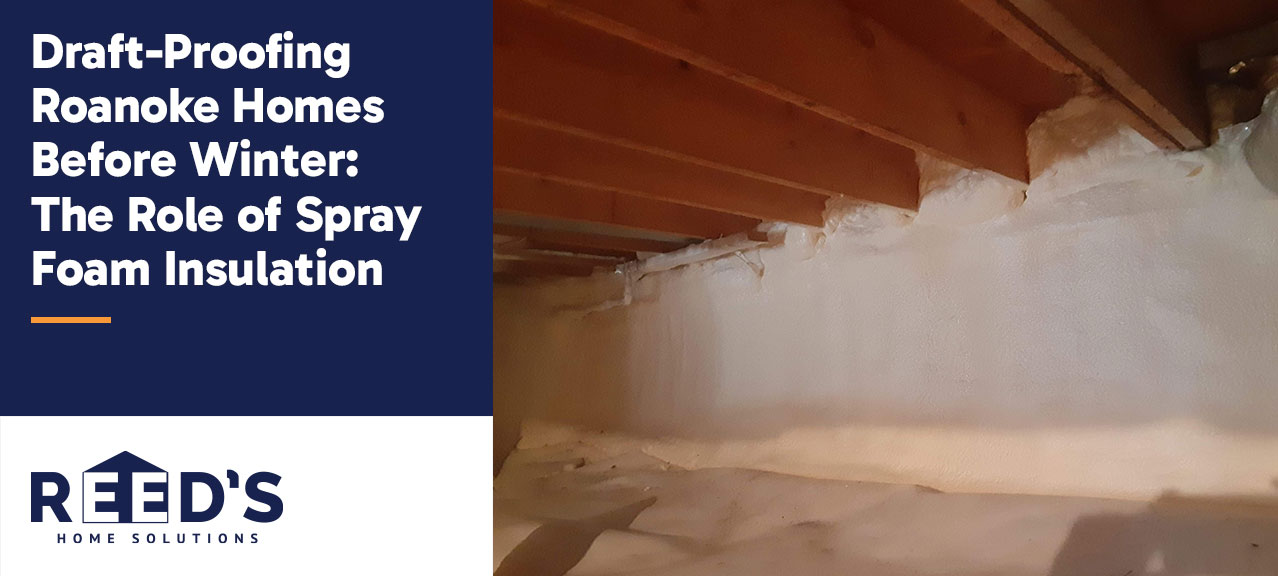
Spray foam insulation seals these leaks at the source while delivering superior insulation value. Whether the problem is a drafty basement rim joist or gaps around plumbing penetrations, spray foam addresses these issues in ways traditional insulation simply cannot.
This guide covers why draft-proofing your Roanoke home before winter matters, how spray foam insulation in Roanoke compares to traditional insulation options, where it works best, what the installation process looks like, and why Reed’s Home Solutions is the right insulation contractor for the job.
Why Draft-Proofing Matters Before Winter in Roanoke
Roanoke Valley Winter Temperatures and Heating Demand
Roanoke winters are no minor inconvenience. The area sees an average of 88.9 days annually when nighttime temperatures fall below freezing, with January lows averaging 26.1°F. Annual snowfall averages 22.8 inches, and sustained cold periods keep your heating system running hard for months at a time.
Every air leak in your home makes that worse. Natural gas consumption climbs significantly during winter as colder temperatures push space heating demand higher. Your HVAC system compensates by cycling more frequently — burning more fuel and wearing down faster — just to maintain a comfortable indoor temperature.
How Air Leaks Drive Most Winter Heat Loss
Air leakage allows conditioned indoor air to escape through small gaps around frames and seals, and it is one of the most significant contributors to winter heat loss. Stack effect accelerates this problem. Heat naturally rises and exits through the top of your home due to the pressure difference between your warm interior and the cold outdoors.
Exterior walls account for a large share of your building’s thermal envelope, and heat loss through them is especially pronounced in older homes where insulation has settled and degraded over time. Even something as overlooked as an open fireplace damper can increase your heating energy consumption by over 30 percent.
Common Draft Sources in Older Roanoke Homes
Foundation settling creates hairline cracks around windows, doors, and any break in the wall. These gaps become primary entry points for cold outdoor air. Draft-proofing a Roanoke home means tracking down and sealing multiple problem areas:
- Chimney chases: Running from basement to roof, these create ideal conditions for stack effect air leakage throughout the home
- Attic access points: Folding attic stairs leave large openings covered by nothing more than thin plywood, directly connecting unconditioned attic space to your living area
- Basement walls and sills: The junction between your foundation and wooden sill plate is a consistent source of significant air leakage
- Recessed lighting and plumbing penetrations: These openings allow air to move freely between floors and from attics directly into living spaces
- Windows and doors: Deteriorated caulking, missing weatherstripping, and gaps between frames and surrounding walls all invite cold air in
If you spot any of these issues, getting them addressed before winter arrives is important. Left alone, they force your heating system to work harder all season long and drive up energy costs that could have been avoided.
Understanding Spray Foam Insulation for Draft-Proofing
What Spray Foam Is and How It Works
Spray foam insulation is created when two liquid chemicals — isocyanate and polyol resin — mix at the spray gun tip and react on contact. The result is a rapid expansion. Open-cell foam can expand up to 150 times its original volume, while closed-cell expands 35 to 50 times. That expansion is what makes spray foam so effective — it fills irregular gaps, cracks, and hard-to-reach spaces that other insulation materials simply cannot access.
Once cured, spray foam hardens into a permanent layer that adheres directly to the surface. It never settles, never shifts, and never leaves the gaps that fiberglass batts are known for. The result is an airtight seal that stops air movement through your building envelope at the source.
Open-Cell vs. Closed-Cell Spray Foam
Not all spray foam is the same, and choosing the right type matters for your specific application.
Open-cell foam weighs around 0.5 pounds per cubic foot and delivers an R-value of R-3.5 to R-3.7 per inch. The cells break open during expansion, producing a soft, flexible material that allows vapor to pass through. This makes open-cell foam a solid choice for interior walls where soundproofing is a priority.
Closed-cell foam is the denser option at 2 pounds per cubic foot, with an R-value of R-6 to R-7 per inch[91]. The cells remain sealed, trapping insulative gasses that provide significantly higher thermal resistance. At proper application thickness, closed-cell foam serves as both an air barrier and a vapor retarder. Its rigid structure also adds measurable strength to wall assemblies and resists moisture penetration — making it the preferred choice for crawl spaces, basements, and any area exposed to moisture.
How Spray Foam Compares to Fiberglass and Cellulose
Fiberglass and cellulose insulation have their place, but they cannot block airflow effectively. Fiberglass offers R-3 to R-4 per inch, but it leaves gaps around framing members and settles over time — reducing its real-world performance. Air leakage through those gaps can account for up to 40 percent of your total heating and cooling costs. Spray foam eliminates that problem entirely by sealing and insulating in a single application.
Where Spray Foam Works Best in Roanoke Homes
Some areas of your home benefit more than others from spray foam application:
- Attics: The largest exposed surface in your home for heat loss, making proper sealing here a top priority
- Rim joists: These account for approximately 30% of total air leakage in a structure — a significant source that is easy to overlook
- Crawl spaces and basements: Closed-cell foam is ideal here because of its moisture resistance and vapor control properties
- Plumbing, electrical, and ductwork penetrations: Spray foam seals these gaps where traditional insulation materials fail to perform
Signs Your Home Needs Draft-Proofing and What to Expect
Common Draft Indicators in Your Home
Some signs of air leakage are hard to miss. Cold air seeping through and around windows and doors during winter is one of the clearest signals. Uneven temperatures between rooms are another — if one room stays noticeably colder than the rest, air leakage is often the cause. Excessive dust buildup from outdoor air infiltrating your living space, combined with energy bills higher than what similar-sized homes nearby pay, points to an HVAC system working overtime to keep up with escaping conditioned air.
If any of these sound familiar, it’s worth finding the source of the problem and addressing it before winter settles in. Left unchecked, air leakage issues only get worse and more expensive to ignore.
The Spray Foam Installation Process
Professional spray foam installation does require you to vacate your home during application. Your installer will begin by cleaning the surfaces and masking off any areas not receiving foam. The chemicals mix at the spray gun tip and expand to fill wall cavities, attic spaces, rim joists, or crawl space walls. Application happens in multiple thin layers rather than a single thick pass — this ensures proper curing throughout.
Reoccupancy time ranges from 24 to 72 hours depending on foam type and application thickness, giving the material adequate time to off-gas before you return. Your contractor should walk you through the exact timeline before work begins.
Energy Savings and Return on Investment
Homeowners report energy savings between 30% and 50% on heating and cooling costs after spray foam installation. The U.S. Department of Energy confirms homes with spray foam achieve 35% to 40% better energy efficiency than the average home. Most installations pay for themselves within 3 to 7 years through reduced energy bills. With a lifespan of 80 to 100 years, spray foam insulation continues delivering savings long after that initial payback period.
Upgrading your insulation is an investment that pays for itself — and then keeps paying.
Cost Factors for Spray Foam in Roanoke
Several variables affect your total Roanoke spray foam insulation cost. The size of the area being treated has the most direct impact, with larger zones requiring more material and labor time. Tight crawl spaces or cathedral ceilings add installation complexity and can affect pricing. Your choice between closed-cell and open-cell foam also plays a role, since material density differs significantly between the two. If old fiberglass or moldy insulation needs to be removed before application, that adds labor to the overall investment.
A detailed written proposal from your contractor will spell out exactly what’s included — foam type, application areas, R-value targets, and total cost — so there are no surprises.
How to Choose the Right Spray Foam Contractor in Roanoke
What to Look for in a Spray Foam Installer
Not every installer delivers the same results. Choosing the right contractor matters as much as choosing the right product.
Read Google reviews and check recent customer references in your area. Look for consistent feedback about professionalism, clean work, and actual reductions in energy bills. A qualified contractor will walk you through air sealing strategies before recommending any product. Ask for a detailed written proposal that specifies foam type, R-value targets, application areas, and total depth.
A few other questions worth asking:
- Re-occupancy time: This varies by product and requires proper ventilation before you return home
- Chemical storage: Confirm the installer stores materials in temperature-controlled environments and monitors air temperature and humidity during application
Reed’s Home Solutions Draft-Proofing Approach
Reed’s Home Solutions brings certified expertise to every spray foam insulation project in Roanoke. Our trained installers understand the local climate demands and building science principles specific to Roanoke Valley homes. We provide detailed written proposals, maintain proper insurance coverage, and follow strict safety protocols throughout every installation.
Our goal is straightforward: seal your home against winter drafts, reduce your energy costs, and create a more comfortable living environment for your family.
Frequently Asked Questions About Spray Foam Insulation
Can I install spray foam myself? Small DIY kits work for minor gaps and small cracks. Full installations, however, require professional equipment and training to ensure safety and proper application.
How long before I can return home after installation? Plan to vacate for 24 to 72 hours. The exact timeframe depends on foam type, application thickness, and ventilation conditions.
Does spray foam require maintenance? Spray foam is low-maintenance by nature. A quick annual inspection for physical damage is all that’s typically needed.
Contact Reed’s Home Solutions for Draft-Proofing in Roanoke
A drafty home heading into winter is not just uncomfortable — it is expensive. Every unsealed gap around your foundation, attic, or plumbing penetrations forces your heating system to work harder than it should. Spray foam insulation seals those leaks at the source and delivers reliable performance for decades.
Reed’s Home Solutions is ready to help you winterize your Roanoke home with certified expertise and proven results. Our trained installers understand the specific challenges Roanoke Valley homes face each winter, and we provide detailed proposals so you know exactly what to expect before work begins.
Contact us today to schedule your free inspection and take the first step toward a warmer, more energy-efficient home this winter.