
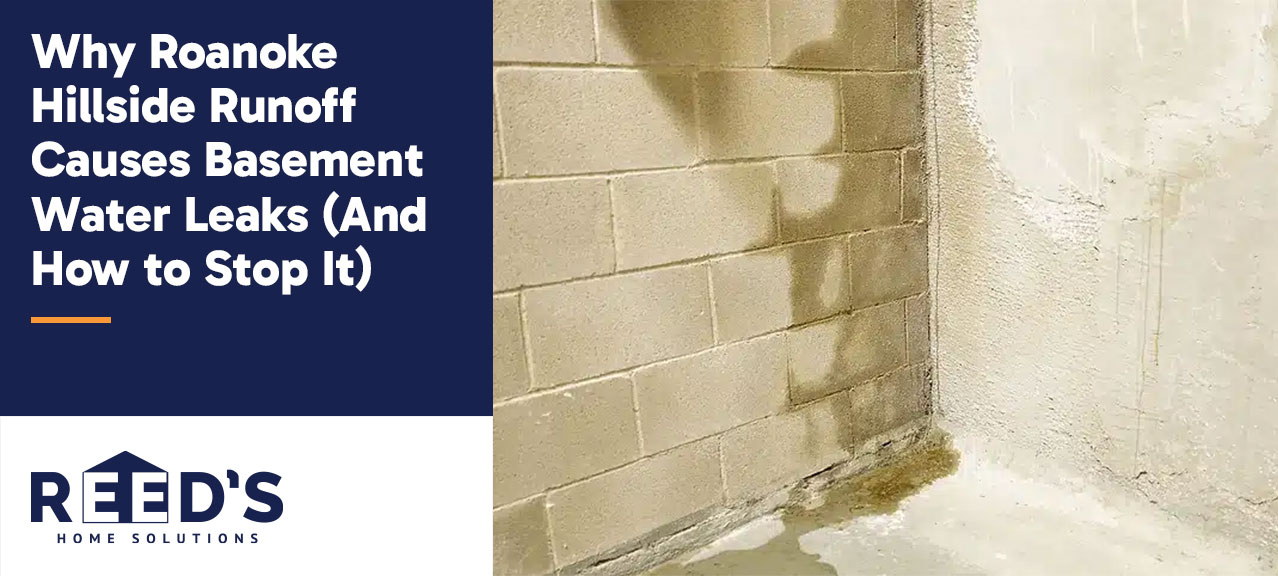
Water in your basement after a heavy rain is more than a nuisance. For Roanoke homeowners, it is a warning sign that something serious is happening beneath your feet. The numbers tell the story clearly — 98 percent of basements will experience water damage at some point, and the average insurance claim runs well over $11,000.
Your home’s location in the Blue Ridge foothills is part of the problem. The same terrain that makes Roanoke beautiful also makes basements vulnerable. Hillside runoff has to go somewhere, and without proper drainage in place, it heads straight toward your foundation.
The longer these hillside drainage problems go unaddressed, the worse they get. What starts as dampness or a faint musty smell can turn into foundation crack repair, Roanoke basement waterproofing, and mold remediation. These are not problems that resolve on their own.
The good news is that grading and drainage solutions can stop water intrusion before it causes serious harm. Understanding why your terrain puts your basement at risk is the first step toward protecting your home and avoiding costly repairs down the road.
Why Roanoke’s Hillside Terrain Makes Basements Vulnerable
The Blue Ridge Foothills and Natural Slope of the Roanoke Valley
Roanoke sits inside a mountain-rimmed valley, and that geography works against your basement. The Blue Ridge foothills create natural drainage patterns that push water directly toward homes. Think of the valley’s bowl-shaped topography as a funnel — runoff from higher elevations has nowhere to go except straight into residential areas below. Several neighborhoods deal with flash flooding every single year because of this terrain. Storms crossing the Blue Ridge drop additional precipitation as they descend, and your home becomes the collection point for water traveling downhill from hundreds of feet above.
How Gravity Moves Water Toward Your Foundation
Water follows one simple rule: it moves to the lowest point. When rain hits the higher ground behind your home, gravity pulls it downward without pause. Soil acts like a sponge at first, absorbing moisture until it becomes fully saturated. Once that happens, water begins moving sideways and downward, pushing into the soil pressed directly against your foundation. The pressure builds slowly and silently — but it never stops. Over time, this forces water into openings you would never spot during a routine walk around your house.
Clay-Heavy Soil Types That Worsen Water Runoff
Clay soil makes an already difficult situation worse. Unlike sandy soil that lets water pass through quickly, clay absorbs moisture slowly and holds it for extended periods. Those dense, tightly packed particles trap water around your foundation rather than allowing it to drain away. When clay gets wet, it expands. When it dries, it contracts. That repeated cycle puts stress on basement walls with every wet season, and the resulting hydrostatic pressure worsens each time it happens.
Water sitting in saturated clay has nowhere to go except toward your foundation. Clay-heavy ground can stay wet for days — sometimes weeks — after rain stops, maintaining constant pressure against below-grade walls. That is not a temporary problem. It is an ongoing one.
Poor Grading Directing Water Toward the House
The ground around your home should slope away from it — specifically, dropping six inches over the first ten feet from your foundation. When it does not, you have a grading problem.
Poor grading typically develops gradually. After construction, backfilled soil compacts and settles over time, creating shallow depressions along your home’s perimeter. What was once a proper slope becomes a reversed one that channels water back toward the structure. Because grading changes slowly, negative slope conditions may develop years after your home was built — long after anyone thinks to look for them. In areas with clay soil, this problem compounds quickly. Water pools near foundation walls because the grade simply fails to move surface water outward.
How Hillside Runoff Gets Into Your Basement
Hydrostatic pressure against foundation walls
Water weighs more than 60 pounds per cubic foot. When soil around your foundation becomes saturated during a heavy Roanoke Valley rain, that weight adds up fast. Thousands of pounds of force press against your concrete walls with every storm. Even a well-built foundation cannot hold out against sustained hydrostatic pressure. The pressure shifts with the seasons, peaking during spring thaw and after prolonged rain events. Clay-rich soil holds moisture far longer than sandy ground, keeping that pressure constant for days or even weeks after the rain stops.
Saturated soil and foundation cracks
Foundation cracks form through a combination of settling, temperature fluctuations, and external soil pressure. Once hydrostatic pressure builds, water forces its way into existing cracks and widens them over time. The cove joint — where your basement floor meets the wall — is one of the first places water finds its way in. Hairline cracks may look harmless, but under sustained pressure, they allow steady water entry. The backfilled soil placed around your foundation during construction absorbs water differently than undisturbed ground. Water pools in this backfill zone and exploits every weakness in the foundation.
Clogged or missing gutters adding to runoff volume
A typical 1,800 square foot roof sheds over 1,100 gallons of water per inch of rainfall. Clogged gutters cannot channel that volume away from your home — instead, water overflows and dumps directly against your foundation. Downspouts that terminate within nine inches of the house deposit hundreds of gallons at the foundation base with every storm. Debris blocks proper flow, and water cascades down exterior walls into the soil below. This concentrated saturation right next to your basement walls is exactly what creates the hydrostatic pressure responsible for water in basement after rain events.
Window wells and egress points as entry spots
A properly designed window well should never hold standing water. If your well fills and stays full after a storm, the drainage system has failed. At that point, water has two options: evaporate slowly or breach the window seal into your basement. Sustained pressure eventually finds weak points even in windows that appear fully sealed. Poor grading that slopes toward window wells makes the problem worse, funneling rainwater directly to these below-grade openings. What starts as a drainage failure becomes a direct entry point.
Warning signs your home is at risk
Some of these warning signs are easy to miss. If you spot any of the following, it is important to get to the source of the problem before it escalates:
- Musty or earthy odors in the basement that persist despite ventilation
- White chalky deposits — known as efflorescence — on foundation walls
- Dampness or water stains on basement floors near exterior walls
- Standing water in window wells that takes days to drain or never fully drains
- Cracks in basement walls or floors, particularly horizontal or stair-step patterns
- Paint peeling or bubbling on basement walls
These are not cosmetic issues. Each one points to water pressure working against your foundation, and the longer they go unaddressed, the more damage they cause.
How to Stop Hillside Runoff From Flooding Your Basement
The right combination of grading and drainage solutions can redirect water before it ever reaches your foundation. Here is what that looks like in practice.
- Regrading Your Yard: Proper slope is the starting point for any drainage fix. The ground should drop six inches over the first ten feet from your foundation. Federal Emergency Management Agency guidelines recommend roughly one inch per foot over this distance. Clay-type soil actually works in your favor here — it encourages water to move away from the structure rather than soak straight down.
- French Drain Installation: Perforated pipes buried in gravel-filled trenches collect groundwater and redirect it away from your home. The system works on a consistent downward gradient of one to two percent, with the pipe positioned at the trench bottom directing water toward a safe outlet. Gravity does the work, preventing pooling and the foundation pressure that follows.
- Extending Downspouts: Downspouts should terminate at least five to ten feet from your foundation. Each one sends roughly 12 gallons per minute toward the ground during heavy rain. Cleaning gutters three times a year prevents the clogs that cause overflow. Underground drainage systems can carry that water 20 to 30 feet out to pop-up emitters or dry wells.
- Interior and Exterior Waterproofing: Exterior waterproofing applies protective membranes directly to foundation walls, stopping water before it enters. Interior systems redirect water that does get in, typically through collection troughs and drainage channels. For hillside homes in Roanoke, combining both approaches gives the most reliable protection. Clay-rich soils build significant hydrostatic pressure, so durable, flexible materials are essential.
- Sump Pump with Battery Backup: A sump pump installation is only as reliable as its backup power source. Battery-operated pumps handle 800 to 2,000 gallons per hour, and a fully charged battery sustains operation for seven to eight hours during an outage. The backup pump’s float switch should sit above the primary pump’s float to activate only when needed.
- Retaining Walls for Steeper Slopes: On moderate to steep slopes where erosion threatens your foundation, retaining walls slow runoff and hold soil in place. Multiple shorter walls outperform a single tall wall by distributing pressure more effectively. Gravel columns behind the walls combined with perforated drain pipes at the base keep water moving. Terracing the slope into manageable sections reduces runoff speed and erosion over the long term.
No single fix works for every hillside property. The right solution depends on your slope, soil type, and how water currently reaches your home. That is why a professional inspection is the best place to start.
DIY Fixes vs. When to Call a Professional
Simple steps homeowners can do now
Some moisture problems can be addressed without calling anyone. Cleaning gutters, extending downspouts, and applying waterproof sealants to basement walls cost between $30 and $300 for materials and provide immediate relief for surface-level dampness. A dehumidifier helps control humidity when moisture appears without an obvious entry point.
These fixes have limits, though. DIY waterproofing products typically last only two to five years before requiring reapplication, and most cannot hold up against the hydrostatic pressure that drives Roanoke basement water leaks during sustained rain. Surface treatments address symptoms, not the source.
When the problem requires professional waterproofing systems
Persistent water pooling, foundation cracks, bowing walls, visible mold, and musty odors that keep coming back despite your efforts all point to a problem that goes beyond what sealants and downspout extensions can fix. These are signs that water is finding its way in through structural weaknesses, and that requires expert assessment.
Professional basement waterproofing in Roanoke area range from $2,300 to $8,000. That investment addresses root causes rather than symptoms and comes with warranties that protect your home long-term. Recurring leaks after multiple DIY attempts are a clear signal that it is time to call in a professional.
How Reed’s Home Solutions can help with basement water problems
Reed’s Home Solutions specializes in Roanoke basement leak repair that homeowners trust for hillside drainage problems. We diagnose water entry points and install drainage systems designed specifically for Blue Ridge foothill terrain. Our services include battery backup sump pumps, interior drainage channels, and exterior waterproofing — giving your home reliable protection against seasonal flooding and the ongoing pressure that hillside runoff creates.
Contact us today for a free inspection and estimate. There is simply no reason to let water damage get worse when proven solutions are available.
Conclusion
Hillside drainage problems do not get better on their own. Every rain season that passes without a proper solution gives water more opportunity to find its way into your basement and cause more damage.
Your terrain is not something you can change. The Blue Ridge foothills will continue directing runoff toward your home regardless of what you do. What you can change is how your property handles that water. Proper grading, a functioning French drain system, extended downspouts, and reliable waterproofing give water somewhere else to go before it ever reaches your foundation.
Start with the basics. Clean your gutters, extend your downspouts, and check the slope of the ground around your home. If water in your basement after rain persists despite those efforts, that is the signal to call in a professional.
Reed’s Home Solutions helps Roanoke homeowners address the root causes of basement water leaks — not just the symptoms. Our team understands the hillside drainage challenges specific to the Blue Ridge foothill region and installs solutions built to handle them. Contact us today for a free inspection and take the first step toward a drier, healthier home.
CONTACT US TODAY