
Parkersburg winters are not forgiving. Hard freezes push every home’s heating system to its limits, and when your attic isn’t properly insulated, up to 40% of your home’s heat escapes right through the top. That heat loss drives up energy bills, strains your HVAC equipment, and leaves your home vulnerable to frozen pipes and ice dams.
Without proper Parkersburg attic insulation and adequate R-value levels in your attic, the problems compound quickly — inconsistent temperatures, skyrocketing heating costs, and costly winter damage that could have been avoided. Getting your attic ready before the first hard freeze hits is one of the most important steps a Parkersburg homeowner can take to protect both their comfort and their property.
Reed’s Home Solutions specializes in professional blown-in insulation services for homeowners throughout West Virginia who need real protection against the coldest months of the year. Our goal is simple: keep your home warm, your energy bills manageable, and your family safe when temperatures drop hard and fast.
Why Parkersburg Winters Demand Proper Attic Insulation
How Heat Escapes Through Unsealed Attics
Heat rises — it’s basic physics. Your attic sits directly in the path of every BTU your heating system generates, and when that space isn’t properly insulated, warm air pushes straight through and disappears outside. This is called the stack effect, and the U.S. Department of Energy confirms it forces heating systems to work harder and longer just to maintain the same indoor temperature. As warm air escapes upward, cold air gets pulled in through cracks and gaps downstairs, and the cycle keeps repeating all winter long.
An under-insulated attic can account for 25-30% of a home’s total heat loss. That loss happens through three separate pathways:
- Conduction — heat moving through materials where insulation is thin or missing
- Convection — warm air escaping through gaps around fixtures, penetrations, and framing
- Radiation — warm surfaces transferring heat energy directly to cold roof sheathing
Unsealed attic access hatches are another commonly overlooked problem. Even in homes with decent insulation elsewhere, an uninsulated hatch opening acts as an open window to the cold.
Preventing Ice Dams and Frozen Pipes
Ice dams are a direct consequence of heat escaping through your attic. When warm air reaches the roof deck, it melts the snow sitting on top. That water runs down toward the eaves, where roof temperatures drop below 32°F and refreeze. Over time, ice builds up along the roof edge, trapping water behind it. That trapped water finds cracks in the roof covering and works its way into your attic and living spaces below, causing serious damage to ceilings and walls.
Frozen pipes are an equally damaging risk. Water supply lines routed through attic spaces begin forming ice when outdoor temperatures fall just below 20°F. Water expands as it freezes, and that pressure has nowhere to go — eventually, pipes crack or burst. A quarter-inch split can release 600 gallons of water per hour during thaw. That’s thousands of dollars in damage to flooring, walls, and belongings. Proper West Virginia winter insulation keeps attic temperatures stable enough to protect both your roof and your pipes.
The Cost of Inadequate Insulation in West Virginia
The financial impact of a poorly insulated attic shows up every month on your utility bill. The EPA estimates that attic sealing and insulation can help homeowners save an average of 15% on heating and cooling costs. That’s real money — and it adds up fast over a full heating season.
The damage to your HVAC system is less obvious but just as costly. When insulation is inadequate, heating equipment runs longer cycles to compensate. Parts built to last 15-20 years can fail in 10-12 years instead simply because the system never gets a break. The U.S. Department of Energy reports that up to 30% of energy loss in the average home comes from poor insulation. Attic blown-in insulation Parkersburg WV homeowners invest in today typically pays for itself within 5-7 years through reduced utility expenses — and the savings continue long after that.
Understanding Blown-In Insulation: Fiberglass vs. Cellulose
How the Blown-In Installation Process Works
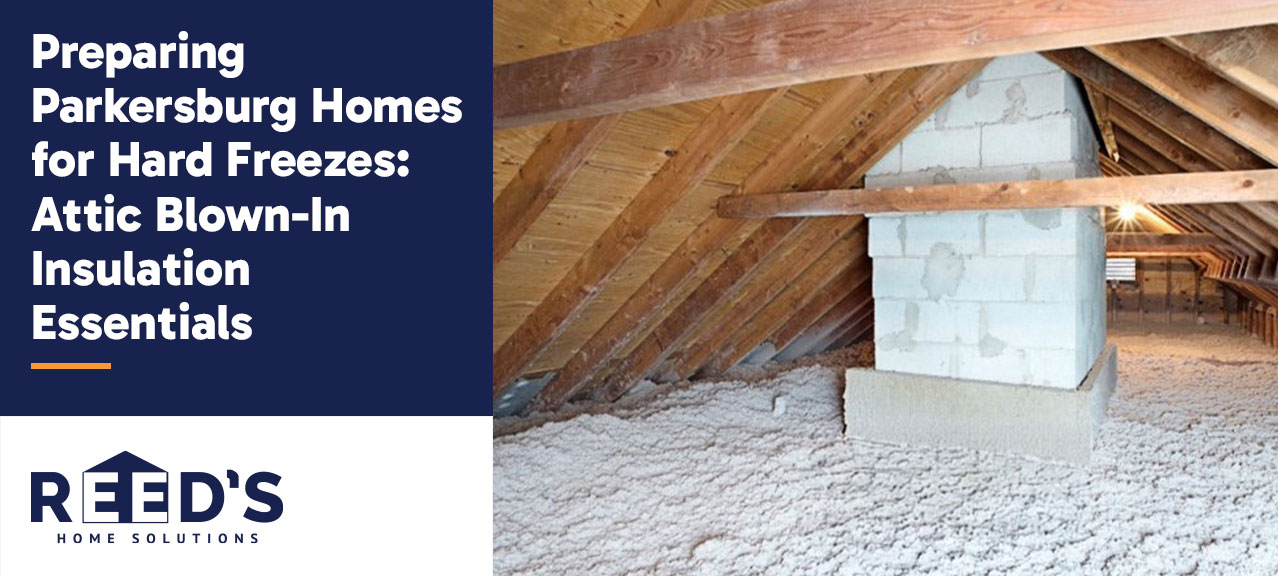
Blown-in insulation works differently from standard batt insulation. Loose material gets fed into a blowing machine, broken down into smaller particles, and pushed through a hose directly into your attic space. This process allows installers to build even coverage around wiring, plumbing, and framing — areas where pre-cut panels simply cannot reach. The result is consistent depth across the entire attic floor for reliable thermal performance.
Air sealing always comes before the insulation goes in. Gaps around pipes, vents, electrical boxes, and top plates get sealed first to stop convection loops that would otherwise undermine everything the insulation is working to achieve.
Loose-Fill Fiberglass: What You Should Know
Fiberglass blown-in insulation is made from spun glass fibers. It resists moisture well, weighs less than cellulose, and doesn’t settle significantly after installation. However, there is a meaningful drawback for West Virginia homeowners:
- R-value per inch: R-2.2 to R-2.7
- Cold weather performance: At temperatures below 20°F, loose-fill fiberglass can lose up to 50% of its R-value
That last point matters a great deal during hard freeze conditions. When you need protection most, fiberglass delivers the least.
Blown-In Cellulose: A Stronger Option for Hard Freezes
Cellulose insulation is made from 80-85% recycled newspaper treated with borate fire retardants. Its denser composition fills gaps more completely than fiberglass, and its performance characteristics are notably different:
- R-value per inch: R-3.2 to R-3.8 — nearly 40% more per inch than fiberglass
- Cold weather performance: R-value actually increases as temperatures drop
- Energy comparison: University of Colorado testing showed cellulose-insulated buildings used 26% less energy than identical fiberglass-insulated structures
The dense fibers restrict airflow more effectively, making cellulose a stronger choice for pipe freeze prevention in attic spaces.
Target R-Values for Parkersburg Attics
Parkersburg attics need R-49 to R-60 to stand up to sustained hard freeze conditions. Reaching that target requires 15-18 inches of cellulose or 22-27 inches of fiberglass. The difference in material depth — and cold-weather performance — is why Reed’s Home Solutions recommends cellulose for homeowners who need reliable energy efficiency through West Virginia’s coldest months.
Pre-Freeze Preparation: Air Sealing and Installation
Why Air Sealing Comes Before Insulation
Adding insulation without first sealing air leaks is like putting a warm coat on with no buttons — heat still escapes through every gap. Air leaks through soffit gaps, recessed lights, and duct penetrations account for up to 40% of convective heat loss in your home. Insulation slows heat transfer through solid material but does almost nothing to stop air moving through gaps. That distinction matters.
Sealing before insulating saves 15-25% on heating and cooling costs. Fiberglass insulation requires twice the air sealing attention compared to cellulose, since uncontrolled air infiltration moves easily through its loose-fill structure. Professional attic sealing uses an average of three cans of expanding foam — equivalent to 33 gallons of expanded material. That volume alone tells you just how many gaps exist in a typical attic floor.
Sealing Attic Bypasses and Top Plates
Attic bypasses are hidden airways that connect your living spaces directly to your attic cavity. They allow conditioned air to escape constantly, undermining even well-installed insulation. Common bypass locations include:
- Recessed can lights
- Bathroom exhaust fans
- Plumbing runs and wire passages
- HVAC equipment areas
- Wall top plates
Top plates deserve particular attention. These are the continuous gaps where interior walls meet the attic floor, and research indicates that sealing this location delivers the greatest impact of all attic sealing efforts. Sealing requires pulling back existing insulation to expose these penetration points. Expanding foam handles gaps and wire penetrations well, while larger voids need rigid sheathing combined with spray foam.
Ensuring Proper Attic Ventilation
Good ventilation and good insulation work together — one doesn’t replace the other. Proper ventilation prevents moisture accumulation and ice dam formation during hard freeze conditions. Building codes require a net free vent area of 1:150 of attic floor space, and balanced ventilation systems split this equally between soffit intake vents and ridge exhaust vents.
Never cover soffit vents with insulation. Install rafter vents between rafters to maintain clear airflow channels from soffits through ridge vents. Blocking these pathways traps moisture and creates the exact conditions that lead to ice dams and attic mold.
Professional Inspection and Thermal Imaging
Knowing where your attic is losing heat isn’t always obvious from a visual inspection. Thermal imaging reveals temperature differentials that identify exactly where heat escapes. Infrared cameras detect moisture behind walls, fallen insulation, and air leaks that are completely invisible to the naked eye.
A professional attic inspection measures insulation depth, calculates your actual R-value, inspects ventilation pathways, and identifies air leak locations at penetrations and framing gaps. This thorough assessment ensures we address the source of the problem — not just the symptoms — before the first hard freeze arrives.
Benefits of Upgrading Before the First Hard Freeze
Upgrading your attic insulation before winter arrives is an investment that pays you back quickly — in lower bills, a more comfortable home, and fewer costly repairs. Here is what Parkersburg homeowners can expect:
- Lower monthly heating costs: The EPA estimates proper attic air sealing and insulation saves homeowners an average of 15% on heating and cooling costs. The U.S. Department of Energy puts that figure as high as 20%. For most Parkersburg homeowners, that adds up to $200–400 in annual savings — and the difference typically shows up within one or two billing cycles.
- Consistent temperatures throughout your home: Cold spots and uncomfortable upstairs bedrooms are telltale signs of an under-insulated attic. Once adequate insulation establishes a proper thermal envelope, those temperature variations disappear. Bedrooms stay warmer overnight in winter, rooms overheat less in summer, and your home holds temperature longer without constant thermostat adjustments.
- Reduced HVAC strain and longer equipment life: A well-insulated attic means your heating system doesn’t have to work as hard. Properly insulated homes see HVAC systems run 20–25% less while maintaining the same comfort levels. That reduced workload translates to less wear on compressors and motors — extending equipment lifespan by 3–5 years and cutting service calls by 30–40% in the first five years alone.
- Protection against winter damage: Adequate insulation keeps roof temperatures consistent, which stops ice dams before they start. It also shields water supply lines from the kind of freeze damage that can release hundreds of gallons of water per hour during a thaw — a costly disaster that proper West Virginia winter insulation helps you avoid entirely.
There is simply no reason to head into a Parkersburg hard freeze with an attic that isn’t ready. The savings, comfort, and protection that come with professional blown-in insulation make the decision straightforward.
Contact Reed’s Home Solutions Today
The first hard freeze doesn’t wait, and neither should you. A properly insulated attic protects your pipes, prevents ice dams, and keeps heating costs where they belong — manageable. Waiting until winter arrives means risking the kind of damage that costs far more to fix than it ever would have cost to prevent.
Reed’s Home Solutions is here to help Parkersburg homeowners get ahead of the cold. Our Parkersburg blown-in insulation services give your home the protection it needs to handle whatever West Virginia winter delivers.
Contact us today for a FREE estimate — and take the first step toward a warmer, more energy-efficient home before the temperatures drop.