
About 25% of your home’s heat loss occurs through the ceiling, and blown-in attic insulation Morgantown homeowners install before peak snow season can address this vulnerability. Heating and cooling accounts for most energy usage in your home. Proper attic insulation before snow season is crucial for Morgantown WV winter preparation. Better insulation means less heat loss and reduced work for your furnace. You can save up to 20% to 50% monthly, depending on your climate zone. Reed’s Home Solutions helps Morgantown, West Virginia homeowners winterize by explaining why snow season home energy efficiency matters and how blown-in insulation installation works. We also cover what signs indicate your attic needs attention and how to reduce heating costs Morgantown residents face each winter.
Morgantown’s snow season and why attic insulation matters before it starts
Quick answer: Why insulate before peak snow season
Insulation before snow season allows contractors to complete work faster and prevents installation delays from weather. It stops heat loss before your furnace runs through winter months without rest. Temperatures drop and snow accumulates. Your poorly insulated attic damages your roof and drives up monthly heating bills.
Average snowfall and winter temperatures in Morgantown, WV
Morgantown receives about 25 inches of snow each year. Winter lows drop below freezing and sometimes plunge below 10°F. These conditions create sustained cold periods where your attic insulation either protects your home or fails to prevent heat escape. The region’s temperate continental climate produces four distinct seasons, but winter brings the most expensive comfort challenges for homeowners.
How snow cover affects your roof and attic
Snow on your roof reveals heat loss patterns you cannot see otherwise. Heat escapes through poor insulation and warms the roof deck from underneath. This causes snow to melt unevenly. Well-insulated homes keep snow in place longer since heat stays inside where it belongs.
Snow accumulation creates problems beyond visual diagnostics. Snow covers roof vents during winter and disrupts critical airflow that keeps attics ventilated. Blocked vents trap humid air inside the attic space. This leads to condensation, mold growth and wood rot. Trapped moisture contributes to ice dam formation as warm air causes snow to melt at the roof peak and refreeze at the edges.
Why poor insulation gets worse once snow sets in
Waiting until after the first snow costs more and creates compounding problems. Contractor schedules fill up once cold weather arrives. You wait weeks just to get an estimate. Heavy snow can slow installation work, especially when you have exterior walls to insulate.
Poor insulation becomes worse under winter conditions. The melt-refreeze cycle creates ice dams along roof edges and gutters. Water that cannot reach gutters backs up under shingles and enters the roof deck. Wet insulation loses its capacity to trap air and reduces its R-value. Complete replacement becomes necessary. Your heating system works overtime to compensate and never shuts off just to maintain baseline comfort.
How blown-in attic insulation protects your home during winter
What blown-in insulation is and how it’s installed
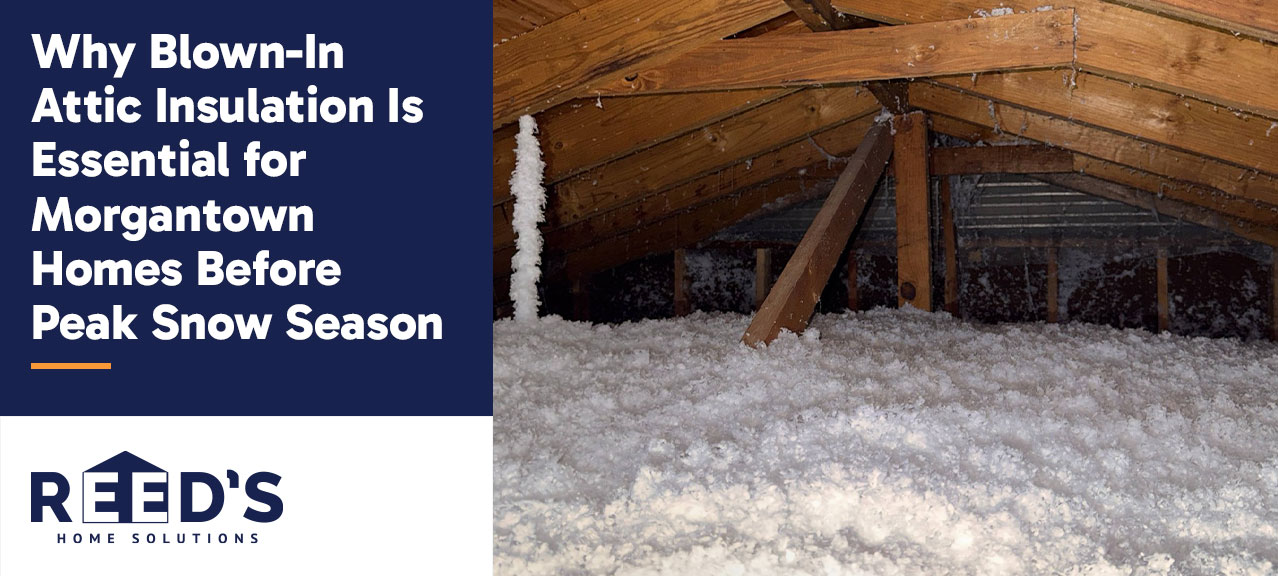
Blown-in insulation consists of small particles of cellulose or fiberglass installed using a machine that blows material into your attic space. The installation crew works in pairs: one person moves through the attic with the blower hose while another operates the machine and feeds bags into the hopper. This method distributes insulation over the attic floor evenly. It conforms to irregular spaces and settles around obstructions like wiring and pipes.
How it fills gaps better than batt insulation
Blown-in material fills every corner and crevice. It creates uninterrupted coverage where batt insulation leaves gaps. Batts can compress around obstructions and leave voids that reduce effectiveness. A 5% gap in coverage can reduce thermal performance by 20% or more. Blown-in insulation eliminates this problem by forming tight around joists and other attic obstacles. Cellulose insulation does a better job at restricting airflow when installed in thick layers, though neither material qualifies as a true air barrier.
What R-value Morgantown homes need for winter
Morgantown falls into climate zone 4 or 5 and requires specific insulation levels:
| Attic Condition | Recommended R-Value |
| Uninsulated attic | R-49 to R-60 |
| 3-4 inches existing | R-38 to R-49 |
Most experts recommend R-38 for attic insulation at minimum, with R-60 preferred in northern climates. Blown-in cellulose provides R-3.2 to R-3.8 per inch, while fiberglass offers R-2.2 to R-2.7 per inch.
How it prevents heat loss through the roof
Insulation creates a thermal barrier that stops warm air from escaping through your ceiling into the attic. Heat flows from warmer living spaces to colder attic areas without adequate coverage. Proper air sealing combined with sufficient insulation reduces heat loss by 30% or more.
How proper insulation stops ice dam formation
Ice dams form when heat escapes through poorly insulated attics and melts snow on the roof. Water runs down to colder eaves, refreezes, and creates ice ridges that force water under shingles. Air sealing all penetrations before insulation installation prevents warm air from reaching the roof deck. The combination of proper air sealing and adequate insulation maintains consistent roof temperatures and prevents the melt-refreeze cycle that creates damaging ice dams.
Signs your attic needs insulation before winter arrives
Visible thin or compressed insulation in your attic
Climb into your attic and look at the floor joists. Can you see the tops of them? If insulation sits level with or below the joists, you lack adequate depth to match your climate zone. Compressed or matted insulation loses effectiveness even though material remains present. Insulation traps air pockets to function properly. Fiberglass and cellulose settle and lose loft over decades. Patchy coverage creates hot and cold spots that affect rooms below.
Ice dams or icicles from previous winters
Ice dams appear to be roofing issues, but they start in the attic in most cases. Heat escaping through poorly insulated attic space warms the roof deck’s underside and melts snow on upper roof sections. Meltwater runs down to colder eaves and refreezes into ice ridges. Water backs up behind these ridges instead of draining and works its way beneath shingles and into your house. Icicles, uneven snow melt patterns, or repeated winter leaking signal your home needs closer examination.
Cold rooms and drafts on upper floors
Upper-floor rooms that feel colder than downstairs spaces show inadequate thermal resistance above them. Cold floors or walls near the attic, along with light drafts near ceiling fixtures or attic hatches, point to insulation failure. Your furnace runs constantly but certain rooms never feel warm unless you raise the thermostat several degrees.
Rising heating bills year over year
Energy bills climbing without changes in habits or thermostat settings suggest your attic as a likely culprit. Heating and cooling make up most residential energy use. When the attic stops doing its job, your HVAC system runs longer and harder to compensate.
Insulation that’s older than 15-20 years
Fiberglass insulation needs replacement 15-20 years into its life, as it becomes dirty, wet, moldy, and ineffective from roof leaks or water damage. Homes built before 2005 ignored energy efficiency. You could have entire uninsulated areas.
The blown-in insulation installation process and what it costs
Step 1: Attic inspection and R-value assessment
Professional contractors measure existing insulation depth at multiple points and calculate actual R-value present. They identify moisture, ventilation issues, or structural concerns before work begins. This assessment determines how much new material your attic requires to reach recommended levels for your climate zone.
Step 2: Air sealing gaps and bypasses
All air leaks get sealed around top plates, wiring penetrations, plumbing pipes, chimneys, attic hatches, and recessed lights before blown-in material goes in. Contractors use expanding foam or high-temperature caulk. Air sealing reduces insulation performance loss by 30% to 70% in some cases. The Department of Energy reports that air leaks account for up to 30% of home energy loss.
Step 3: Blown-in insulation application
Installers work from the farthest point back toward the attic opening. They build even coverage rather than pile material in spots. Depth markers verify uniform application across the entire attic floor.
Step 4: R-value verification
Thermal imaging cameras reveal heat loss patterns and gaps post-installation. Visual inspection confirms proper clearances around heat sources and unblocked ventilation paths.
Installation costs in Morgantown
Several factors influence project scope: attic size, current insulation condition, required R-value increase, and necessary air sealing work.
Expected savings on winter heating bills
Homeowners save an average of 15% on heating and cooling costs, or 11% on total energy costs, when they air seal and add attic insulation.
Why waiting until after first snow costs more
Contractor schedules fill quickly once cold weather starts. Snow can slow installation work.
Conclusion
Blown-in attic insulation that Morgantown homeowners install before peak snow season protects your roof and reduces heating costs by a lot while stopping ice dams. Contractor schedules fill quickly once temperatures drop. Acting now prevents delays and will give your home comfort all winter. Reed’s Home Solutions helps residents winterize with professional Morgantown attic insulation installation that pays for itself through monthly energy savings.