
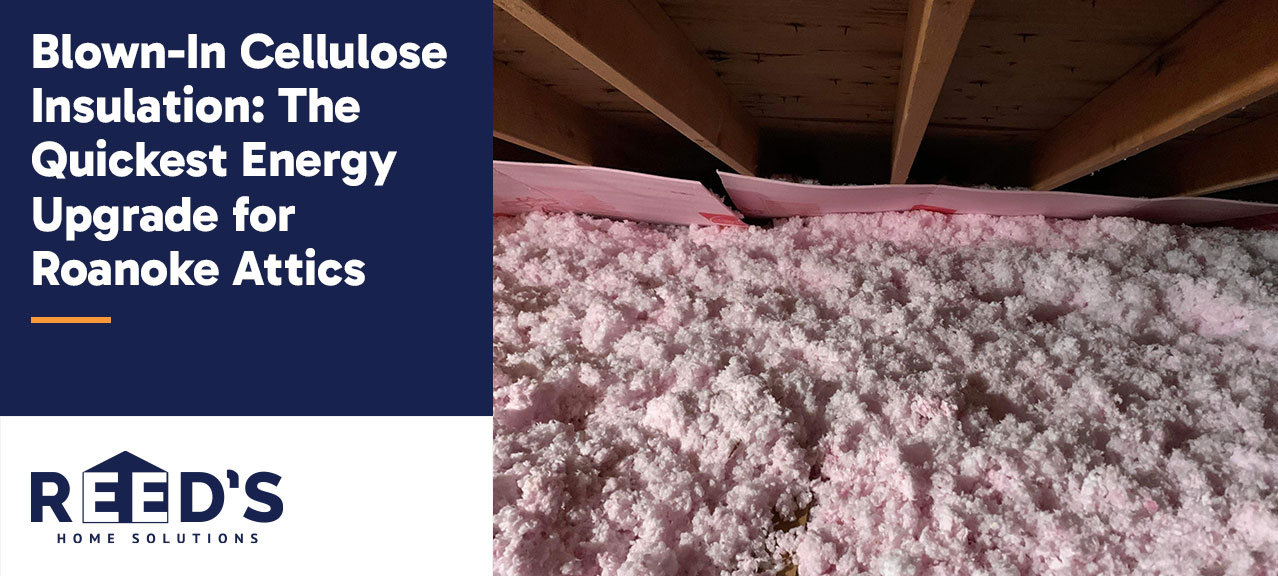
Proper Roanoke insulation and air sealing can reduce your heating and cooling costs by an average of 15%, according to the EPA. This makes blown-in cellulose insulation the quickest way for Roanoke homeowners to lower energy bills. Underinsulated attics lead to soaring summer cooling costs and HVAC systems working overtime in Virginia’s mixed-humid climate. Virginia’s energy code now requires a minimum attic insulation R-value of R-49, yet most older homes fall short. Blown-in cellulose insulation offers an eco-friendly solution made from 75% recycled paper that fills gaps better than batts and installs in a single day. Reed’s Home Solutions of Roanoke specialists help you achieve the energy efficient attic upgrade your Roanoke home needs to reduce energy bills and improve year-round comfort.
What Is Blown-In Cellulose Insulation and Why Roanoke Homes Need It
Made from recycled paper treated with fire retardant
Blown-in cellulose insulation contains 80 to 85 percent recycled newspaper and cardboard. The manufacturing process shreds these paper products into fine fibers and treats them with borate-based fire retardants such as boric acid. This chemical treatment gives cellulose a Class 1 Fire Rating and makes it one of the most fire-resistant insulation materials available. The borate treatment also repels common household pests like ants and termites.
How it is different from fiberglass batts and spray foam
Cellulose delivers R-3.2 to R-3.8 per inch and outperforms standard fiberglass batts that provide R-2.9 to R-3.8. The material installs through a blowing machine that distributes loose-fill insulation in Roanoke attic spaces and fills gaps around framing, wiring, and ductwork. Fiberglass batts come in rigid sheets that struggle to fit around obstacles and often leave air leakage pathways. Cellulose achieves a density of 3.5 pounds per cubic foot and reduces air infiltration by up to 30 percent compared to fiberglass.
Spray foam offers higher R-values at R-6 to R-8 for closed-cell and R-3.6 to R-4.3 for open-cell. Spray foam requires professional application and extended installation time. Blown-in cellulose completes in a single day.
Why Roanoke’s older housing stock needs attic upgrades
Most homes built before 1990 have attic insulation levels of R-11 to R-19, which equals just 3 to 6 inches of fiberglass batts or loose-fill. Current building codes require R-49 to R-60 for attic spaces. Older Roanoke homes lose substantial heat through inadequate attic insulation because of this gap. The average home loses 25 percent of its heat through the roof and attic when insulation falls short.
Seasonal temperature swings and rising energy costs in Virginia
Heating and cooling account for about 47 percent of total household energy consumption. Winter heating and summer air conditioning create the highest energy bills in July, August, and winter months. Homes with electric heating see monthly bills rise by as much as 50 percent during colder months compared to moderate seasons. Attic insulation upgraded to recommended R-values helps stabilize indoor temperatures year-round and reduces the strain on HVAC systems during Virginia’s temperature extremes.
Signs Your Attic Needs Blown-In Cellulose Insulation
You can prevent years of energy waste and comfort issues when you know your attic needs attention. Several clear indicators signal that blown-in cellulose insulation Roanoke homeowners should think over for their attic upgrade.
Visible gaps, thin spots, or compressed insulation
Check your attic to see whether you can spot the tops of floor joists. Insulation sitting level with or below joists indicates insufficient depth for your climate zone. Compressed or matted material loses its insulating value because insulation works by trapping air pockets. Fiberglass and cellulose settle over decades and lose loft and effectiveness. Uneven coverage creates hot and cold spots that track to rooms below.
Ice dams on your roof in winter
Ice dams appear when heat escapes through poorly insulated attic space and warms the roof deck. This melts snow on upper sections. Meltwater runs to colder eaves and refreezes into ice ridges. Water backs up behind these ridges and works beneath shingles. This causes interior damage. Attics with proper insulation keep roof surfaces close to outdoor temperatures and prevent dam formation. R-30 minimum (R-38 preferred) stops heat loss that triggers the melt-freeze cycle.
Uneven temperatures between rooms and floors
Heat moves unevenly through weak attic points and turns upstairs bedrooms into saunas while other areas stay comfortable. One room might stay cold whatever the thermostat settings. This results from thin, uneven, or missing insulation in specific spots. Thermal bridging through wrapped framing compounds the problem.
High heating and cooling bills despite regular HVAC use
Energy costs that trend upward without changes in habits or thermostat settings point to attic insulation failure. Heating and cooling represent a large share of home energy use, so HVAC systems run longer to compensate when attics underperform. Year-round inefficiency signals inadequate insulation rather than seasonal equipment issues.
Attic insulation that’s more than 15-20 years old
Fiberglass and cellulose lose meaningful performance after 15 to 20 years, even without visible damage. Material exposed to moisture, compression, or pests loses effectiveness sooner. Homes built before 1980 with original insulation underperform current standards.
Why Blown-In Cellulose Is the Fastest Energy Upgrade Option
Speed matters when you’re dealing with rising energy costs and uncomfortable rooms. Blown-in cellulose insulation Roanoke contractors install offers the quickest way to measurable energy savings without disrupting your household routine.
No demolition or wall access required
The blowing machine runs a flexible hose direct into your attic through existing access points. This eliminates structural modifications, drywall removal, or interior repairs that other update methods just need. You stay in your home during installation with minimal disturbance to daily activities.
A single day completes most jobs
Most Roanoke residential attic insulation installations take 4 to 8 hours. Homes under 2,500 square feet finish in a single shift. Crews arrive in the morning and complete work by afternoon. This qualifies as a same-day upgrade that delivers immediate comfort improvements.
Fills gaps and irregular spaces better than batts
Blown-in material conforms to obstacles while batts require hand-cutting around every pipe, wire, and junction box. This difference produces 15 to 25 percent better real-life performance. The loose-fill application covers joists in full and eliminates thermal bridging that batts don’t deal very well with.
Understanding R-value and recommended levels for Roanoke
Climate Zone 5 guidelines recommend R-49 to R-60 for attic spaces. Cellulose delivers this target depth with ease. Its R-3.2 to R-3.8 per inch rating requires less material thickness than alternatives.
Blown-in cellulose vs fiberglass insulation: coverage and settling
Cellulose settles 15 to 20 percent in open attic applications as the material compacts. Installers account for this by overblowing at first to maintain target R-value. Fiberglass settles less but provides inferior air sealing properties and allows greater air movement through the insulation layer.
Cellulose vs spray foam: cost and installation time comparison
When paired with proper air sealing, cellulose installations achieve 15 to 35 percent energy savings in homes that were under-insulated before.
The Installation Process and What to Expect
Professional installers begin every blown-in cellulose insulation Roanoke project with a complete attic evaluation. This determines the upgrade scope and material requirements.
Attic inspection and existing insulation assessment
Contractors measure existing insulation depth at multiple locations. They identify the material type using visual inspection. They check for moisture damage, mold and compressed areas. Current R-value is calculated by multiplying depth by the insulation’s R-value per inch. Vermiculite insulation requires lab testing before disturbance due to potential asbestos content.
Air sealing gaps and penetrations before installation
Air sealing happens before blowing insulation because unsealed gaps drop insulation performance by 25 to 40 percent. Crews seal top plates, recessed lights, plumbing penetrations, wiring holes and attic hatches using caulk and expanding foam.
Blowing machine setup and material application
The blowing machine connects to separate electrical circuits and feeds material through hoses into the attic. Installers work from the farthest corner toward the access point. They apply material evenly across joist bays.
Achieving target R-value and even depth
Roanoke falls in Climate Zone 4 and requires R-49 to R-60 for uninsulated attics. Depth markers ensure consistent coverage throughout the space.
Energy savings percentage and payback period
Homeowners save an average of 15 percent on heating and cooling costs after proper air sealing and insulation upgrades. Payback periods range from 2 to 10 years depending on energy costs and insulation type.
Cost factors: attic size, accessibility, and available rebates
Square footage, attic access difficulty and local labor rates determine final project costs. Regional utility companies offer rebates that reduce out-of-pocket expenses for energy efficient attic upgrades.
Contact Reed’s Home Solutions Today
Blown-in cellulose insulation offers your quickest way to lower energy bills and year-round comfort in Roanoke. You’ll start seeing results right away with same-day installation and superior gap-filling properties. No lengthy home renovations required. Reed’s Home Solutions specialists deliver the energy efficient attic upgrade your home needs. Schedule your attic inspection today and reduce energy costs for decades to come.