Crawl Space Insulation in Knoxville, TN
Crawl Space Insulation for Knoxville and East Tennessee Homes
Across East Tennessee, plenty of houses rest on a crawl space, whether that means block walls on a sloping lot or an older bungalow standing on brick piers. Few people ever look under there, yet the space governs how the rest of the house feels. Missing crawl space insulation, or insulation that has absorbed moisture and slumped away from the subfloor, lets cold and damp air climb into your rooms. The symptoms are icy floors in January, energy bills that creep higher every year and a musty smell that keeps coming back no matter how much you clean.
Reed’s Home Solutions installs crawl space insulation throughout Knoxville and the towns around it. Our first step is a careful look at what is actually under your house: moisture levels, vents, floor framing, soil and any old insulation still in place. After that we explain our recommendation and the reasoning behind it, and a written price reaches you before work is scheduled. The visit and the quote cost nothing, and you owe us nothing afterward.
Humidity is the main opponent in this part of Tennessee. Muggy summers and heavy spring rain keep moisture leaning on every foundation, and open vents invite that wet air inside. Once it touches cooler block and wood, it condenses. For that reason we handle moisture and insulation together. Insulation that ignores moisture will not last, and a dry space with bare floors above it still bleeds heat.
Crawl Space Wall Insulation or Floor Insulation: Which Is Right?
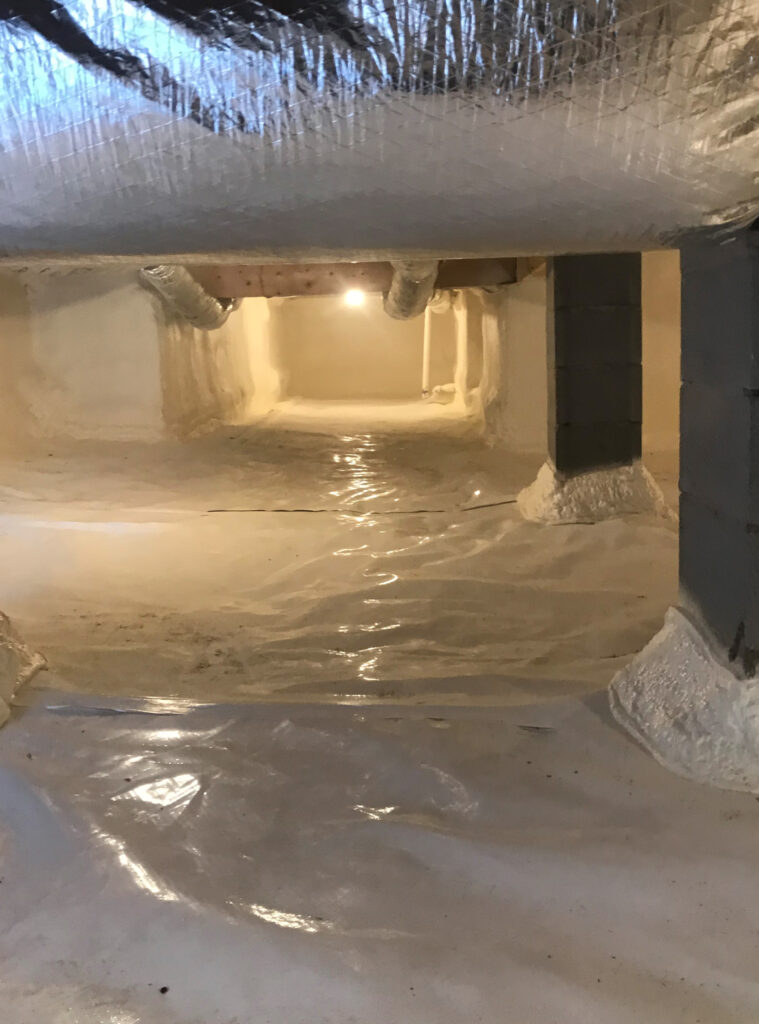
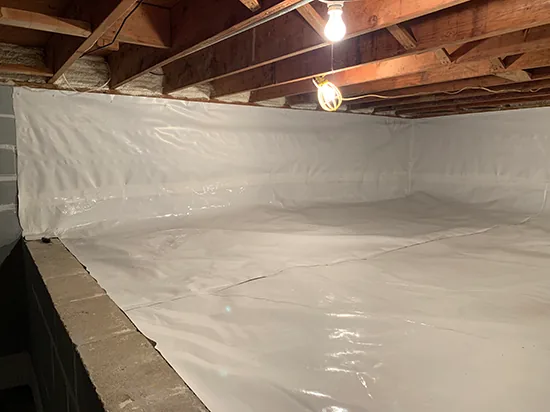
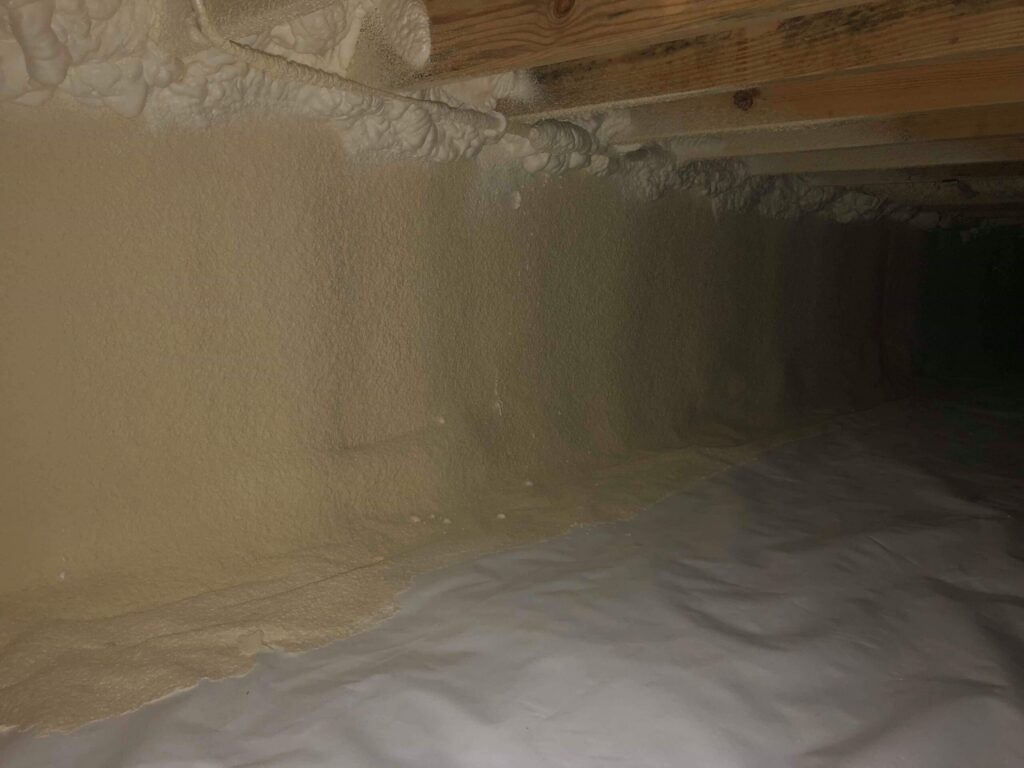
Two strategies exist, and each suits a different house. In a sealed (unvented) crawl space, you insulate the foundation walls and cover the soil, which pulls the space inside the building’s thermal boundary. If you would rather leave a crawl space vented to outside air, you insulate the floor overhead, because that floor then separates heated rooms from the cold, damp zone below.
Walls are our usual recommendation when the space runs damp, when the vents are bringing in moisture, or when ductwork and plumbing pass through the cavity. Closed-cell foam on the walls insulates and slows vapor in one layer, and it seals small gaps along the sill. At about R-6 to 7 per inch, even a thin coat carries real value. Our spray foam insulation in Knoxville page explains how that material behaves.
Floor insulation fits a space that stays dry enough to remain vented, a pier foundation with few walls to treat, or a crawl space too shallow and cramped to seal well. We study the site first and choose afterward, since the wrong pick wastes money.
Floor Insulation for Subfloors Over Unheated Space
Any living space built above something unheated needs floor insulation. A crawl space is the usual case, but rooms over a garage, bonus rooms above a porch and cantilevered bump-outs belong in the same group. Cold air reaches those floors from underneath, and you pick up on it through chilly boards, drafts at the baseboards and a furnace that keeps running without ever warming the room.
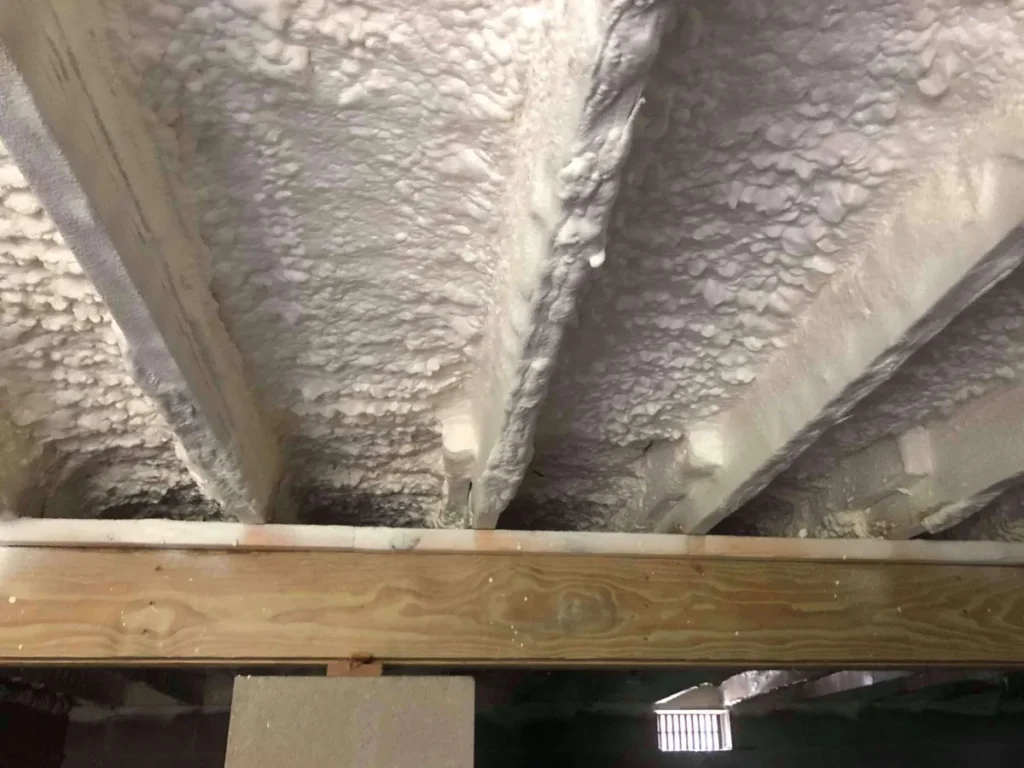
Knox County’s energy requirements ask for R-19 in the floor, following the 2018 IRC as amended locally. Plenty of older houses around Knoxville fall well short of that, typically because thin or fallen batts are all that remains under the subfloor, and the shortfall shows up on your energy bills. Spray foam on the underside of the subfloor raises R-value while it closes gaps at the rim joist and around pipes and wires. Both jobs happen in one visit.
Pooled water, active leaks or damaged joists need attention before any foam goes on, because foam works best over a dry, solid structure. When framing needs work first, our crews also do crawl space repair in Knoxville.
Signs Your Crawl Space or Floor Needs Insulation
Clues tend to appear in the rooms above rather than below. Watch, and sniff, for these.
- Cold floors all winter, especially in main-level rooms.
- Energy bills that rise faster than your usage explains.
- Musty odors drifting from floor registers, closets or the hall near the access door.
- Batts that sag, look stained or lie on the dirt beneath the house.
- Sweating pipes or ducts and dark, damp patches on the underside of the subfloor.
- Mice, insects or nesting material inside old fiberglass.
- Foundation vents standing open and letting humid outside air flow through.
- A sticky, clammy feel indoors in summer, even though the air conditioner is working.
Does Your Crawl Space Need More Than Insulation?
A healthy space under the house takes more than foam alone. Depending on what we find, one of these services may belong in your plan.
Crawl Space Repair
Springy floors, rotted joists, failed vapor barriers and shifted piers should be corrected first. One company can take care of the repairs and the foam that follows.
Mold Treatment
Damp wood and old insulation can grow mold over time. If we find it, we point it out and steer you toward cleanup before the space is sealed.
Foundation Repair
Hilly East Tennessee lots and saturated soil can stress footings and walls. Stair-step cracks or doors that stick deserve a closer look.
Comparing Crawl Space Insulation Options
This table sets out the choices we weigh with Knoxville homeowners before recommending one.
Approach
Moisture behavior
Best use
Approach
Closed-cell foam on the foundation walls with a covered ground surface
Moisture behavior
Repels liquid water and slows vapor
Best use
Our first pick for damp or humid spaces that can be sealed
Approach
Closed-cell foam under the subfloor
Moisture behavior
Repels water and seals gaps in the floor system
Best use
Vented spaces, pier foundations and rooms over open air
Approach
Open-cell foam or loose fill under the floor
Moisture behavior
Absorbs moisture more readily
Best use
Only dry, protected areas; ask us before choosing it
Approach
Fiberglass batts between floor joists
Moisture behavior
Soaks up humidity and droops
Best use
Weak in damp or vented spaces; our batt insulation page covers the dry spots where they do work
Our Crawl Space Insulation Process
A Reed’s crawl space project moves through four stages.
Inspection
Our technician enters the space and checks for pooled water, damp patches, mold, pests and open vents. Condition of the piers or block walls, the joists and any existing insulation gets noted too.
Clean-out and repairs
We remove wet, damaged or contaminated material and haul away debris. Any structural repairs are completed so the foam lands on solid ground.
Seal and insulate
Soil gets covered with a vapor barrier. Spray foam then goes onto the walls or the underside of the floor, whichever fits your house.
Final walkthrough
Before we leave, we look over the finished work for missed spots and then show you what was installed and where.
Benefits of Crawl Space and Floor Insulation
With a dry, insulated space beneath your home, the rooms above feel noticeably different.
- Warmer floors in winter, with temperatures that hold steadier across rooms.
- Lower energy bills. According to ENERGY STAR, added insulation can save up to 15% on heating and cooling.
- Reduced mold and moisture risk below the house.
- Fewer odors rising into closets and rooms.
- A cleaner space that rodents and insects find less welcoming.
- Better protection for framing, since dry wood outlasts damp wood.
How the Space Under Your House Affects Everything Above It
Warm air rises, and it draws replacement air up from below. That air travels through floor gaps, along plumbing runs and past the rim joist, ending up in your kitchen and bedrooms. When it brings dampness or a musty odor along, those rooms inherit both. In a region where summer humidity is a given, the issue deserves attention.
Sealing the crawl space and foaming its walls cuts off that pathway at its source. For unvented spaces in Knox County, the energy requirements list R-10 continuous or R-13 cavity insulation on the walls and R-19 in the floor, and you can read them in the county energy requirements. Meeting those numbers is a starting point, not a guarantee of a dry space, which is why we pair them with moisture control.
Our method comes down to three moves: manage moisture, seal the space, then insulate. In that sequence the work holds up, and you feel it underfoot. A damp lower level in the same house is a separate job, covered on our basement insulation in Knoxville page. Attics matter too, and loose-fill is often the answer there, as our blown-in insulation in Knoxville page explains. For the full list of what we install, start at our insulation contractors in Knoxville overview.
Proven by Results, Recognized for Excellence
Request Your Free Crawl Space Insulation Estimate in Knoxville
One of our technicians crawls under your house, points out what he finds and writes up a firm price before he goes. Any moisture or framing problem is called out on the spot, together with how to correct it. Payment plans can be arranged.
Crawl Space and Floor Insulation Questions From Knoxville Homeowners
Should I insulate the walls or the floor?
Start with whether the space can be sealed. A damp or humid crawl space generally does best with foam on the walls and a covered ground surface. A dry, vented space or a pier foundation often works better with foam under the floor. The inspection decides it.
Which insulation works best in a crawl space?
We install closed-cell spray foam there. Liquid water cannot soak into it and vapor moves through it slowly, which suits a humid East Tennessee space.
Can I just push fiberglass batts between the floor joists?
It is possible, and builders did it for years. Where humidity runs high we advise against it. Batts soak up moisture, sag and hold dampness against the subfloor, leaving the floor system wetter than it began.
Should moisture problems be solved before insulating?
Yes. Spray foam grips dry, solid surfaces best. Pooled water, rot or a space that never dries out should be resolved ahead of insulating, and our team can do those repairs as well.
Will floor insulation make my rooms warmer?
For most homes, yes. Once the space is sealed or the subfloor insulated, far less cold air rises through the boards, and that upward draft is the leading reason floors feel icy during a cold snap.
What about rooms over a garage or a cantilever?
They share the crawl space problem, with cold air sitting below the floor. Foam on the underside of those floors fills gaps and adds R-value. Our garage and wall insulation page covers these spots.
Does crawl space insulation help with humid summers?
It can. Sealed walls and a covered ground surface keep outdoor humidity and soil moisture from settling beneath the house, so the air that drifts upward carries less dampness.
How long does the work take?
Timing hinges on the size of the space and on whether clean-out, repairs or moisture control must happen first. You will find a schedule for your own house in the written estimate.
What will crawl space insulation cost?
No single figure applies. Cost follows the space’s size, its condition and the preparation required. Once the free inspection is done, you receive an itemized quote listing actual numbers.
Is financing available for crawl space insulation?
Yes. We offer flexible financing. Raise it at your free estimate, or see the terms on our financing page.
Areas We Serve
Crawl space and floor insulation from Reed’s is available to homeowners in Knoxville and across East Tennessee.