Crawl Space Vapor Barrier Installation in Knoxville, TN
Crawl Space Vapor Barrier Installers in Knoxville
Think of a crawl space vapor barrier as a thick plastic ground cover. It blankets the exposed soil beneath your floor so water vapor cannot drift up into the framing. In Knoxville, TN, summers are humid and clay soil stays wet long after a storm, so that soil is often the largest moisture source in the whole house.
Reed’s Home Solutions puts in crawl space vapor barriers throughout Knoxville and the towns around it. We start with a free, no-obligation inspection, walk the space with you and put the scope and price in writing before any work begins. As Knoxville’s trusted foundation repair and insulation company, we look at the whole picture first.
If you searched for crawl space repair near me because of a musty smell or a soft spot in the floor, a barrier is often the right first piece.
Anatomy of a Crawl Space Vapor Barrier That Lasts
A barrier succeeds or fails on two points: what it is made of and how carefully it goes in.
The Material
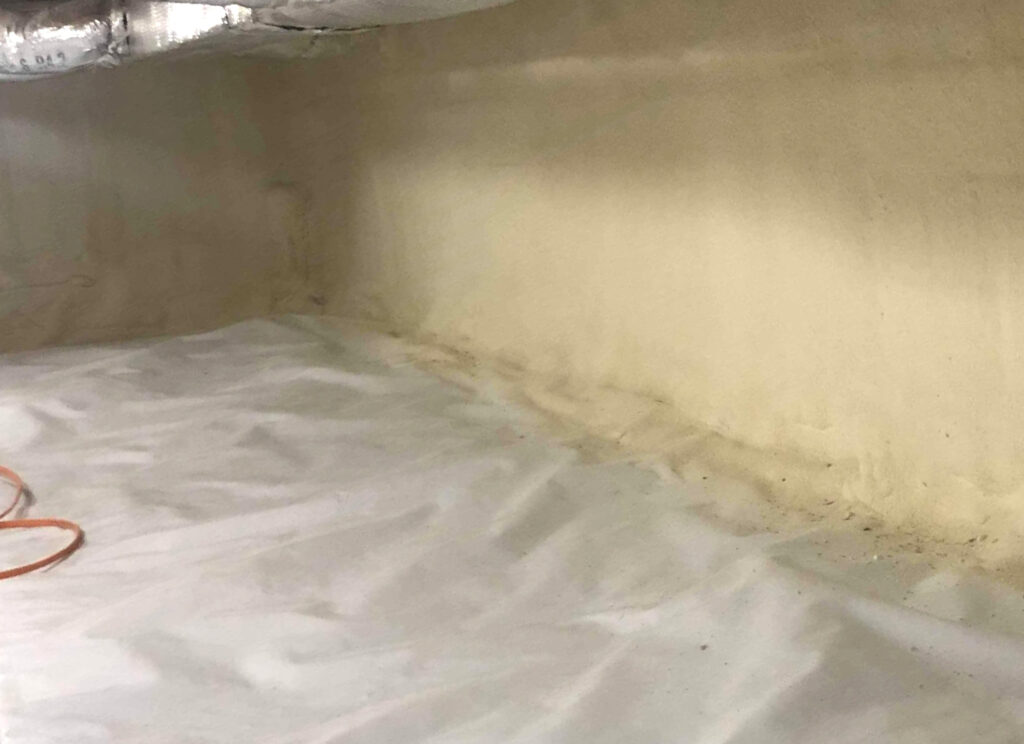
We use reinforced polyethylene in the 10 to 20 mil range, built to take foot traffic and rough soil. We skip the thin 6-mil rolls that tear the first time someone crawls across them. Our sheeting is rated at 0.1 perms or less, so it counts as a Class 1 vapor retarder.
The Installation
Crews cover the entire floor, then carry the plastic up the foundation walls and around each pier. Every seam is lapped and sealed, and we close off gaps where plumbing and ductwork pass through. Loose edges let moisture sneak past, so the finishing details matter most.
Signs of Ground Moisture in a Knoxville Crawl Space
What you might notice. A musty smell, especially when the air conditioner runs. Cold or slightly damp floors. Condensation on ducts and pipes. Dark staining or fuzzy growth on the joists. Sagging floors and more spiders or rodents than usual.
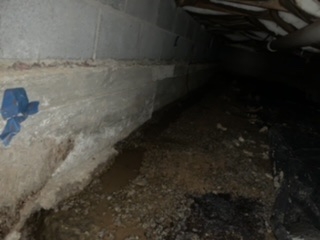
Why it happens. Soil never stops releasing water vapor, and clay releases it for a long time after heavy rain. Many older Knoxville homes have bare dirt or a thin old liner that has torn. Open vents pull in humid summer air that condenses on cooler wood, which adds to the load.
Results You Can Expect From a Sealed Ground Cover
A good barrier will not fix every crawl space problem, but it does this job well.
Drier Air Under the House
Covering the soil cuts off the steady evaporation, so the crawl space air holds less moisture.
Protected Framing
Joists and subfloor stay drier, which slows wood rot and takes away what mold needs.
Fewer Pests
Insects and rodents prefer loose, damp dirt, and a covered floor gives them less to work with.
Easier Service Visits
Technicians can reach plumbing, wiring and ducts without crawling through mud.
Why Covering the Dirt Pays Off in a Knoxville Home
Here is what you gain when the ground stops feeding moisture into the house.
- Less crawl space moisture. Humidity stops climbing every time it rains.
- Lower mold risk. Mold needs damp wood, so a drier space gives it less to feed on.
- Stronger floors. Dry joists hold their shape, which means fewer soft spots.
- Warmer floors. Damp air feels colder, so drier air is more comfortable.
- Fresher air upstairs. Air rises from the crawl space into the rooms above.
- A better base for insulation. Insulation performs poorly in damp air.
Vapor Barrier Alone, or Something More?
- Ground moisture only: a sealed barrier on the floor, walls and piers is often enough.
- Standing water or seepage: the water needs drainage and a sump first.
- Humid air despite a barrier: the space may need closed vents and a dehumidifier.
- Cracks or settling: a foundation problem lets water in no matter what covers the dirt.
Matching the Fix to the Problem
Your inspection decides this. If a barrier is all you need, that is what we quote. If not, we show you why first.
Choosing Between a Barrier, Encapsulation and Waterproofing
Homeowners often ask about encapsulation vs vapor barrier. Here is how the three options compare.
Vapor barrier
Encapsulation
Waterproofing
Main job
Vapor barrier
Block ground moisture
Encapsulation
Seal the space from soil and outside air
Waterproofing
Control active water
Best when
Vapor barrier
Soil is bare and the space is mostly dry
Encapsulation
You want a sealed, conditioned crawl space
Waterproofing
Water pools or seeps in after rain
Vents
Vapor barrier
Typically stay as they are
Encapsulation
Shut and air-sealed
Waterproofing
Depend on the drainage plan
Drainage and sump
Vapor barrier
Not included
Encapsulation
Added where needed
Waterproofing
Core part of the system
Our Installation Process, Start to Finish
Every job follows the same path, so you know what to expect.
Inspect and measure
We check the soil, walls, piers and vents, look for active water and measure the area.
Clear and prepare
Debris and old plastic come out, and sharp spots are smoothed so nothing punctures the sheeting.
Fit the barrier
The sheet is cut to the space, laid across the floor and carried up the walls and around each pier.
Seal and secure
Seams and penetrations are sealed, and the edges are fastened to the foundation.
Walk it through
We review the finished space with you and tell you what, if anything, we would add next.
Crawl Space Vents and the Access Door
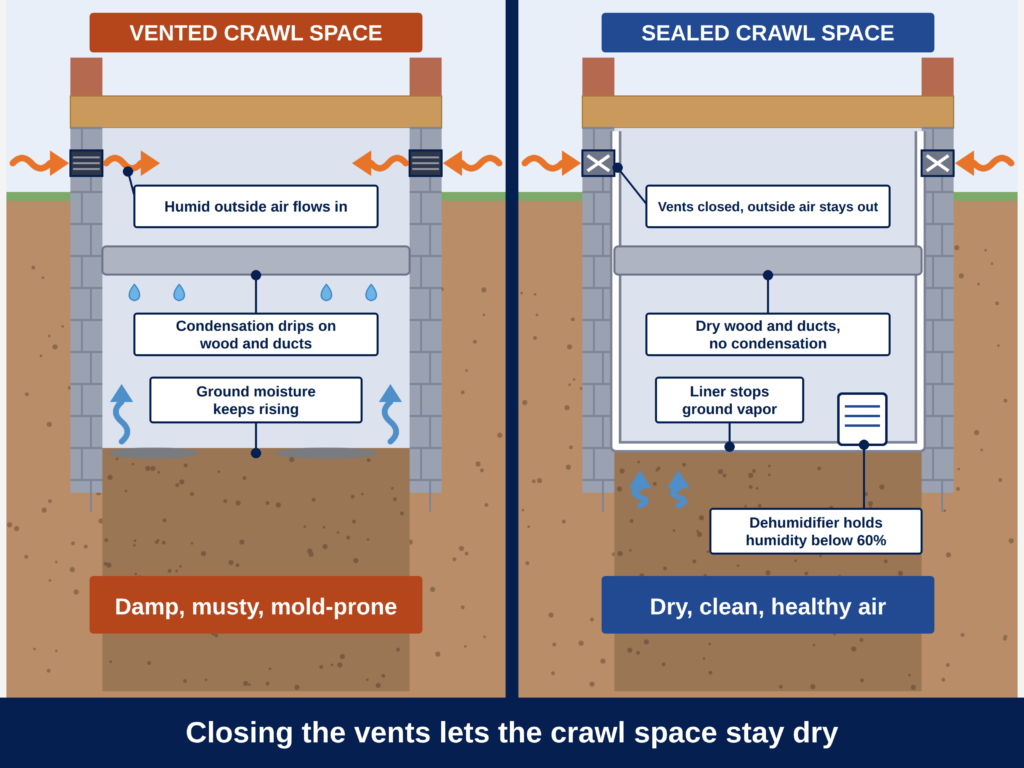
Many Knoxville crawl spaces were built with open vents so outside air would dry the space. In a humid East Tennessee summer the opposite happens: warm air enters and drops its moisture on cooler wood and ducts.
That is the heart of the sealed vs vented crawl space question. Closing the vents moves the job toward full encapsulation, which we cover on our crawl space encapsulation page.
Check the access door too. A warped or gapped door lets in damp air and pests, and we can replace it.
What Affects the Cost of Crawl Space Vapor Barrier Installation?
No two crawl spaces are alike, so we do not quote by phone. These factors move the price, and the free inspection turns them into a written estimate.
- Size. More floor and wall area means more material and labor.
- Access. Low clearance and a small door slow the work.
- Floor condition. Debris and old liners take time to clear.
- Piers and penetrations. Each one needs a careful cut and seal.
- Material grade. Heavy reinforced sheeting costs more than light film.
- Extra repairs. Drainage, vent closure or insulation are quoted separately.
Ask about flexible financing at your estimate.
Pairing a Vapor Barrier With Insulation, Drainage and Foundation Work
A barrier works best with the right partners. Adding crawl space insulation helps with cold floors, and we plan it around the barrier so neither gets in the way.
If rain pushes water in, a barrier only hides it. Our crawl space waterproofing adds drainage, a sump pump and a dehumidifier, and our basement waterproofing team can inspect a basement under another part of the house in the same visit.
Sticking doors, cracked block and uneven floors point to the structure, so a foundation repair inspection comes first. If mold is already visible, our mold services handle it before the space is covered.
Vapor Barrier Installation Near Knoxville
We serve Knoxville, Farragut, Maryville, Oak Ridge, Sevierville, Clinton and Jefferson City, plus Powell, Halls, Karns, Alcoa, Seymour and Lenoir City. Local homes vary, and so do their crawl spaces.
- Older block-and-pier homes: bare soil and torn old liners are common.
- Hillside lots: runoff can funnel toward the foundation.
- Creek-side and low-lying lots: soil stays damp longer, so drainage may matter as much as the barrier.
Proven by Results, Recognized for Excellence
Ready for a Drier Crawl Space?
Book a free, no-obligation inspection. We check the floor, walls, vents and drainage, then give you a written estimate. Flexible financing is available.
Crawl Space Vapor Barrier Questions From Knoxville Homeowners
What mil rating should I look for in a crawl space liner?
A standalone barrier should be reinforced polyethylene between 10 and 20 mil. Thin 6-mil film punctures easily. Check the perm rating as well, which needs to be 0.1 or lower.
Is a vapor barrier the same as crawl space encapsulation?
No. A barrier covers the ground and walls to stop soil moisture. Encapsulation adds a heavier 30-mil liner, closed vents, drainage, insulation and a dehumidifier.
What will a crawl space vapor barrier cost me in Knoxville?
Price follows square footage, access, floor condition, how many piers and pipes need detailing and the material grade. The free inspection ends with a written number.
Is a moisture barrier in the crawl space worth it?
In most damp homes, yes. It protects the framing, reduces odors and gives you a cleaner space. If water is entering, a barrier alone is not the full answer.
Will I need a dehumidifier once a barrier is down?
Possibly. The liner handles soil moisture, but humid air can still blow in through open vents. If readings stay high afterward, a crawl space dehumidifier is the usual next step.
Will a vapor barrier stop standing water in my crawl space?
No. Plastic sheeting cannot push water out. When water pools under your house, you need drainage and often a sump pump, which is what our waterproofing service provides.
Do you seal the seams or just lap them?
We seal them. Laps are bonded with seam tape, and pipes, ducts and posts get sealed collars so moisture has no path through.
Can you work around ductwork and plumbing?
Yes. Each penetration is cut to fit and sealed, so the barrier stays continuous from floor to wall.
Areas We Serve
Reed’s Home Solutions covers crawl space floors in Knoxville and across East Tennessee.