Welcome to Reed’s Home Solutions

RESIDENTIAL SERVICES · KNOXVILLE, TN

Basement Insulation in Knoxville, TN

Basement Insulation Knoxville Homeowners Can Count On

Laundry room, storage or family room, your basement sits inside the thermal boundary of the house. Bare concrete or block walls soak up the cold from the ground and carry it upstairs, and the band of framing on top of the foundation lets outside air slip in all year. Basement insulation in Knoxville, TN goes straight at cold floors, stray drafts and energy bills that refuse to level off.

Reed’s Home Solutions insulates basements across Knoxville and East Tennessee, from hillside homes with a walkout lower level to older houses in established neighborhoods. A technician looks at the walls, the ceiling, the rim joist and any sign of moisture before recommending a material. You pay nothing for the inspection or the estimate, owe nothing afterward and see the price before anyone starts work.

If you have searched for insulation for basement Knoxville homes need, here is the short version. Get the space dry, seal the air leaks, then add the right material in the right place.
Basement Spray Foam Insulation in Knoxville

Why East Tennessee Basements Feel Cold and Clammy

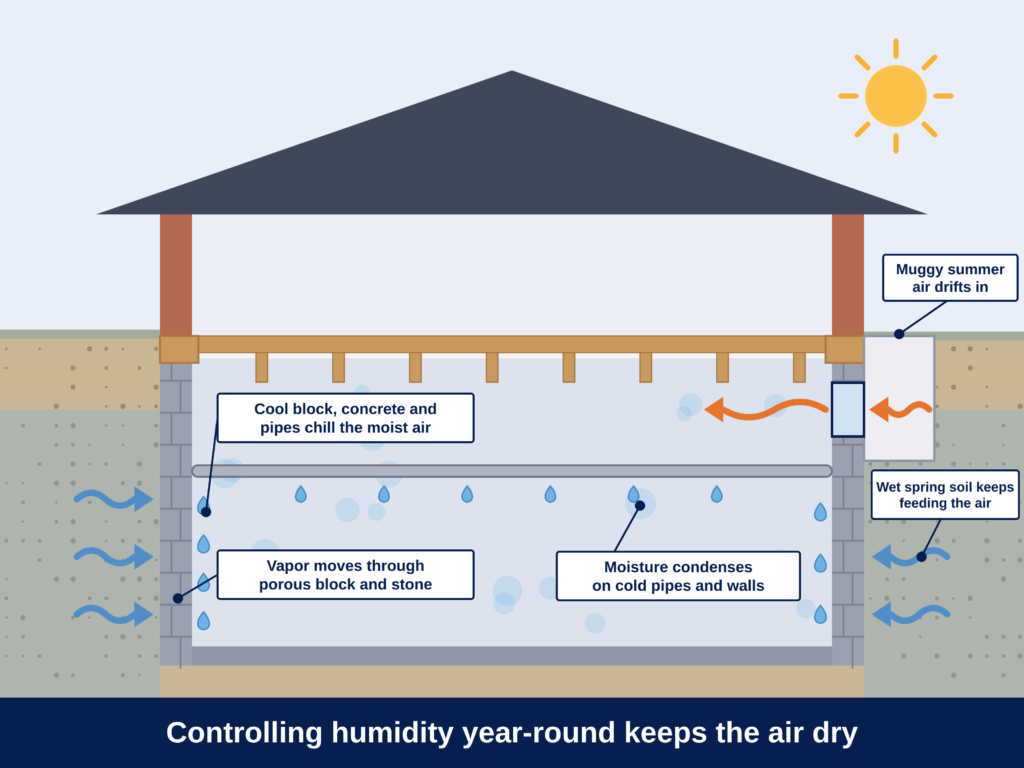
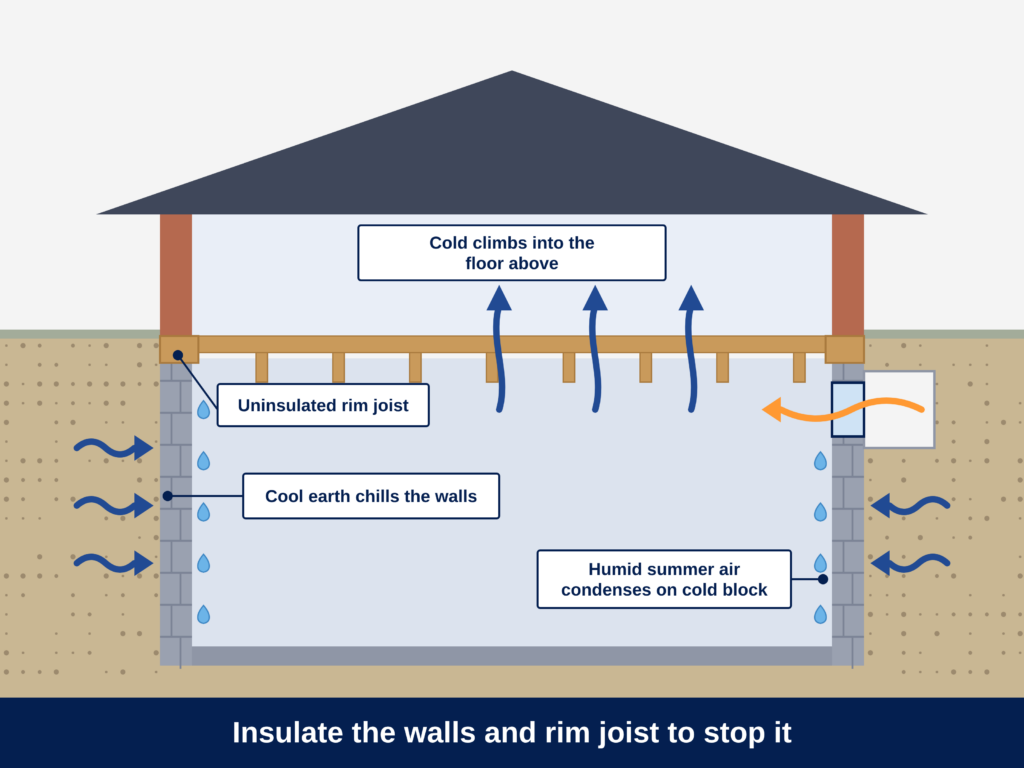
Soil stays cool for most of the year, and a foundation wall passes that temperature straight into the room. Then summer arrives with warm, humid air, and moisture condenses wherever it meets those cool surfaces. East Tennessee has plenty of both, so a lower level can feel chilly in January and sticky in July.

Many Knoxville lots slope, which means one side of the basement is buried deep while the other opens to daylight. The buried wall stays cold and damp, and the walkout side loses heat through doors, windows and a wall that may never have been insulated.

The cold does not stay downstairs. It climbs into the main floor, which is why rooms above an uninsulated basement often feel like they have a draft under the rug. Treating the walls or ceiling takes pressure off your furnace and air conditioner.

Rim Joist Insulation and Basement Wall Insulation

The rim joist is the framing that rests on top of the foundation and supports the floor above. It is full of seams where wood meets masonry, and wires, pipes and vents pass through it. Rim joist insulation that also seals those gaps often changes how a house feels more than any other single step in a basement.

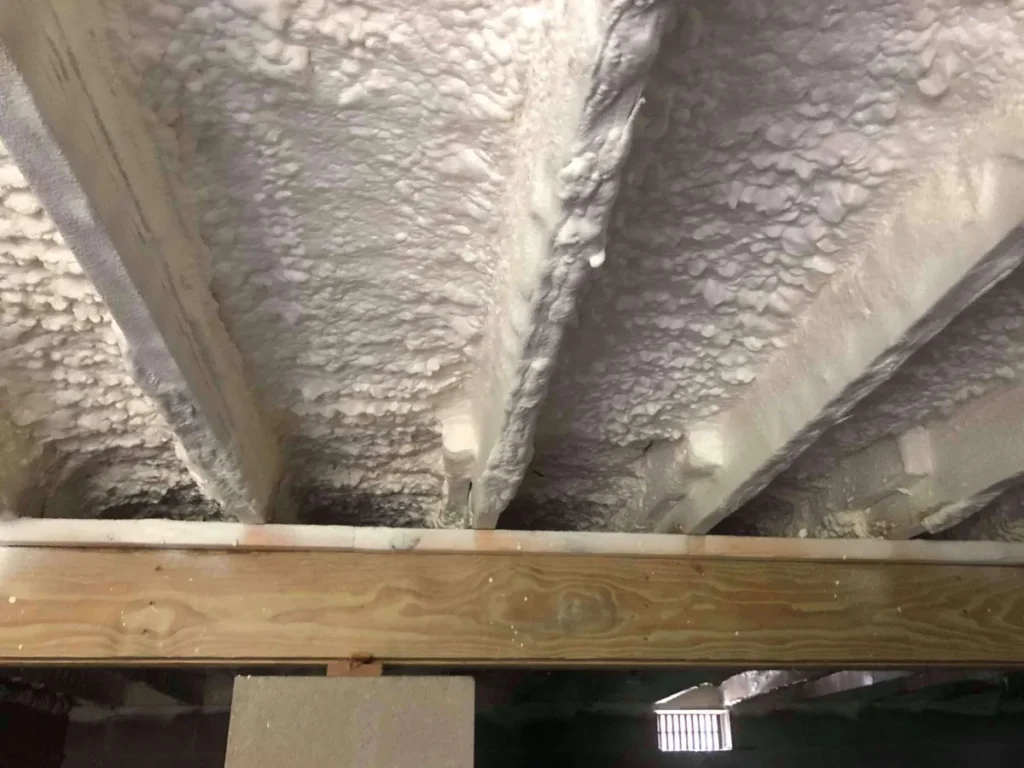
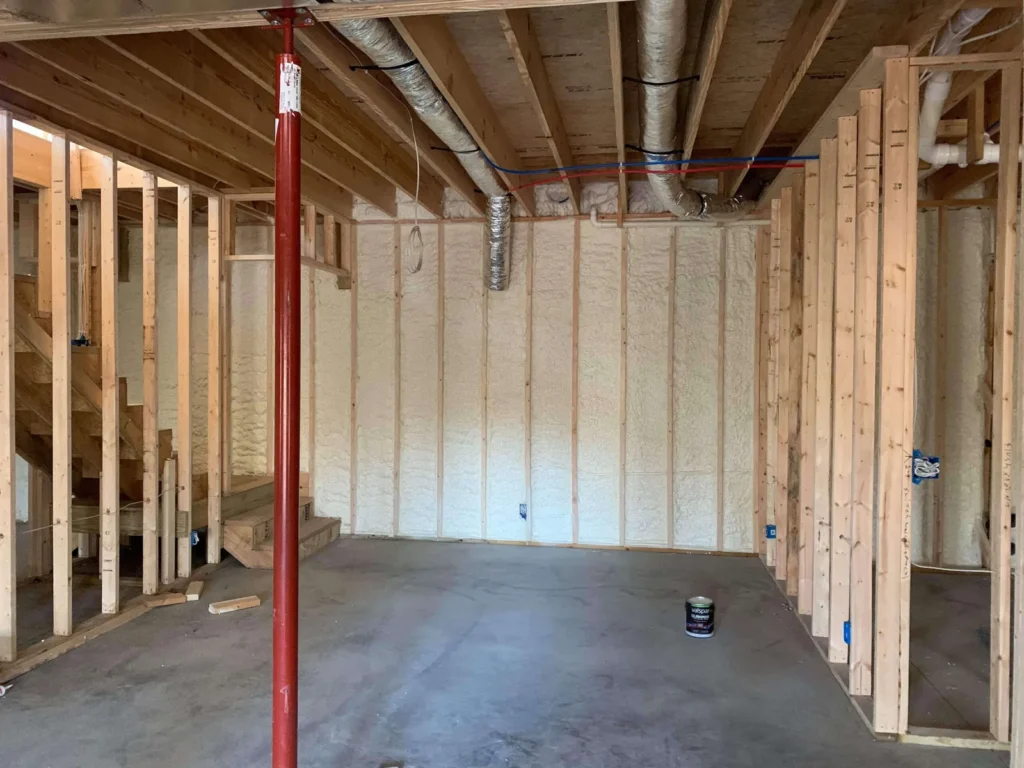
For both rim joists and foundation walls we usually spray closed-cell foam. It swells into cracks, gives about R-6 to 7 per inch and keeps liquid water out while also stopping vapor, a real advantage on a wall pressed against damp soil. Open-cell foam, which rates around R-3.5 to 3.6 per inch, can work on a dry interior surface. We tell you which one belongs where. Our spray foam insulation in Knoxville page covers the benefits of spray foam insulation.

Knox County follows the 2018 IRC as amended, and its energy requirements call for basement walls at R-10 continuous or R-13 in the cavity. You can read the county’s energy requirements for the full list. A finished basement is not off limits. Installers can drill small holes and dense-pack blown-in material into the closed stud bays without removing drywall.

Basement ceiling insulation

Basement Insulation Options by Material

Most basements end up with spray foam on the masonry, though each material earns its place where conditions suit it.

Spray Foam

The usual pick for masonry walls and rim joists. One pass seals air leaks and adds R-value, and closed-cell foam never absorbs water.

Blown-In

A good match when drywall is already up, whether on stud walls or over a ceiling. Dense-packing gets inside without demolition.

Batt

Fits exposed framing, for example joists overhead or a freshly built partition, provided the room stays dry and each batt is cut to fit snugly.

Controlling humidity year-round keeps the air dry.

Keep the Basement Dry Before You Insulate

Insulation cannot rescue a wall that is leaking. If your basement has seepage, white mineral deposits, standing water after storms or a musty odor, we address the water first. Reed’s installs basement waterproofing in Knoxville, from interior drains to sump pumps, and insulation can be scheduled right behind it.

Heavy rain and damp air keep steady moisture pressure on lower levels across East Tennessee. Closed-cell foam tolerates dampness because water does not soak into it, though it cannot stand in for fixing the source. Fix the water, then insulate, and you end up with a space that is both dry and comfortable.

Stair-step cracks, sticking doors and uneven floors point to the structure itself. Sloped lots and settling soil can stress a foundation, and our foundation repair in Knoxville team can look at that during the same visit.

Insulating a Basement Ceiling or Floor Above

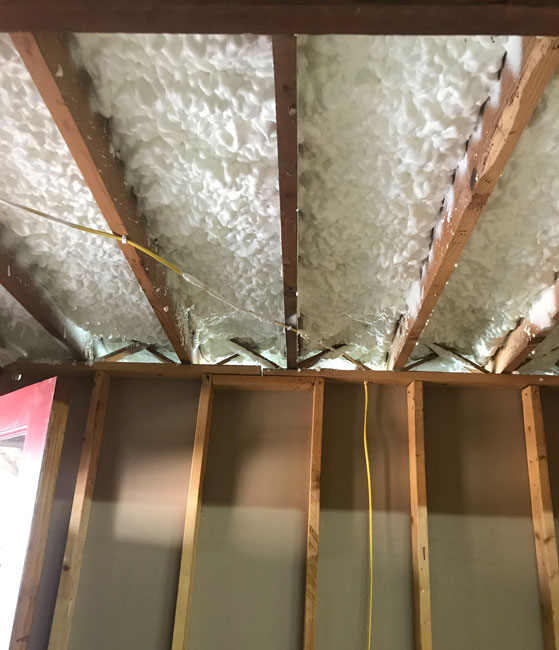
If the basement will stay unfinished, work on the ceiling, which doubles as the floor of the rooms above, often makes more sense. Foam or blown-in material packed between the joists keeps the main level warmer and cold from climbing through it.

The same logic applies to a floor over an open carport, a garage or a cantilevered room, all common on hilly Knoxville lots. Insulating there keeps warmth in the rooms you live in and ends the cold-floor complaint. Our wall and garage insulation in Knoxville page covers the garage side, and the crawl space insulation page explains floors over a crawl space.

We ask how you use the lower level, then propose walls, ceiling or both.

Crawl Space Insulation in Knoxville TN

Insulation for Old Homes Knoxville Neighborhoods Have

Older houses around Knoxville often have stone, brick or poured concrete foundations, and the basements may have been left bare for generations. Any scraps of old batts sagging between joists rarely do much and can hold moisture against the wood.

In an older home we check the condition of the masonry, the framing and the rim joist before choosing anything. Uneven walls and odd cavities suit spray foam, which conforms to the surface. If the house is also due for attic work, our attic insulation page shows how the pieces fit together.

Signs Your Knoxville Basement Needs Insulation

These clues turn up again and again in basements around East Tennessee.

Our Basement Insulation Process

Every Reed’s basement job moves through the same four stages.

1

Inspection

A technician inspects walls, ceiling and rim joist, checks for moisture or structural issues and records whatever insulation exists.

2

Prep

The work area is cleared and protected, and any repair that must come first gets done.

3

Insulate and seal

Crews spray foam on walls and rim joists, or install blown-in or batt material in spots where those make more sense.

4

Walkthrough

When the job is cleaned up, we show you what was installed and where.

Benefits of Basement Insulation

A well-insulated lower level pays you back across the whole house.

Proven by Results, Recognized for Excellence

Request a Free Basement Insulation Estimate in Knoxville

A Reed’s technician walks the basement with you, explains what needs work and names a clear price before leaving. Spot moisture or foundation trouble and we say so immediately, with a plan to deal with it. Financing is available.

Basement Insulation Questions From Knoxville Homeowners

For foundation walls and rim joists, our pick is closed-cell spray foam. Moisture cannot soak into it, it blocks vapor and it fills gaps as it expands.

When the basement leaks or stays damp, yes. Dry surfaces give insulation its best performance, so water gets solved first. Reed’s does both jobs.

Your plans for the room decide it. If you intend to finish the space or spend time there, walls come first. If it will stay unfinished, treating the ceiling can warm the floor above for less. We settle it on the walkthrough.

Frequently, yes. We open small access holes and dense-pack blown-in material into the stud cavities, leaving the drywall intact. If your walls will not work for it, we say so.

Probably. Closing up the sill band and walls stops outside air from sneaking in, and ENERGY STAR reports savings on heating and cooling of up to 15% from added insulation.

Cool masonry sweats when humid air reaches it, and heavy rain can also push water in from outside. We check for each cause and advise on insulation, waterproofing or a combination.

Knox County’s energy requirements, based on the 2018 IRC as amended, list R-10 continuous or R-13 cavity insulation for basement walls. We build the plan around that and around how you use the space.

Insulation cost turns on basement size, wall construction and which materials suit it. Once the free inspection is done, we hand you a line-by-line quote with actual figures.

Yes. Monthly payment plans can be arranged. Bring it up when we meet, or look over our financing page beforehand.

Areas We Serve

Basement insulation from Reed’s is available to homeowners in Knoxville and across East Tennessee.

Scroll to Top