Welcome to Reed’s Home Solutions

RESIDENTIAL SERVICES · KNOXVILLE, TN

Blown-In Insulation in Knoxville, TN

Blown-In Insulation Knoxville TN Homeowners Can Rely On

Knoxville summers are sticky, and East Tennessee cold snaps can show up with little warning, so a house with a thin attic or hollow walls works hard for every degree. Blown-in insulation Knoxville TN homeowners ask about is a retrofit-friendly answer. A blower parked outside sends loose-fill down a long hose and into the space, where it drifts around joists, wiring and ductwork. Nothing inside your ceilings, drywall or siding has to come apart.

Reed’s Home Solutions installs cellulose and fiberglass loose-fill across Knox County and the towns around it. Every job begins with a free, no-obligation inspection. We measure the material already in place, check for moisture and air leaks, and tell you plainly what we would do. A written estimate comes first, and the work is scheduled only after you approve it.

Two situations suit loose-fill best: an attic floor with too little on it, and an older wall that was never filled at all. Crews can usually complete one attic, one set of walls or one garage within a single day.

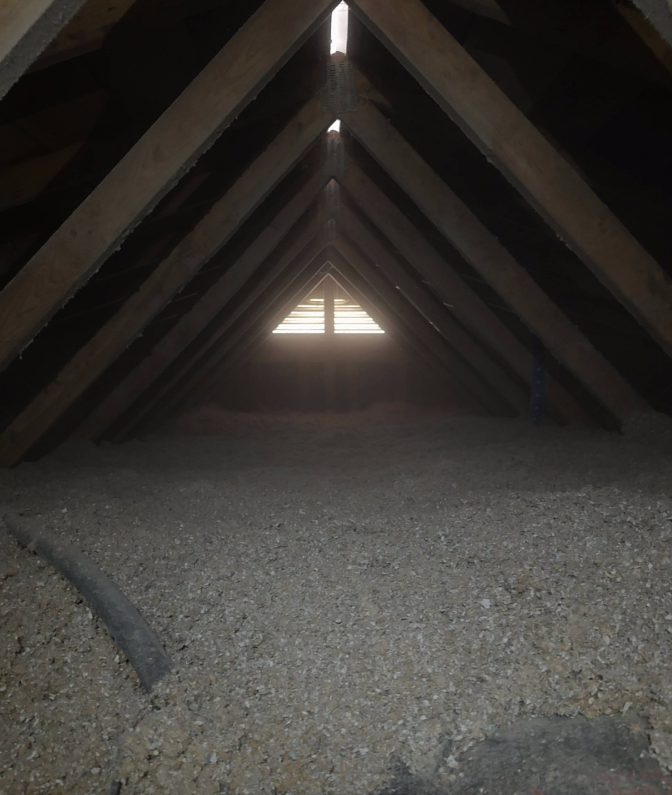
Attic space with triangular roof framing and blown-in insulation covering the floor, illuminated by light coming through a vent at the far end.

Cellulose or Fiberglass: Comparing Loose-Fill Materials

Either material can do the job well. Which one we recommend depends on the space, so that decision waits until we have seen it.

Cellulose

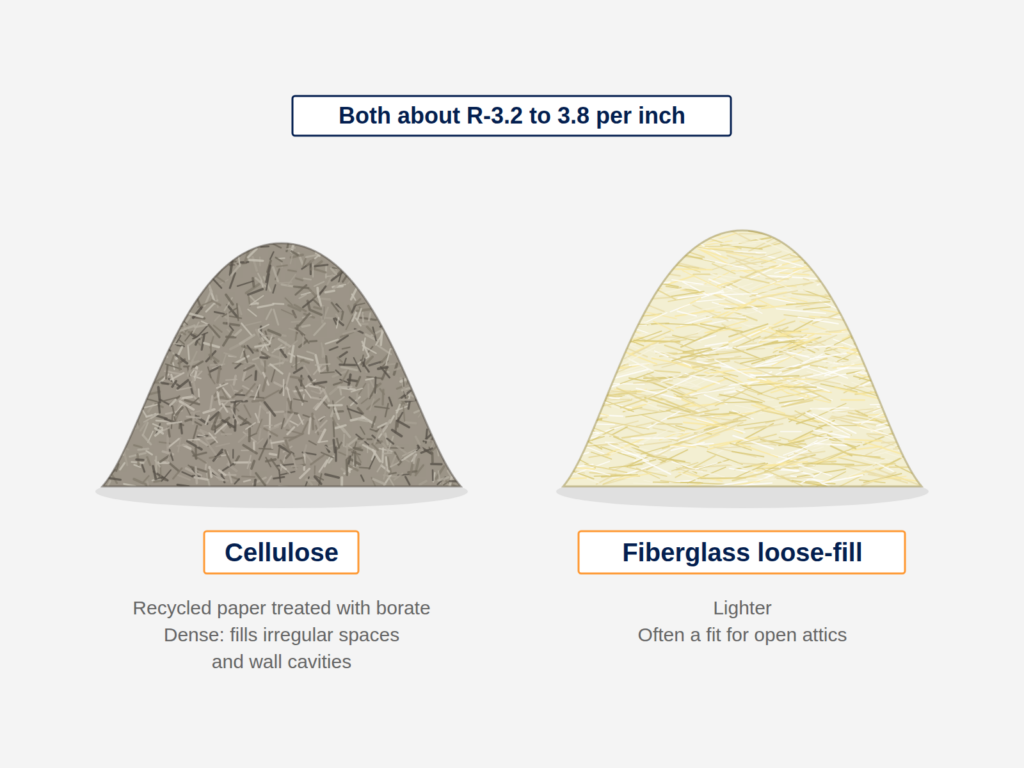
Recycled newsprint treated with borate. For a loose-fill product it is heavy, which helps it settle into crooked cavities and tight corners. Installers often reach for it in walls and in attics crowded with obstructions. Each inch adds roughly R-3.2 up to R-3.8.

Fiberglass Loose-Fill

Fine glass fibers that stay light and airy. Damp air bothers them less than it bothers paper, and they spread easily over wide, open attic floors. Their thermal performance sits in the same band, around R-3.2 to R-3.8 for every inch.

Where Blown-In Insulation Goes in Knoxville Homes

If there is an open floor to cover or a cavity we can reach, loose-fill can usually go in.

Attics

Laid across the attic floor to bring a thin layer up toward current targets. If what is there now is dry and sound, we usually build on top of it.

Existing Walls

Filled solid through small holes made from the room or from the exterior, then patched. Your finished walls stay closed.

Floors Over Open Air

Sealed joist bays beneath a bump-out or a room over the garage can be filled through access holes. Floor insulation above a crawl space is a different job with its own page.

Why East Tennessee Homeowners Choose Loose-Fill

Customers from Knoxville to Maryville and Oak Ridge keep naming the same few reasons.

Blown-In vs. Spray Foam vs. Batt Insulation in Knoxville

A quick comparison of the three materials homeowners ask about most.

Blown-in

Spray foam

Batt

R-value per inch

Blown-in

Roughly R-3.2 to R-3.8

Spray foam

Open-cell near R-3.5, closed-cell near R-6 to R-7

Batt

Roughly R-3.0 to R-4.3

Seals air leaks

Blown-in

Slightly

Spray foam

Excellent

Batt

Slightly

Finished walls

Blown-in

Yes, by dense-packing

Spray foam

Only where framing is exposed

Batt

Only where framing is exposed

Best fit

Blown-in

Attic floors and built walls

Spray foam

Drafty or moisture-prone spaces

Batt

Open framing in new work

How Our Blown-In Insulation Installation Works

Every visit moves through the same four stages.

1

Inspect

Our technician records how deep the current insulation is, probes the cavities and watches for damp spots, drafts and blocked vents.

2

Protect

Floors and belongings get covered, the blower is set up outdoors and any opening that could let air or material slip through is sealed.

3

Install

In attics, the material is laid to the depth we quoted. In walls, it is fed into each cavity through a small drilled opening until it is firm.

4

Finish

We patch the openings, haul off debris and walk through the finished work with you.

Blown-In Insulation

Blown-In Attic Insulation for Knoxville Houses

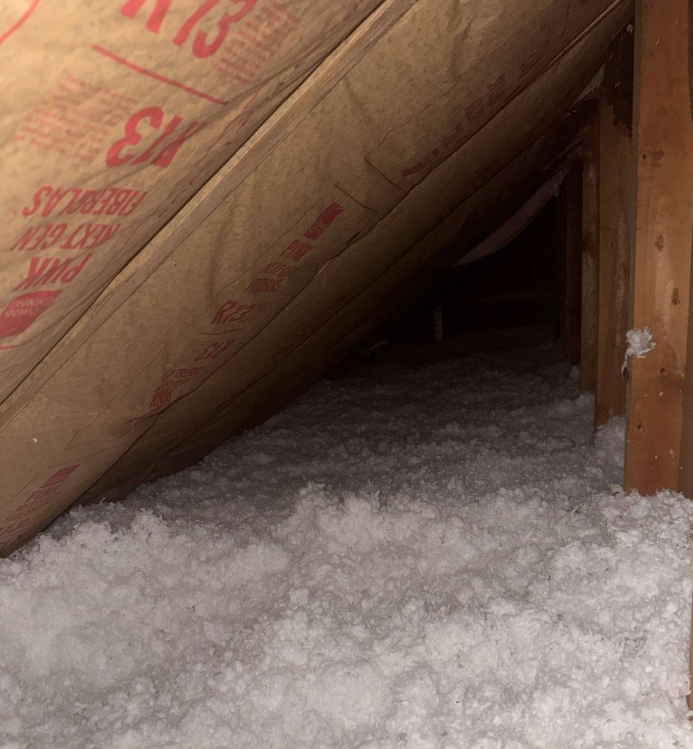
For most houses, the attic is where loose-fill pays off first. The crew blows it across the floor to a planned depth. It behaves like drifting snow, so it fills in around ducts, wires and framing corners that a batt cannot follow, leaving one continuous layer in place of a quilt of seams. Our attic insulation page covers the whole space, including roof insulation.

Knoxville is in climate zone 4. There, ENERGY STAR suggests R-60 if the attic has nothing, and R-49 if 3 to 4 inches are already in place. Knox County’s energy requirements call for R-38 in the ceiling, or R-30 when an energy truss is used. At your inspection we measure the current depth and show you the comparison. Plenty of East Tennessee attics fall short, and loose-fill closes that gap faster than any alternative.

Before we start, we check for leaks, dampness and ventilation problems so the new layer does not choke the attic’s airflow. Wet, moldy or contaminated material comes out first. Dry insulation in decent shape can stay, with fresh material on top. The ENERGY STAR R-value guide explains the numbers in more detail.
Dense-Pack Wall Insulation for Older Knoxville Homes

Insulation for old homes Knoxville wide is often a wall problem. Houses in the older neighborhoods around downtown and the surrounding hills frequently have thin or empty wall cavities, and tearing out plaster or drywall to fix that rarely makes sense. Dense-packing solves it without the mess.

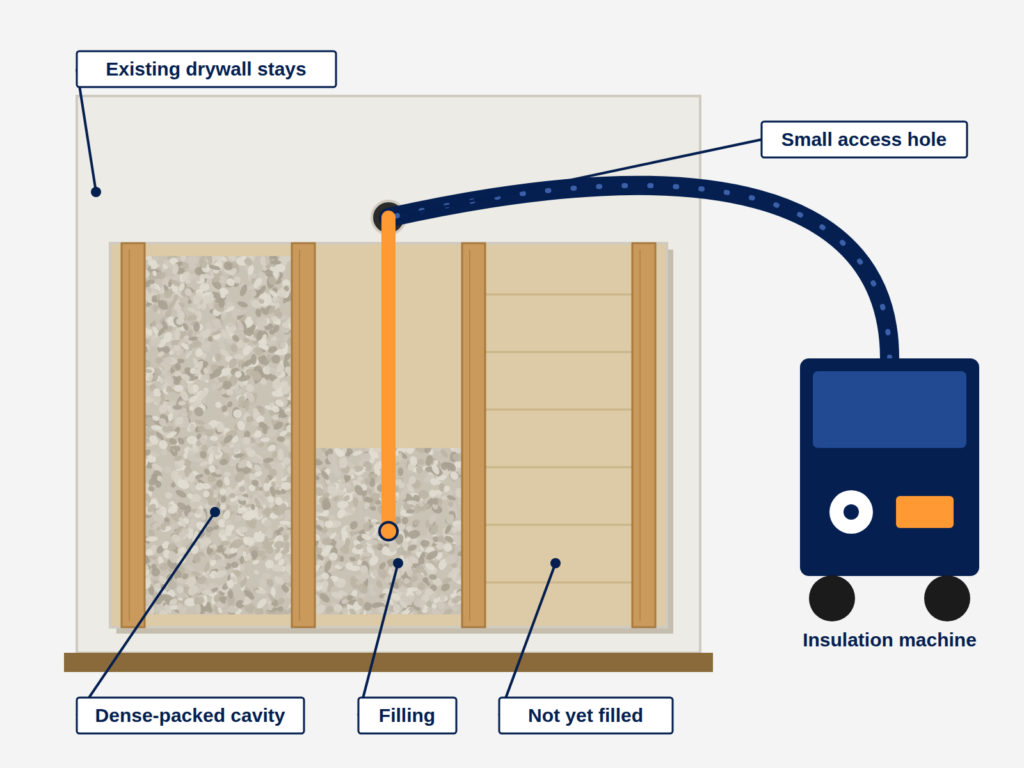
Each stud bay gets one small hole, roughly an inch or two across. We drill from whichever side causes less disruption, inside the room or through the exterior. Then the hose feeds material under pressure until the bay is dense and uniform. Wiring, water lines and fire blocking get wrapped, which are the spots where batts tend to leave voids. All holes are patched at the end.

A set of walls or a garage normally fits inside a day. A finished garage, or a bedroom sitting above one, gets the same treatment, which helps with the cold floors that hillside lots and open-air overhangs often produce. You can read more on our wall and garage insulation page.

wall insulation graphic showing an empty wall, settled insulation and a fully dense packed wall of insulation.
Mounds of cellulose and fiberglass loose-fill insulation side by side

Choosing Between Cellulose and Fiberglass Loose-Fill

The two products rate almost the same, so the R-value rarely settles the question. Density and moisture tolerance do. Cellulose is heavier and packs snugly into corners and closed cavities, while the lighter fiberglass is a frequent pick for broad, open attic floors.

Our recommendation considers the space, the existing material and your priorities. You will see the chosen product named in the written estimate, and the technician can explain the reasoning on request.

If sealing air leaks or holding back moisture matters more than adding depth, residential spray foam insulation Knoxville customers often request may suit you better, and our spray foam page lays out the benefits of spray foam insulation. For open framing in a remodel or new build, fiberglass batt insulation is often the budget-friendly route.

Signs Your Knoxville House Needs More Insulation

These are the usual triggers for a call about insulation in Knoxville.

Proven by Results, Recognized for Excellence

Get a Free Blown-In Insulation Estimate in Knoxville

Our technician looks over your attic and walls, explains the findings and hands you a written price on the spot.

Knoxville Blown-In Insulation: Common Questions

Insulation cost shifts with the product chosen, the square footage involved and the amount already installed. We price it in writing after a free inspection, so you know the figure before work begins.

It depends on the house. Their R-values are nearly identical. Cellulose, a borate-treated paper product, packs more densely. Fiberglass weighs less and copes well with damp air. Your technician picks the one that suits your space.

Yes. Small holes allow the hose to reach each cavity, the material is packed firm, and the holes are patched at the end.

In many cases yes, provided what is there is dry and still in reasonable shape. We confirm that at the inspection.

One day is typical for an attic, a set of walls or a garage, and we confirm the timing when scheduling.

Often. Added insulation can bring heating and cooling costs down by up to 15%, and rooms tend to feel steadier too.

Yes, flexible plans exist. Raise the topic at your free estimate, or browse the financing page first.

A little compaction happens in any open attic, so we install deeper than the target to allow for it and note the finished depth. In walls the material is packed tight and has no room to drop.

Not usually. Material that is soaked, moldy or contaminated has to go. Anything dry and sound stays, and the new layer rests on it.

Often it is the best choice. Older houses tend to have thin attics and empty walls, and loose-fill reaches both without removing plaster or drywall.

Borate is added to the cellulose we use, which is the treatment that addresses both concerns. Your technician can go through the specific product during the estimate.

It frequently can. Joist bays that are closed in get filled through small access holes. If the underside is open or air leaks are the real culprit, we may point you to a different material.

We work in Knoxville and nearby towns such as Farragut, Maryville, Oak Ridge, Sevierville, Clinton and Jefferson City. Our service areas page lists more.

Areas We Serve

Blown-in insulation from Reed’s Home Solutions is available in Knoxville and throughout East Tennessee.

Scroll to Top