Attic Insulation in Knoxville, TN
Attic Insulation Knoxville TN Homeowners Can Count On
Your attic is the biggest leak in most houses. Warm air rises through a thin or gappy attic floor all winter, and when an East Tennessee heat wave settles in, a sun-baked roof turns the attic into a furnace that radiates down into your bedrooms. Good attic insulation, paired with air sealing, keeps the living space steady so your heat pump, furnace and air conditioner stop chasing the weather.
Reed’s Home Solutions is an insulation company that serves Knoxville, Farragut, Maryville and the surrounding counties. Before we suggest a product, we go up and look. We check the depth of what is there, find where air is slipping through, and note any moisture, mold or pest trouble. Then we walk you through spray foam, blown-in or batt options, explain the reasoning in plain terms and give you a price before any material is opened.
A useful yardstick comes from ENERGY STAR. In climate zone 4, which covers Knoxville, it recommends R-60 for an attic with no insulation and R-49 for one that already has 3 to 4 inches. If your attic falls short of those numbers, adding more is one of the better upgrades you can make.
Signs Your Knoxville Attic Needs Insulation
You do not need to climb the ladder to spot a problem. These are the clues homeowners across the area mention most.
- Utility bills trending up while the way you live at home stays the same.
- Upstairs rooms that bake in summer or feel cold in January, especially bonus rooms and bedrooms under the roof.
- Bare patches on a snowy roof after a cold snap, a hint that warmth is leaking out through the ceiling.
- Drafts and dust near the attic hatch, recessed lights, bath fans and the tops of interior walls.
- Insulation that is flat, stained, damp or thin, or ceiling joists you can see clearly from the hatch.
- An air conditioner that hardly ever cycles off on humid Knoxville afternoons and still cannot reach the setpoint.
- A stale, musty smell upstairs, a sign that damp air may be reaching a cool roof deck.
Spot two or more of these and a free attic inspection will show you what is going on over your head.
Spray Foam, Blown-In and Batt: Choosing Attic Insulation
Each material has a place in an attic. The right pick depends on the framing, the access and what you want the space to do.
Spray Foam Attic Insulation
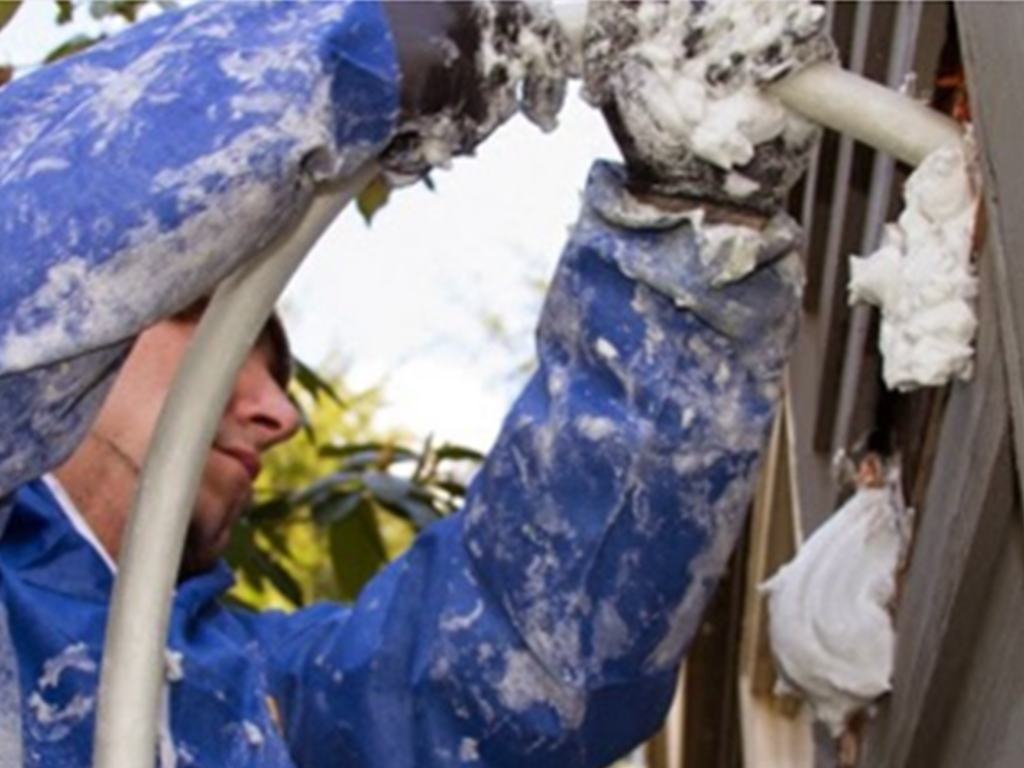
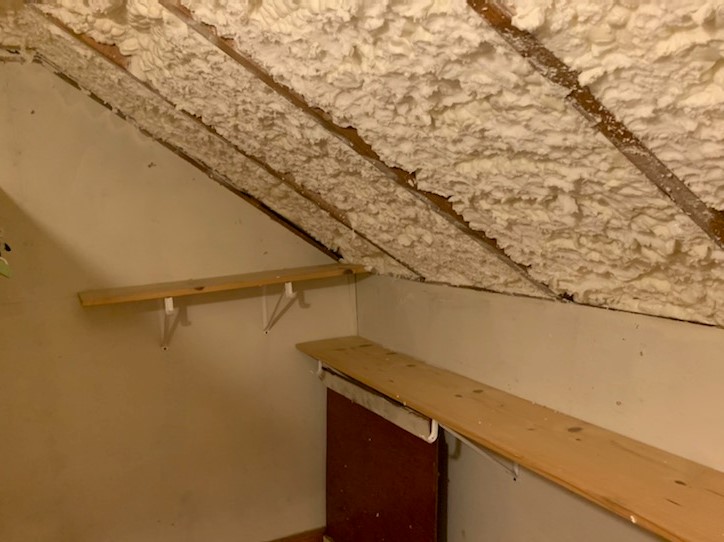
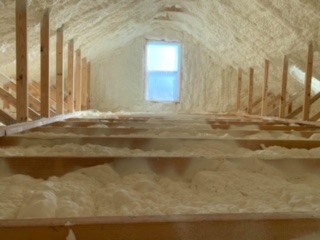
As foam cures it swells into seams, gaps and odd corners, so one material acts as both insulation and air barrier. Crews can spray it along the bottom of the roof sheathing or over the attic floor. Per inch, closed-cell foam gives around R-6 to R-7, while open-cell gives around R-3.5 to R-3.6.
Blown-In Attic Insulation
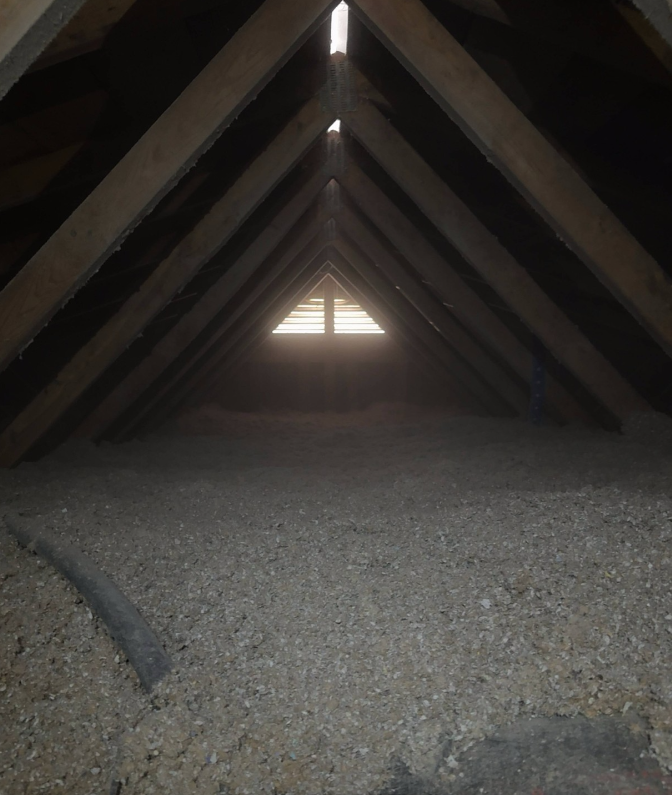
A machine feeds cellulose or fiberglass through a long hose, and the fluffy fill drifts over the attic floor and around joists, wiring and duct runs. Existing insulation that is dry and sound can generally stay where it is. Each inch adds roughly R-3.2 to R-3.8.
Batt Attic Insulation
Pre-cut rolls and panels of fiberglass or mineral wool drop between joists or rafters. They make sense where framing is open and reachable, such as a new build, a knee wall or a bare section of floor. Expect about R-3.0 to R-4.3 for every inch of thickness.
How We Install Attic Insulation
Every attic gets an assessment first. We measure the existing layer, look for air paths around chimney chases, plumbing stacks, light fixtures and the hatch, and check for dampness, mold, droppings and blocked soffit vents that need attention before anything new goes in.
Prep. We protect floors and belongings, set up safe access and close the larger openings that let conditioned air escape upward. Wet, moldy or contaminated insulation comes out first.
Install. Next, the crew installs your chosen material, whether that is sprayed foam, loose-fill blown across the joists or batts trimmed to fit the bays. For spray foam, we confirm the surfaces and conditions are right for the product so it bonds and cures the way it should.
Finish. We verify coverage and depth against your estimate and clean up. Plan on one day for the typical attic, wall or garage project.
Roof Insulation Knoxville TN: Roof Decks and Vaulted Ceilings
Roof insulation is the answer when the attic floor is not an option. Finished attic rooms, vaulted and cathedral ceilings, dormers and spaces over a garage leave no flat area to blow insulation across. Older neighborhoods around Knoxville and Oak Ridge have plenty of these rooflines, often with thin insulation or none.
Foam sprayed to the underside of the roof sheathing insulates and seals right at the roofline. That creates an unvented attic whose temperature stays much nearer to the rest of the house. The rooms below feel steadier, and ductwork or an air handler up there is shielded from extreme heat and cold. For sloped ceilings with closed cavities, dense-packed blown-in insulation can be placed through small holes without tearing out drywall.
Torn between insulating the roofline or the floor below it? We look at the framing, the ventilation and how you use the space, and we set out the pros and cons so you can choose. A room over the garage is a common special case, and our garage and wall insulation page covers it in more detail.
What Better Attic Insulation Does for You
When the work is done right, you notice it in comfort first and then on your utility statement.
- Lower energy bills. Equipment runs less when less air escapes, and ENERGY STAR cites savings of up to 15% on heating and cooling.
- Even temperatures. The gap between a hot upstairs and a cool main floor shrinks.
- Gentler duty on your HVAC. Equipment that cycles less is under less strain.
- Better moisture control. Sealed leaks mean less humid summer air reaching cool surfaces in the attic.
- A quieter home. Added material dampens outside noise as well.
Matching Attic Insulation to Your House
Use this as a rough guide. The firm recommendation comes after our crew has stood in your attic and looked around.
Situation
Recommended
Reason
Situation
Leaky attic over an overheated upstairs
Recommended
Spray foam
Reason
Blocks air movement while adding R-value
Situation
Open floor with a thin layer of insulation
Recommended
Blown-in
Reason
Builds thickness fast around joists and wiring
Situation
Exposed framing in new construction or a gut remodel
Recommended
Batt
Reason
Low cost when every bay is within reach
Situation
Cathedral ceiling, finished attic or bonus room above the garage
Recommended
Roofline foam, or dense-packed loose-fill
Reason
Reaches slopes and enclosed cavities
Situation
Wet, moldy or pest-soiled insulation
Recommended
Clear it out and start fresh
Reason
Fresh material belongs in a clean, dry space
R-Value Targets for Knoxville Attics
Two sets of numbers matter here. ENERGY STAR recommends R-60 for a bare attic in climate zone 4. With 3 to 4 inches already in place, the goal is R-49 instead. Knox County sets the minimum for new work, listing R-38 for ceilings under the 2018 IRC as amended by the county, with R-30 allowed when the roof uses an energy truss. The Knox County energy requirements spell out the details.
In practice, we treat code as the floor and the ENERGY STAR figure as the goal. With a blown-in attic, we measure the depth you have today and show how much more it takes to reach the target. With spray foam on a roof deck, the thickness we apply is chosen to deliver the R-value that makes sense for your rafters and your budget.
Air Sealing Comes Before Attic Insulation in Knoxville
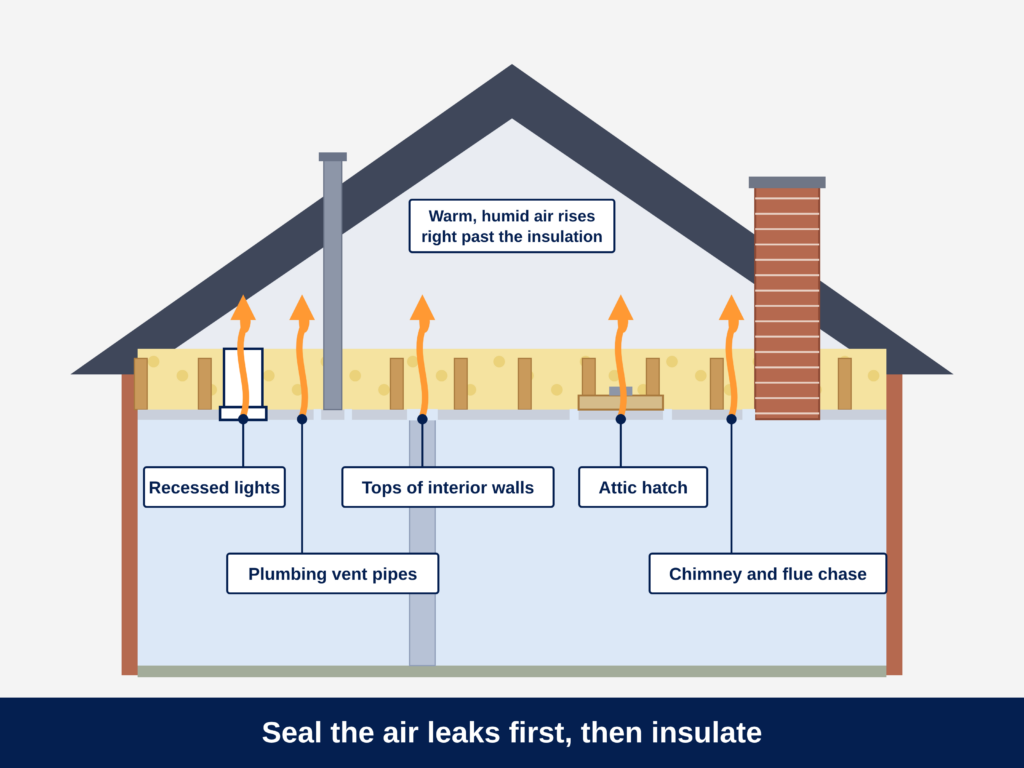
Stacking insulation over open gaps is like wearing a sweater with the zipper undone. Wire holes, plumbing vents, chimney chases, can lights and the tops of interior walls let air rise into the attic, and loose insulation does not stop that flow by itself.
So the inspection includes a hunt for leaks, and the significant ones get sealed before any insulation arrives. Spray foam does the sealing as it goes on, while blown-in and batt follow after the bigger gaps are closed. You end up with an attic that works with the rest of the house, which matters during sticky East Tennessee summers and the occasional hard freeze.
Proven by Results, Recognized for Excellence
Request a Free Attic Insulation Estimate in Knoxville
We inspect the attic, explain what we find and give you a clear price. Should moisture or structural problems turn up, we will say so and can bring in crawl space repair or foundation repair help.
Knoxville Attic and Roof Insulation FAQs
How much does attic insulation cost in Knoxville?
The price depends on the material, the attic size, what is already up there and whether old material must come out. After the free inspection you get an itemized written estimate, and nothing begins until you have approved it.
What is the best insulation for my attic?
It comes down to how the attic is built. Leaky attics, finished rooms and sloped roof decks lean toward spray foam. An open floor that needs more depth usually gets blown-in, and bare framing suits batts. We settle on the final pick after seeing the space.
What R-value should a Knoxville attic have?
For an attic with nothing in it, ENERGY STAR points to R-60, and for one holding 3 to 4 inches it suggests R-49. Its R-value guide explains the zones. Knox County code sets a ceiling minimum of R-38, or R-30 if there is an energy truss. We measure what you have and show you the gap.
What is roof insulation, and when do I need it?
Roof insulation means insulating the roof deck or rafters instead of the attic floor. It is the right move for vaulted ceilings, finished attic rooms and homes where ductwork sits in the attic. Spray foam on the underside of the roof deck is the usual method.
Can new insulation go on top of old?
Frequently. When existing fiberglass or cellulose is dry and in reasonable shape, fresh loose-fill can be layered on top. If it is soaked, moldy or contaminated, it has to be cleared away first. The inspection tells us which situation applies.
Is attic insulation worthwhile in an older Knoxville home?
Frequently it is the best place to start. Older houses tend to have thin attic insulation and many small air leaks, so adding material and sealing gaps can noticeably improve comfort.
How long does the work take?
The typical attic, wall or garage project fits inside one day. A big house or removal work can stretch that, and your estimate says so.
Do I need to be home during the install?
An adult needs to be present when the crew arrives to let them in and show the way to the attic. Once that is done, you are free to keep out of the work area.
Is financing available?
Yes, we offer flexible financing on insulation work. Raise it while we are pricing the job, or read about the options on our financing page.
Do you work beyond the Knoxville city limits?
Yes. We send crews to Farragut, Maryville, Oak Ridge, Sevierville, Alcoa, Powell and Lenoir City, and other nearby towns. Our insulation overview and service areas pages help you confirm yours.
Areas We Serve
Across Knoxville and East Tennessee, our crews insulate attics and roof decks of every shape and size.