Welcome to Reed’s Home Solutions

RESIDENTIAL SERVICES

Blown In Insulation

Maximize Thermal Efficiency with Professional Blown-In Insulation

Reed’s Home Solutions specializes in professional blown-in insulation installation that transforms your home’s energy efficiency and comfort levels throughout Kentucky, West Virginia, Tennessee, and Virginia. Our expert team uses both cellulose and fiberglass blown-in insulation technologies to create superior thermal barriers that outperform traditional batt insulation materials. With R-values ranging from 3.2 to 3.8 per inch depending on the material type selected, our blown-in insulation provides long-lasting protection against energy loss, air infiltration, and thermal bridging that can compromise your home’s comfort and increase utility costs.

Why Choose Blown In Insulation For Your Home

  • Reduces heating and cooling costs by up to 15% through superior thermal coverage and complete gap-filling capabilities
  • Prevents air leakage and drafts with excellent conforming properties that protect your home’s thermal envelope integrity
  • Eliminates hard-to-reach gaps and voids by conforming to irregular spaces that traditional batt insulation cannot access
  • Provides long-term durability with a lifespan of 20-30 years minimum without settling significantly or degrading performance
  • Enhances indoor air quality by creating an effective barrier against outdoor pollutants and allergens entering your living space

Choosing the Right Blown-In Insulation

Choosing the perfect blown-in insulation requires balancing your home’s unique architectural footprint with the specific climate demands of your region.

  • Cellulose: Often favored for its high-density coverage and exceptional fire-retardant properties, this eco-conscious material is an ideal choice for leveling out uneven attic floors or retrofitting older, drafty wall cavities.
  • Fiberglass: Engineered for long-term structural stability, blown-in fiberglass excels in high-moisture environments. Because it is resistant to settling, it maintains its thermal integrity over decades, ensuring your R-value doesn’t degrade as the years pass.

Our insulation specialists conduct a comprehensive diagnostic of your home—examining everything from roof-pitch ventilation to existing wall gaps—to prescribe the precise material that meets your energy-efficiency goals. We don’t just fill spaces; we use professional-grade pneumatic equipment to achieve a precise, uniform density. This ensures a seamless, monolithic thermal blanket that eliminates hidden heat-loss pathways, providing you with stable indoor temperatures and noticeable utility bill reductions every season.

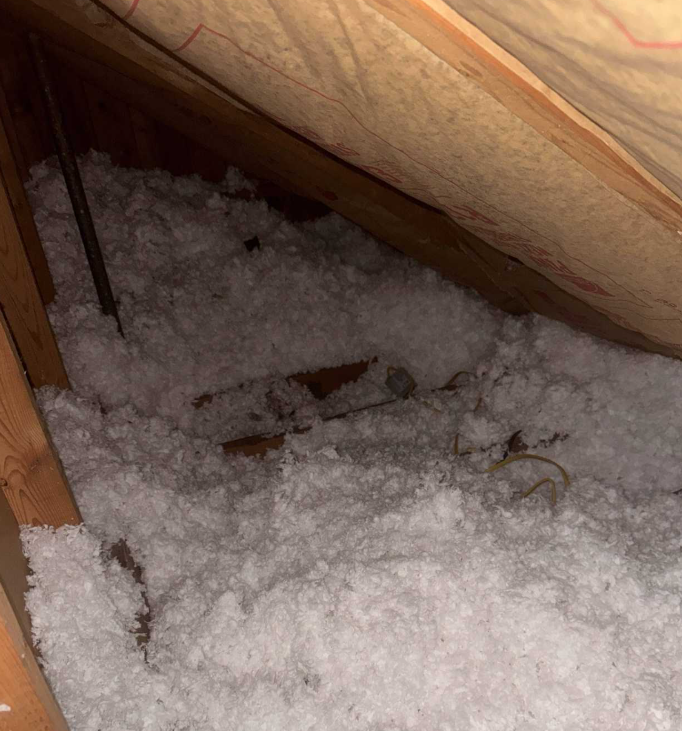
Loose-fill blown-in insulation covering the floor of an attic with exposed rafters and roof decking.

Where to Insulate?

Featured Services

High energy bills, water intrusion, and foundation problems don’t resolve themselves and typically worsen over time, leading to increased costs and potential safety concerns. Reed’s Home Solutions provides three essential services that address these common commercial building challenges with proven, professional solutions.

Blown In Attic Insulation

This is the primary use case for blown-in cellulose or fiberglass. It is ideal here because:

  • Irregular Joists: It fills the gaps between joists that aren’t perfectly 16″ or 24″ apart.
  • Hard-to-Reach Corners: It can be blown into tight eaves or “nooks and crannies” where a person can’t physically crawl.
  • Topping Up: You can blow a fresh layer directly over old, existing insulation to increase your R-value without removing the old stuff.

Blown In Existing Wall Insulation

If you live in an older home with no wall insulation, you don’t have to tear down the drywall. Professionals use a technique called dense-packing:

  • Exterior Walls: Small holes (usually 1–2 inches) are drilled into the siding or the interior drywall near the top of each wall cavity.
  • Dense Packing: The insulation is packed tightly into these cavities to prevent it from settling over time.
  • Interior Walls: It’s also used for soundproofing between bedrooms, bathrooms, or laundry rooms.

Floor Insulation and Hard-to-Reach Areas

  • Over Unheated Garages: If you have a bedroom above a cold garage, insulation can be blown into the floor joists to stop the chill.
  • Crawl Spaces: While less common than spray foam or batts, it can be used in crawl space ceilings if a netting or “belly” fabric is installed first to hold it up.
  • Sloped Ceilings & Knee Walls: In finished attics, it can be blown into the “triangular” empty spaces behind short knee walls.

Schedule Your Free Inspection

Our certified specialists will inspect your home, explain the problem, and provide a no-obligation estimate. Get started by filling out the form below.

Home Energy Audit

Our certified energy specialists conduct thorough home energy audits to identify every opportunity for insulation improvements that can enhance your home’s efficiency and comfort. We use advanced diagnostic equipment including infrared cameras and digital manometers to locate thermal bridging, air leakage points, and areas where existing insulation has failed or settled. This detailed assessment allows us to prioritize insulation upgrades that will deliver the greatest energy savings and comfort improvements for your investment. Ready to discover how much you could save with proper insulation?

Learn more about our detailed Home Energy Audit process. Schedule your free assessment today.

Related Job

Job completed for Attic and crawlspace project-Delbarton, WV

Completion date: September 14, 2022
Location: Burnsville, NC

Why did the customer contact us?

The customer recently moved to the area and purchased this home, which was in desperate need of better insulation. The customer’s goals were making the home more comfortable and energy efficient at the same time.

Solutions provided:

In the crawlspace area, we covered the earth with a 30 mil liner and sealed the liner around the perimeter walls with closed cell spray foam insulation. The liner helps prevent mold and mildew growth as well. This created a continuous seal around the foundation, as all vents are sealed up. The rim joist area was insulated with spray foam insulation and a dehumidifier was installed and drained to the outside of the foundation. We also installed a new crawlspace access door. In the attic, the roof deck was insulated with a nominal 6 inches of open cell spray foam insulation. This brings the attic into the thermal envelope of the home, ensuring that the attic space stays a more consistent temperature and a healthier place for storage items. Both of these projects together will make the home much more comfortable…less drafts, less humidity, cleaner air, and a more comfortable temperature without overworking the HVAC unit.

Proven by Results, Recognized for Excellence

Scroll to Top