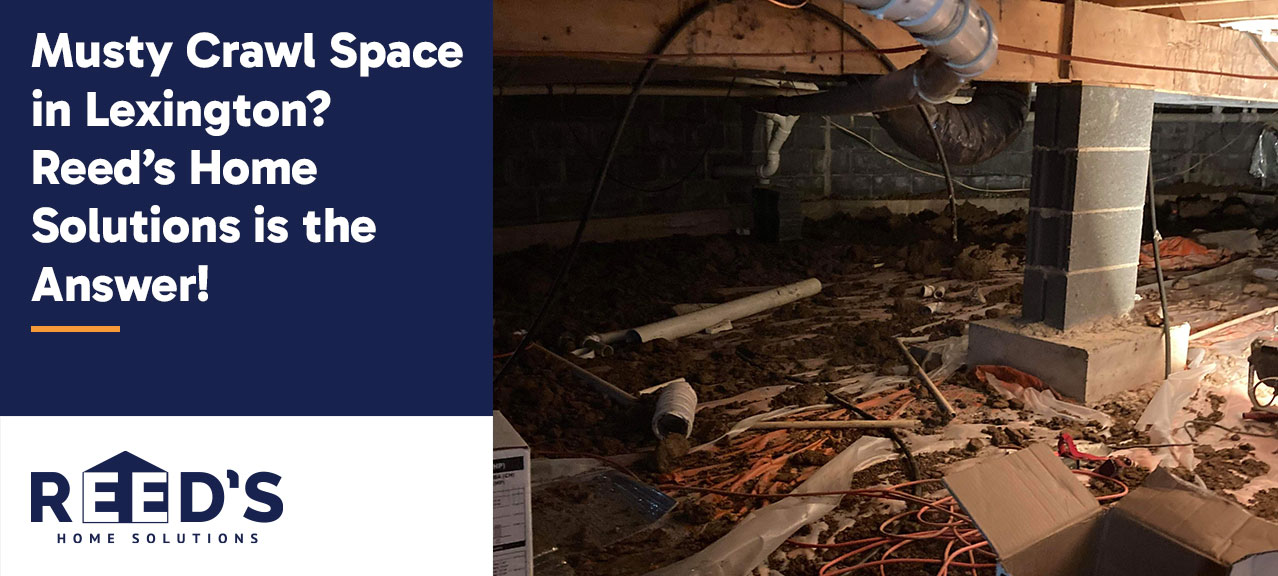
A musty crawl space in your Lexington home indicates serious problems that require attention. Since half of your home’s air comes from the crawl space, that unpleasant smell is just the beginning. The damp, dark environment creates perfect conditions for mold growth and structural damage, leading to sagging floors and rotting joists.
Lexington’s climate poses unique challenges for crawl space moisture control. Kentucky’s humid summers make moisture management essential for protecting your home. We understand our region’s specific climate challenges and how they affect local homes.
Our proven crawl space encapsulation services include comprehensive moisture control solutions:
- Perimeter drainage systems
- Drainage matting
- Sump pumps
- Dehumidifiers
What Causes a Crawl Space in Lexington to Develop a Musty Smell?
That musty odor warns of problems affecting your entire house. Understanding the cause is crucial to preventing further damage.
High Humidity Levels in Kentucky
Kentucky’s climate creates ideal conditions for crawl space issues:
- Summer humidity often exceeds 70%
- Mold grows at 60%+ humidity
- Clay soils trap moisture
- Stack effect carries odors upward
Poor Ventilation and Air Circulation
Traditional crawl space vents often worsen the problem by introducing humid air. Signs include:
- Stronger musty odors in humid weather
- Clammy first floor
- Window condensation
Organic Material Decay and Mold Growth
When moisture invades your crawl space, organic materials start deteriorating rapidly. Mold can establish itself within 24-48 hours in wet conditions. These microorganisms quickly release MVOCs (microbial volatile organic compounds), creating that distinctive musty odor.
The problem intensifies because most crawl space materials provide ideal food for mold:
- Wood floor joists
- Subflooring
- Insulation materials
- Accumulated dust
- Drywall paper backing
Under optimal conditions, just one square foot of drywall can host up to a billion mold spores. Long-term moisture exposure weakens wooden structural components through rot, potentially causing extensive home damage. Industry experts note that a $250,000 home could face up to $100,000 in mold-related repairs, making crawl space encapsulation in Lexington a vital investment.
Where Can Moisture Enter Your Crawl Space in Lexington Homes?
Several common entry points allow moisture into Lexington crawl spaces:
Foundation Cracks and Wall Seepage
Lexington’s clay soil creates constant foundation pressure. This soil:
- Absorbs rainwater
- Expands against foundation walls
- Creates hydrostatic pressure
- Allows moisture through even tiny cracks
Foundation cracks develop from:
- Natural home settling
- Heavy Kentucky rainfall pressure
- Seasonal soil changes
These seemingly minor cracks provide enough space for water infiltration, leading to wood rot, structural issues, and persistent musty smells.
When warm, humid air contacts cool surfaces in your crawl space, condensation forms and drips onto the ground or insulation. This creates perfect conditions for mold growth and wood deterioration.
Even small plumbing issues can escalate into serious moisture problems. We frequently see minor leaks causing thousands in damage when left unaddressed.
Poor Grading and Drainage Issues
Your Lexington home’s surrounding ground directly impacts crawl space moisture. Poor drainage leads to water pooling near foundations, increasing water intrusion risks.
Key drainage warning signs include:
- Standing water near foundation after rain
- Water flowing toward instead of away from home
- Damaged or clogged gutters and downspouts
- Consistently damp foundation soil
When your yard lacks proper slope, rainwater naturally moves toward your foundation. Combined with Lexington’s unpredictable rainfall, this creates ongoing moisture issues.
When Should I Get a Musty Crawl Space Inspected?
Early crawl space inspection can prevent minor issues from becoming major structural problems. We help homeowners identify critical inspection timing.
After Heavy Rainfall or Flooding
Lexington’s heavy rains create immediate crawl space risks. Watch for:
- Standing crawl space water
- Saturated foundation soil
- Water pooling by foundation
- New dampness under your home
Post-storm water intrusion needs immediate attention. We’ve seen ignored moisture lead to serious structural damage months later.
These symptoms often indicate existing water damage to floor joists and support beams. Once moisture penetrates the wood structure, deterioration progresses quickly. Even high humidity levels can compromise these essential structural components.
During Seasonal Home Maintenance
Schedule bi-annual crawl space inspections in early spring and late fall. Look for:
- Water intrusion or humidity issues
- Insulation damage or displacement
- Moisture-related pest activity
- Changes from previous inspection
Regular professional inspections help catch issues before they require costly repairs. Routine maintenance keeps your home’s structure sound.
Why Does My Crawl Space Smell Musty After Rain in Lexington?
That post-rain musty odor isn’t random. Rainstorms create specific conditions under Lexington homes that cause these unpleasant smells. Our experts have pinpointed the causes and solutions.
Rainwater Pooling Near Your Foundation
Rain naturally flows to low areas around your property—typically against foundation walls. Poor yard grading directs water toward your foundation instead of away. Damaged gutters and downspouts dump water next to your crawl space.
This pooling creates hydrostatic pressure on foundation walls. Even tiny cracks become moisture entry points. Once inside, mold and bacteria produce musty odors.
Soil saturation and Vapor Intrusion
Lexington’s clay soil retains water after rain. This saturated soil pressures crawl space walls and releases rising moisture vapor.
Getting rid of musty odors requires professional solutions, not temporary fixes like air fresheners. At Reed’s Home Solutions, we eliminate these problems at their source for Lexington homeowners.
Install a Crawl Space Encapsulation System
A complete encapsulation system creates a controlled environment under your home, permanently stopping moisture issues. Our 20-mil reinforced vapor barriers come with a 25-year warranty and seal every potential entry point on floors and walls.
Use a Dehumidifier to Control Moisture
Commercial-grade crawl space dehumidifiers maintain humidity below 60% to prevent mold growth. Since up to 50% of your home’s air comes from below, proper dehumidification creates healthier air throughout.
Seal Vents and Insulate Walls
Crawl space vents often worsen moisture problems by letting humid air enter. We seal these openings and add insulation to block outside moisture while improving energy efficiency.
Consider Vapor Barriers and Drainage
Quality drainage systems prevent water buildup before issues start. Combined with vapor barriers, they provide long-term moisture protection. Without proper control, summer humidity can reach 70-90%.
Contact Reed’s for Lexington Solutions
Don’t let musty odors persist – they indicate ongoing damage. Our proven regional solutions include:
- Warranted encapsulation systems
- Professional dehumidification
- Preventive drainage solutions
- Complete moisture source inspection
- Vent sealing and insulation
Schedule your free inspection with Reed’s Home Solutions today to get customized solutions and eliminate musty odors permanently.