
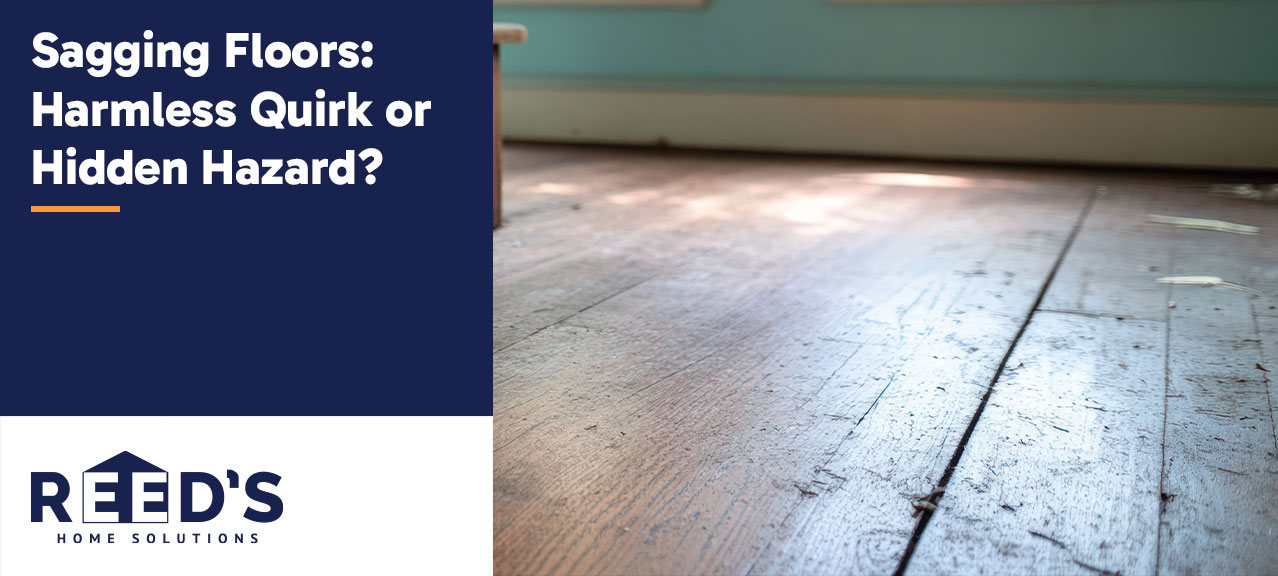
That uneven spot in your living room isn’t just an annoying quirk—it’s a warning sign of serious structural problems developing beneath your feet. For over 30 years, Reed’s Home Solutions has helped homeowners throughout West Virginia, Virginia, Tennessee, Ohio, and Kentucky address sagging floor problems before they become dangerous emergencies.
Approximately one in five older properties shows floor movement over time. When foundation damage occurs, a minor sag can rapidly evolve into severe structural issues affecting your entire home. Early detection and proper repair can stop these problems before they threaten your home’s safety.
At Reed’s Home Solutions, we understand that sagging floors often stem from moisture problems in your basement or crawl space. Our specialists have seen how these issues develop across our service regions.
Common Signs Your Floor Might Be Sagging
Spotting these warning signs early can protect your home’s structural integrity. We’ve helped countless homeowners identify these problems before they become emergencies.
Uneven or sloping surfaces
Your floor should be level, but sagging creates obvious visual problems. Try this simple test: place a marble on your floor—if it rolls consistently in one direction, you have a slope that shouldn’t be there.
Watch for these visual signs:
- Furniture that leans slightly
- Items that slowly migrate toward one side of a room
- High and low places across your floor
- A visible dip between support walls
Soft or bouncy spots when walking
Healthy floors feel solid underfoot. Springiness means your floor support structure is compromised.
You might experience:
- Cracking sounds when walking
- Spongy spots that give under weight
- Unstable areas compared to other spots
- Vibrating items when walking by
Gaps between floor and baseboards
Inspect where your floors meet walls for visible gaps between flooring and baseboards. These gaps appear when floors pull away from walls during settlement. The space between your baseboard’s bottom and floor should be minimal and consistent throughout the rooms. Growing gaps signal floor sagging.
Sticking doors and misaligned frames
When floors sag, they strain your home’s frame. This causes door frames to skew, making doors:
- Stick when opening/closing
- Swing open by themselves
- Become hard to latch
Windows may also become difficult to operate as structural alignment changes. Watch for wall cracks near door and window corners.
At Reed’s Home Solutions, we’ve found that moisture in crawl spaces or basements causes most sagging issues in our service area. We start floor repairs by addressing moisture problems to prevent future issues.
What Causes Floors to Sag
Understanding floor sagging helps catch problems before they become costly structural emergencies. Over 30 years serving West Virginia, Virginia, Tennessee, Ohio, and Kentucky homes, we’ve identified these main causes:
Moisture in crawl space or basement
Water is your home’s biggest structural threat. Across our service regions, we commonly find:
- High humidity softening wood over time
- Standing water creating mold conditions
- Poor ventilation trapping moisture
- Improper drainage directing water toward foundations
- Expansive clay soils that swell with moisture and shrink when dry, causing foundation movement
- Poor initial soil compaction during home construction leading to settlement issues
- Uneven settling creating stress points that affect floor levelness
- Large trees near foundations drawing moisture unevenly from soil
Aging materials in older homes
Homes built decades ago across our service area face unique challenges:
- Pre-1970s construction used untreated lumber more susceptible to moisture damage and insect infestation
- Outdated building standards resulted in inadequate structural support
- Natural deterioration of materials over time has weakened load-bearing capacity
- Foundation degradation below grade often goes unnoticed until floors sag
Most sagging floor issues we encounter start with moisture problems in basements or crawl spaces. By addressing the underlying moisture issue first, we can prevent or stop structural damage before it becomes hazardous.
Why You Shouldn’t Ignore Sagging Floors
Sagging floors require prompt attention. At Reed’s Home Solutions, we’ve witnessed how unaddressed floor problems across our service region quickly progress from minor issues to major hazards.
Are sagging floors dangerous?
Sagging floors indicate serious structural concerns beyond cosmetic issues. They point to underlying weaknesses that can compromise your home’s integrity and stability over time.
Effective sagging floor repair requires addressing both visible damage and root causes. At Reed’s Home Solutions, we’ve developed a proven approach that works across diverse home types throughout our service region.
Professional inspection and diagnosis
Our specialists conduct thorough inspections examining:
- Floor levelness and structural support
- Load-bearing components and joist conditions
- Moisture levels in crawl spaces/basements
- Wood condition and pest damage signs
Using specialized tools, we identify hidden problems that casual inspections miss.
Installing structural supports
For extensive sagging, we install:
- Heavy-duty adjustable steel jacks
- Strategic support beams to redistribute weight
- Custom solutions for your crawl space
- Corrosion-resistant materials for durability
Moisture control solutions
We address moisture issues by installing:
- High-density vapor barriers
- Drainage systems where needed
- Dehumidification equipment
- Proper insulation and vent sealing
Contact us if you notice uneven floors, soft spots, sticking doors/windows, or visible cracks. Professional repair prevents minor issues from becoming major structural problems.
Sagging floors worsen over time without intervention. Our 30+ years helping homeowners across West Virginia, Virginia, Tennessee, Ohio, and Kentucky shows that early detection prevents costly structural damage.
Warning signs indicate deeper issues:
- Moisture causing wood rot and weakness
- Pest damage to support structures
- Foundation settlement creating uneven support
- Aging structural materials
- Poor initial construction methods
Delays increase repair costs. Minor sagging often stems from moisture issues below living spaces, triggering structural chain reactions.
Our comprehensive repair approach includes:
- Professional diagnosis of root causes
- Structural reinforcement or replacement
- Moisture control prevention
- Crawl space encapsulation protection
- Regular maintenance checks
Reed’s Home Solutions provides thorough structural assessments and proven repairs regionwide. We address visible and underlying floor issues for all home types.
Contact us today for a free inspection to protect your home’s stability and investment.