
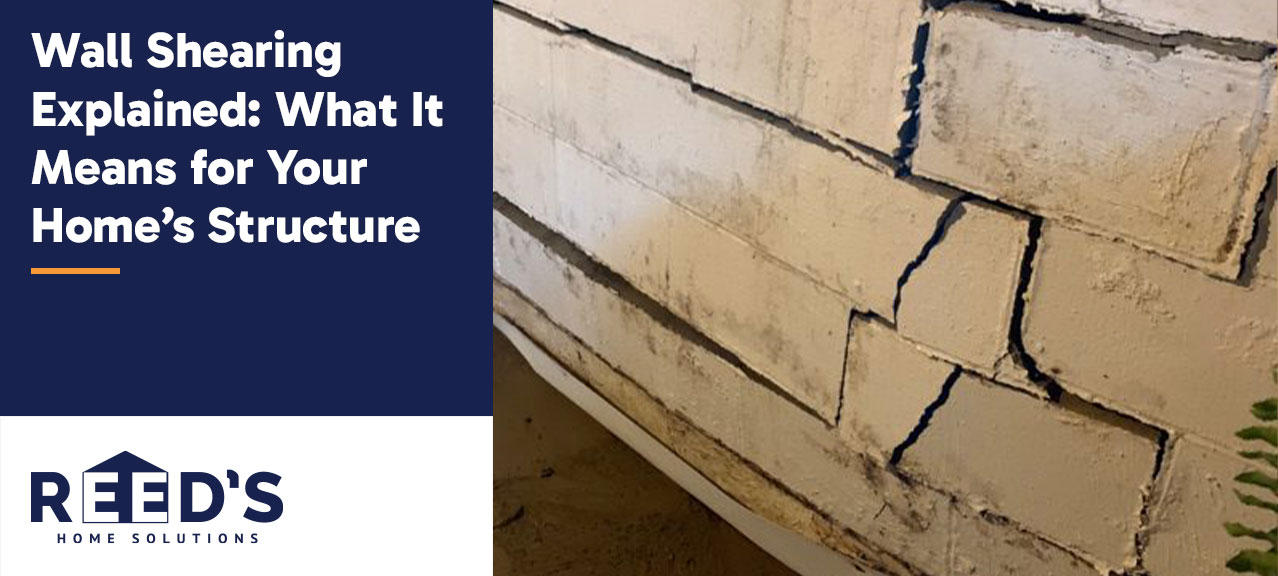
At Reed’s Home Solutions, we regularly address wall shearing issues across Kentucky, West Virginia, Virginia, Tennessee, and Ohio. This serious foundation problem occurs when basement walls move horizontally due to soil pressure and poor drainage. Those cracks in your basement walls signal foundation instability that requires immediate attention.
Hydrostatic pressure is the main culprit behind wall shearing, pushing against basement walls until they begin to fail. Without professional intervention, the damage worsens over time and can lead to complete wall failure.
Taller basement walls face greater pressure and higher structural risks. Watch for stair-step cracks in block walls as early warning signs. Cracks wider than 1/8 inch indicate significant structural stress needing immediate professional attention.
Understanding Wall Shearing and Its Impact on Your Foundation
Wall shearing manifests through horizontal or diagonal cracks on interior and exterior walls. These cracks signal external soil pressure pushing against your foundation.
Wall Shearing Damages Your Home’s Structure
When walls shift horizontally, several serious problems develop:
- Structural weakness and compromised load-bearing capacity
- Water infiltration leading to damage and mold
- Progressive damage affecting supports and floor levelness
Early detection is crucial before wall shearing weakens your entire foundation system.
Different Types of Foundation Wall Movement
Basement walls face unique challenges from surrounding soil pressure. The soil expands when wet and shrinks when dry, causing horizontal shearing that needs immediate attention.
Wall Shearing vs. Bowing Walls
Two distinct issues require different solutions:
- Shearing: Horizontal/diagonal wall movement with matching cracks
- Bowing: Walls curve inward from the middle
Shearing often appears first, progressing to visible bowing without proper intervention. Both indicate serious pressure from water-saturated soils against basement walls and require professional stabilization to prevent complete failure.
Our shearing specialists at Reed’s Home Solutions identify your specific wall movement issues and implement targeted solutions before small problems escalate into major structural failures.
What Causes Basement Wall Shearing
At Reed’s Home Solutions, we’ve helped homeowners across our service area identify several key factors that work together to damage foundations:
Hydrostatic Pressure and Poor Drainage
Water-saturated soil creates intense lateral pressure against foundation walls, eventually causing horizontal cracking and movement. Poor drainage compounds this issue by allowing water to collect around basement walls instead of flowing away. This standing water can lead to:
- Foundation erosion
- Basement flooding
- Compromised structural support
Expansive Soil and Ground Movement
Clay-rich soils pose unique challenges by expanding up to 30% when wet and shrinking when dry. This constant pressure cycle directly impacts basement walls, particularly at typical foundation depths.
Freeze-Thaw Impact
Winter creates additional risks as frozen soil expands about 9%, exerting tremendous force against foundation walls. Repeated freeze-thaw cycles gradually weaken mortar joints and concrete, often creating stair-step cracks in block walls.
Construction Issues
Inadequate reinforcement and poor floor connections make block walls especially vulnerable to shearing damage. Our specialists regularly identify issues like:
- Missing steel reinforcement
- Poor waterproofing
- Inadequate soil compaction
These construction flaws often remain hidden until years later when soil pressure finally overwhelms the wall’s resistance to movement.
Shearing Basement Wall Repair: Professional Solutions That Work
At Reed’s Home Solutions, we match proven repair methods to your specific damage level, helping homeowners throughout Kentucky, West Virginia, Tennessee, and Ohio prevent further foundation damage.
Carbon Fiber Reinforcement
For early-stage damage, carbon fiber straps provide excellent reinforcement. These high-strength materials work effectively when:
- Wall bowing is under 2 inches
- Shearing remains below 1.5 inches
Steel I-Beams for Serious Damage
When horizontal shearing exceeds 2-4 inches, we install steel I-beams for superior support. These vertical supports:
- Anchor below the footing
- Connect to floor joists above
- Distribute lateral pressure across the wall
Wall Anchors and Brace Systems
Our wall anchor systems:
- Connect through exterior soil
- Pull bowed walls toward alignment
- Include adjustable brace systems
- Can improve wall position over time
The Problems with DIY Attempts
DIY repairs create serious risks:
- Missing crucial structural factors
- Voiding insurance coverage
- Creating costlier future problems
Our Professional Process
We begin with thorough assessment to:
- Identify shearing severity
- Find underlying causes
- Implement appropriate reinforcement
- Add moisture control solutions
Maintain clean gutters to prevent water overflow and soil saturation near foundations. Clean annually, or more frequently with overhanging trees. Extend downspouts at least ten feet from foundation walls. Poor gutter maintenance leads to concentrated water discharge that commonly causes horizontal wall shearing.
Foundation Inspection Schedule
Monitor for small cracks, dampness, or wall movement during regular inspections. Early detection enables simpler repairs before major shearing issues develop. Check foundations seasonally, particularly after heavy rains and winter thaws when soil conditions shift dramatically.