
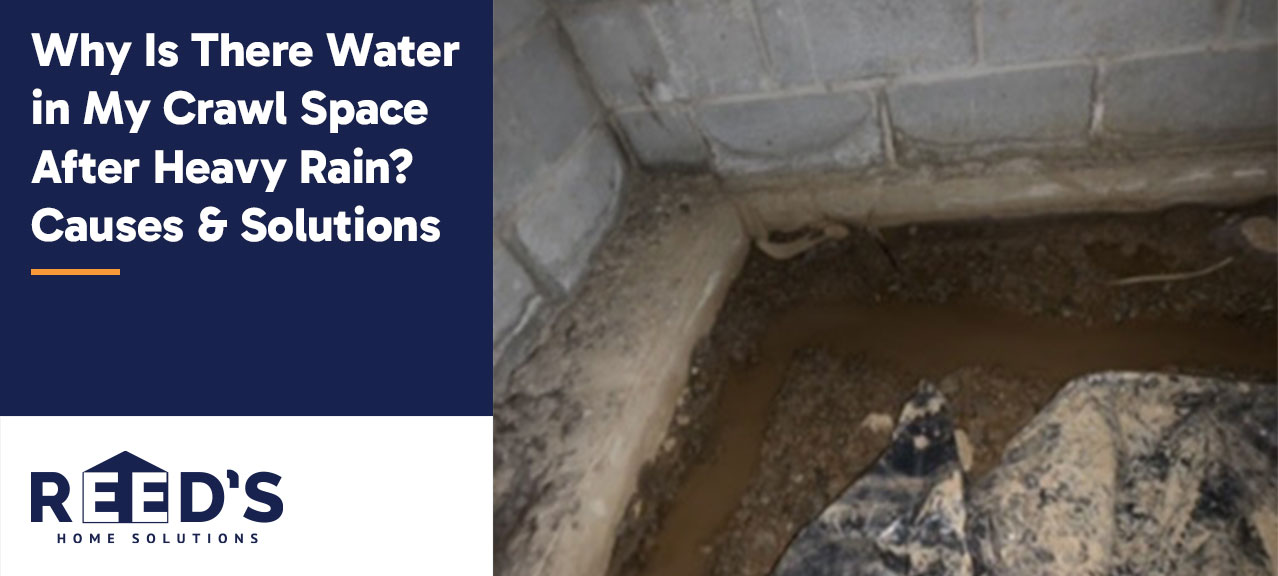
Water in your crawl space after heavy rain can lead to serious problems. The U.S. EPA warns that water-damaged areas must be dried within 24-48 hours to prevent mold growth. Left untreated, even small amounts of water can cause structural damage, mold, pests, and costly repairs.
Heavy rainfall creates major challenges for homeowners, especially since many homes weren’t built with proper crawl space waterproofing. Clay soil worsens flooding by expanding when wet and shrinking when dry, affecting 25% of homes and causing $12 billion in annual damage.
Reed’s Home Solutions specializes in crawl space waterproofing and foundation repair across Kentucky, West Virginia, Tennessee, and Ohio. We understand that flooding threatens your home’s structure and family’s health. Standing water, odors, mold, or storm damage may indicate serious crawl space issues.
Our team has helped countless homeowners identify and permanently fix crawl space flooding. Here’s what you need to know:
Why Crawl Spaces Flood During Heavy Rain
Understanding crawl space flooding requires recognizing key structural vulnerabilities:
How crawl spaces are designed
Crawl spaces create a buffer between living space and ground, typically sitting 1-2 feet below grade. While this design allows access to utilities, it makes spaces prone to moisture issues. Most older homes lack adequate ventilation and drainage. For minimal flood risk, below-grade height shouldn’t exceed 4 feet.
Why below-grade areas collect water
Crawl spaces naturally collect water due to their below-ground position. During heavy rain, saturated backfill creates hydrostatic pressure that forces water through foundation gaps.
The role of soil and weather in flooding
Soil composition plays a crucial role in crawl space water issues. Clay-rich soil in our service areas is particularly problematic, retaining moisture longer than other soil types. This dense soil’s expansion and contraction affects 25% of homes, resulting in $12 billion yearly damage nationwide.
Weather patterns significantly impact crawl space moisture. Even after rainfall ends, saturated soil continues releasing moisture toward foundation walls. Rising groundwater levels days after heavy storms can cause unexpected flooding in previously dry spaces.
Your crawl space faces three key vulnerabilities: below-grade positioning, hydrostatic pressure, and challenging soil conditions, all worsened by heavy rainfall.
Common Causes of Flooded Crawl Space After Heavy Rain
Multiple factors typically combine to create moisture issues. Based on our extensive experience across Kentucky, West Virginia, Tennessee, and Ohio, here are the five main causes:
- Poor grading and landscaping that directs water toward foundations
- Clogged gutters and downspouts that overflow near foundation walls
- Foundation cracks and joints that allow water entry
- Rising groundwater levels after storms creating hydrostatic pressure
- Plumbing leaks and HVAC condensation going unnoticed
Crawl Space Flooding Solutions That Work
Water in your crawl space requires immediate action to prevent long-term damage. At Reed’s Home Solutions, we help homeowners across West Virginia, Tennessee, Kentucky, and Ohio restore flooded crawl spaces and prevent future problems.
Emergency Water Removal
Standing water must be extracted quickly to prevent structural damage and mold growth. While small amounts can be handled with wet/dry vacuums, larger floods need submersible pumps. Never enter a flooded crawl space before checking for electrical hazards or contaminated water. Professional extraction ensures safe and proper water removal.
Complete Drying and Dehumidification
Proper drying prevents mold and structural damage. High-powered fans and dehumidifiers remove moisture from wooden beams, concrete walls, and supports within 24-48 hours to prevent mold.
Sump Pump Installation Services
5 key features of our sump pump systems:
- Automatic activation when groundwater rises
- Battery backup during power outages
- 24/7 groundwater monitoring
- Professional installation at lowest points
- Long-term flood protection
Vapor Barrier Protection
5 steps in our vapor barrier process:
- Installing 6-10 mil plastic sheeting
- Extending barriers up foundation walls
- Sealing seams with waterproof tape
- Creating 12-inch overlaps
- Blocking all ground moisture
Complete Crawl Space Encapsulation
5 elements of our encapsulation system:
- Sealing all vents
- Installing wall insulation
- Adding dehumidification
- Integrating vapor barriers
- Connecting sump pumps
This comprehensive approach prevents water damage while improving air quality and efficiency.
Moisture attacks wooden structures in your crawl space, causing floor joists and support beams to weaken. This leads to sagging floors and foundation issues. Wet components lose structural integrity, creating safety risks.
Energy Bills Skyrocket from Wet Insulation
Wet insulation loses up to 40% effectiveness, forcing heating and cooling systems to work harder. This typically raises energy costs by 10-20%. Fiberglass batting traps moisture against wooden components.
Pests Move into Damp Spaces
Damp crawl spaces attract destructive pests seeking shelter. These visitors damage structures and create unsanitary conditions. Address issues promptly to prevent escalating problems.
Contact Reed’s Home Solutions for Crawl Space Waterproofing
Resolving issues with your crawl space after heavy rain require professional solutions. Multiple factors contribute to flooding – poor drainage, foundation cracks, and faulty gutters. Quick action prevents costly repairs.
Our 5 key solutions include:
- Sump pump systems with battery backup
- Vapor barriers blocking ground moisture
- Dehumidification systems
- Complete crawl space encapsulation
- Professional drainage solutions
At Reed’s Home Solutions, we address underlying drainage and water flow problems. Our warranted products provide state-of-the-art waterproofing while protecting your home’s value.
Take advantage of our free inspections to assess your property. Contact us today to schedule your evaluation.