
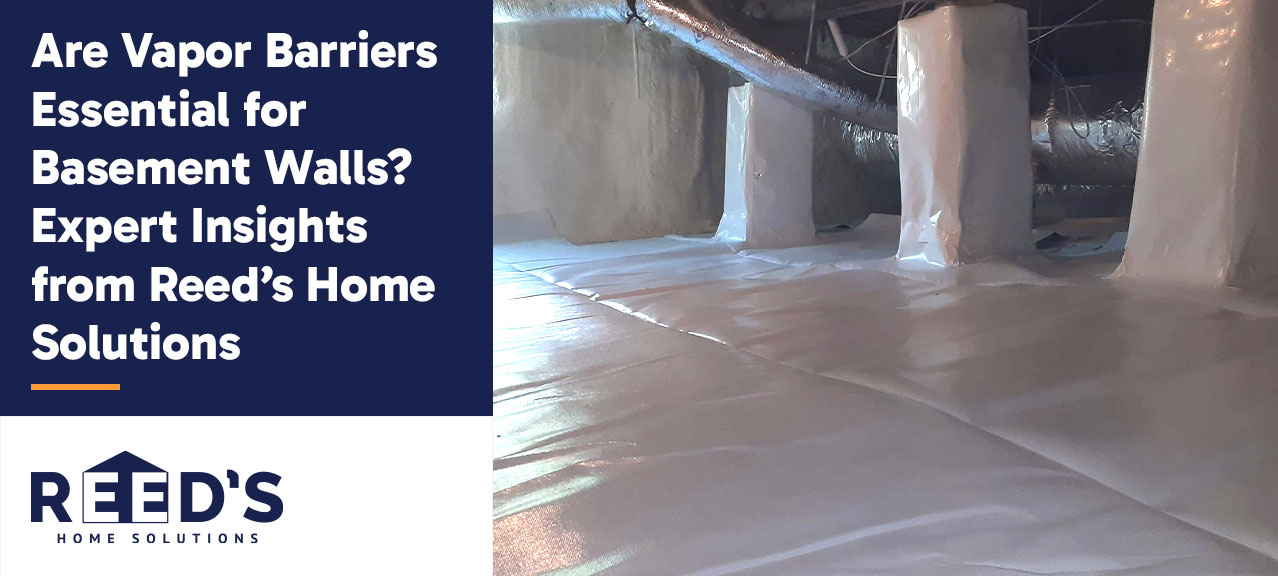
Expert Guidance from Reed’s Home Solutions on Basement Moisture Protection
At Reed’s Home Solutions, we understand how moisture silently damages basement walls. Water vapor naturally moves from warm to cold areas and from higher to lower concentration, penetrating walls and creating serious long-term problems. While initial moisture issues might seem minor, they can lead to deteriorating concrete walls, compromised insulation, and damaged wooden framing.
Many homeowners feel uncertain about vapor barrier installation. A vapor barrier blocks moisture from passing through basement walls, with true barriers stopping almost all moisture transfer (less than 0.1 perms). When high humidity combines with materials like wood or drywall, it creates perfect conditions for mold growth. This is particularly important since insulated basement walls typically require vapor barriers against concrete foundation walls.
Our team has helped countless homeowners protect their basements from moisture damage, preventing costly repairs and creating healthier living spaces.
This guide explains everything about basement vapor barriers – from how they function by blocking or slowing moisture to the different types available and their permeability ratings. We’ll help you understand when professional installation becomes necessary and why proper vapor barrier installation is crucial for protecting your basement and home’s structural integrity.
Contact us today to learn how we can help protect your basement from moisture damage and create a healthier living environment for your family.
Where Basement Moisture Comes From
At Reed’s Home Solutions, we regularly encounter basement moisture issues originating from multiple sources:
- Indoor activities like showering, cooking, and laundry generate significant moisture
- Saturated soil creates external pressure against foundation walls
- Concrete’s microscopic pathways allow moisture to move upward through capillary action
- Natural vapor diffusion pulls moisture from damp soil through walls
- Cool basement surfaces cause humid air to condense
- New concrete walls contain residual moisture that needs proper management
Warning Signs Your Basement Needs Vapor Protection
We recommend watching for these key indicators:
- Musty odors, often the earliest warning sign
- Discoloration on walls, floors, or ceilings
- White, powdery efflorescence on masonry
- Condensation on pipes, windows, or walls
- Mold growth, especially in corners
- Deteriorating stored items and materials
- Warped or swelling wood
How Moisture Damages Your Home and Health
Uncontrolled basement moisture creates serious issues beyond simple dampness. It weakens structural elements, damages insulation, and attracts pests. The resulting mold and bacteria trigger health problems, particularly affecting those with respiratory conditions. Additionally, high humidity forces HVAC systems to work harder, reducing home comfort while increasing energy costs.
Contact Reed’s Home Solutions today for expert basement moisture protection.
These specialized materials provide dual protection against moisture and heat loss. Aluminum-faced fiberglass insulation creates an effective moisture barrier while enhancing thermal efficiency. Similarly, foil-faced polystyrene and polyisocyanurate boards deliver excellent moisture blocking and insulation.
Spray Foam Applications
Our closed-cell spray foam creates a seamless vapor barrier without joints or gaps. At 1.5-2 inches thickness, it achieves optimal moisture protection. Unlike standard barriers, spray foam maintains its integrity long-term. We recommend high-density closed-cell foam for maximum protection in colder regions.
Professional Installation: Getting It Right
Proper installation determines your vapor barrier’s effectiveness. At Reed’s Home Solutions, we’ve helped countless homeowners protect their basements through expert installation.
Essential Installation Steps
We follow these critical steps:
- Thorough wall cleaning and preparation
- Precise measuring with 12-inch seam overlaps
- Professional adhesive application
- Careful top-to-bottom installation
- Complete seam sealing
Common Installation Mistakes
Even experienced installers can make these errors:
- Incorrect barrier placement relative to insulation
- Gaps compromising the moisture barrier
- Improper fastener selection
- Inadequate seam sealing
These mistakes often require complete reinstallation.
Our Comprehensive Approach
Reed’s Home Solutions provides:
- Complete moisture source assessment
- Custom material selection
- Integrated system installation
- Quality assurance inspections
Contact us for a free inspection to assess your basement’s needs.
Quality installation is crucial – even premium materials fail without proper installation. Many homeowners trust our professional expertise for guaranteed results.
Addressing moisture problems now prevents costly water damage later. Your basement’s health directly impacts your home’s structural integrity.
At Reed’s Home Solutions, we provide expert vapor barrier installation and complete moisture management solutions. Let us help create a dry, healthy basement environment.
Contact us today for a free inspection.